
NR Times hears from NervGen about its groundbreaking new drug that could enable the body to regenerate nerves.
It was never believed that the nervous system could repair itself.

In 1906, Camillo Golgi and Santiago Ramón y Cajal received a Nobel Prize in Medicine for their work on the nervous system.
The latter asserted that “the nerve paths are something fixed, ended, immutable.
“Everything may die, nothing may be regenerated,” the scientist said.
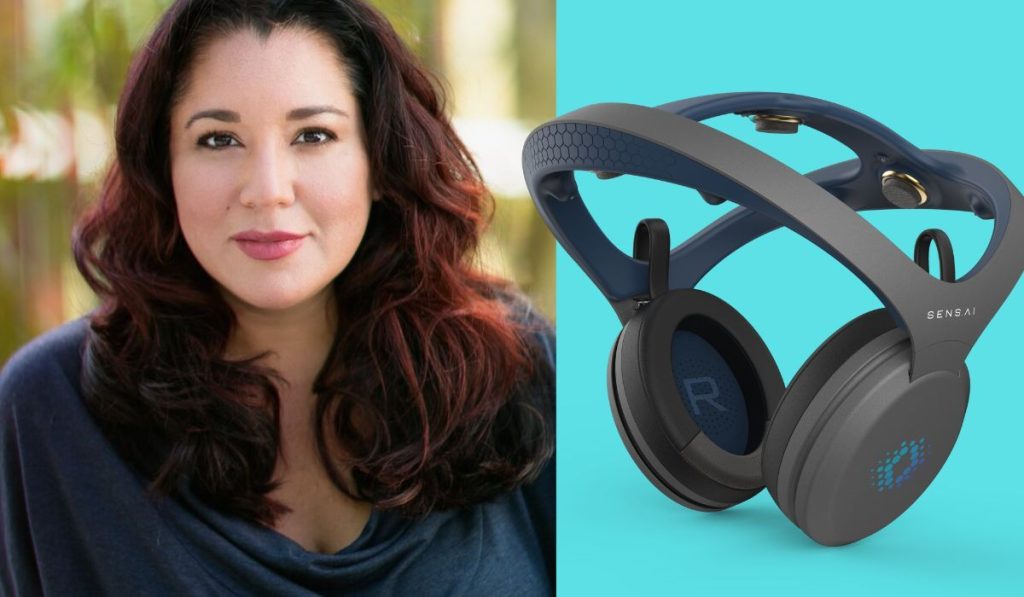
Almost a century later in the 1990s, a single researcher, Dr Jerry Silver (pictured above), a professor of neurosciences at Case Western Reserve University’s School of Medicine, challenged that thesis. Dr Silver has dedicated his career to understanding regeneration failure in the adult spinal cord.
He had a breakthrough moment when he discovered a group of molecules called Chondroitin sulfate proteoglycans (CPSGs). His work suggested that these molecules act as inhibitors of axonal growth and neuroplasticity in spinal cord injury.
In other words, they disrupt the body’s ability to repair itself.
In his lab in Cleveland, Ohio, Dr Silver and his team studied CSPGs, removing them and putting them back into the process.
What they found was threefold: signals were connecting again in the form of axonal regeneration, restoring of the axon’s protective coating, myelin and enhanced overall plasticity.
NVG 291 was born out of a partnership between Dr Silver’s lab and Harvard University.
The collaborative project identified a receptor called PTPsigma. This was how CSPGs were connecting to a cell.
Now a target had been found, work began on developing the drug that would later become NVG 291.
Following a successful phase I trial, NVG 291 is now subject to a phase II clinical trial.
NR Times talks to NervGen CEO, Mike Kelly about the groundbreaking work of Dr Silver, the roadmap for NVG 291 and its potential impact on the way spinal cord injury is treated.
How did Dr Silver’s work change the way researchers look at spinal cord injury?

NervGen CEO Mike Kelly
A lot of folks had failed prior to the 1990s and walked away believing that this conventional wisdom that the nervous system can’t repair itself is true.
What Dr. Silver’s work did was instead of focusing on discovering [compounds] that can regenerate nerves, he explored how the human body can regenerate nerves.
That’s really the shift and it’s what our tagline is as a company: enabling the nervous system to repair itself.
We’re not actually doing the repair, the body is doing the repair, we’re just focusing on the thing that’s inhibiting the repair.
Could you explain the mechanism of action for NVG 291?
NVG 291 enters the cell and we believe that it disrupts the intracellular process of the interaction between the receptor and the cell.
We have shown that when you introduce MDG 291, it actually does have axonal regeneration, it does have plasticity, it does have remyelination.
We’re currently conducting further studies to elucidate the molecular signals that we’re interfering with.
Where is NervGen currently in its journey with NVG 291? What are your primary objectives?
We’ve been working towards this clinical trial for some time now. We completed our phase one, which was our safety study.
And that was, that was positive. we had 70 subjects single dose multiple dose. And there were no serious adverse events, no discontinuation
We submitted that information to the FDA and then during that process, we were preparing this study with Shirley Ryan Ability Labs, our chief medical officer, Dan Mikol, who is an expert in this area, as well as a group of key opinion leaders.
It’s the who’s who of spinal cord injury [thinking] about and designing a clinical trial to show whether this drug can translate from the preclinical data from rodents, which is pretty robust, into humans.
Can you tell us more about the design of this trial?
[Mikol] took a pretty methodological approach. Looking at the specific things that we measured pre-clinically, he wanted to measure those things clinically.There are two cohorts of patients. There are patients who have had an acute injury, meaning that they’ve been injured one to 49 days ago, and those who’ve had a chronic injury, which was one to 10 years ago. The reason for that is there is some spontaneous recovery post-injury.
We selected patients who have a cervical incomplete injury, meaning that they have some function below the site of injury.
It’s important that we selected those [patients] because we’re mirroring what was seen in the animal studies.
What are you measuring in this trial?
There are two primary endpoints that we’re measuring. There is motor-evoked amplitude in a group of muscles in the hand and motor-evoked amplitude in a group of muscles in the leg.
Then, we have a cadre of functional endpoints where we’re looking at walking speed, nine-hole peg test and various different neurological measures.
We’re also measuring some more electro-physiological measures in various other muscle groups throughout the body.
The last group of endpoints we have our exploratory endpoints. We have biomarkers, bladder function and many other things that we’ve seen in the animal models.
Is this a new approach?
Yes, I think it’s a novel approach that [Mikol] came up with because it takes an objective quantitative measure.
It takes all of the noise out of subjective responses because it measures electric pulses.
The patients have a baseline of electricity going from the brain to those muscle groups and that’s measured.
Then we randomise them into placebo or drug and we test to see if those signals are becoming better.
The primary endpoint is definitely new in this area and one of the reasons why we chose Shirley Ryan Ability Labs is because they have expertise in electrophysiology.
I think [this approach] is going to give us more shots on goal to see something and also increase our ability to predict the next study’s endpoint.
What impact do you hope NVG 291 will have on patients’ lives once it’s available?
My hope is that this improves patients’ lives. That’s really the goal here.
If we can give some independence to folks or some improved functional ability, or the ability to reinvigorate their rehabilitation process so that they can do things they haven’t done before I think this is going to be a massive success.
We’ve done market research with people who suffered an injury and the things that are at the top of the list are functional improvement that gives them independence.
Bladder function is way up on the list, the ability to move their hands and transfer out of a wheelchair into bed. Things like this are extremely meaningful to this community.
We don’t have to have a massive functional breakthrough here, we just have to have functional improvement for folks because they have nothing. And it is not only the cost to them, but the cost to the system is massive.
If NVG 291 passes clinical trials, how soon do you anticipate it reaching the market?
That really is a tough question to answer because it depends on the robustness of the effect, and how quickly how quickly we can get the next study up and running. It also comes down to our discussions with the FDA.
This could be a little bit faster than other therapies. The reason I say that is when you enrol a patient, they’re enrolled for three months of treatment and then another four weeks of rigorous exercise.
It’s a pretty short period of time and there are 300,000 people who’ve had an injury more than a year ago in the US so recruiting these folks is not going to be a challenge.
For this study, we should have read out mid-2024. Then we’ll meet with the FDA and then we’ll conduct the next study. Then a review process. It’s definitely going to be years, not decades.
What’s your vision for NervGen’s future beyond spinal cord injuries?
Spinal cord injury is just the start. We have preclinical data in six different disease models.
We had a challenge when I first came in because we were trying to push six balls down the field at the same time and that’s tough when you have limited resources.
Spinal cord injury was ahead of everything else. The further spinal cord injury went, the more resources we put into that field.
My vision is that once we have proof of concept data that we can enable the nervous system to repair itself, there are several different disease states that we’d like to get into.
Stroke is one of them, MS is another. We have data in peripheral nerve [injury], but we think that there could potentially be more applications in ALS.
What sets this therapy apart from other drugs targeting SCI?
When you have a product like this, you have a discovery in a lab and then one external lab validates your discovery.
The data that’s behind NVG 291 comes from many different labs across the globe.
There are six different disease models that have been replicated in many different labs.
That’s what gives us the confidence that there is something here and that gives us the most hope that we’re going to see something.