Activity-based rehab is still a relatively new therapy, but it holds vast potential in the treatment and recovery of spinal cord injury, says one of the field’s leading experts, Dr Rebecca Martin.
More than 15 million people around the world are thought to be living with a spinal cord injury (SCI), yet advancements in research and treatments have been limited in recent decades.
That could be about to change, with a growing evidence base supporting the use of activity-based rehab for recovering spinal activity following an injury.
One of those spearheading this research is Dr Rebecca Martin, manager of Clinical Education and Training at the International Center for Spinal Cord Injury (ICSCI) at Kennedy Krieger Institute, and an assistant professor at The Johns Hopkins University School of Medicine in the Department of Physical Medicine and Rehabilitation.
Dr Martin is conducting studies on the impact of activity-based therapy in combination with transcutaneous spinal cord stimulation (TSCS), with some promising potential, particularly in paediatric patients.
She talks to NR Times about the most promising advancement in neurorehab she has seen in her 18-year career — and why her patients keep her focused on finding better treatments.
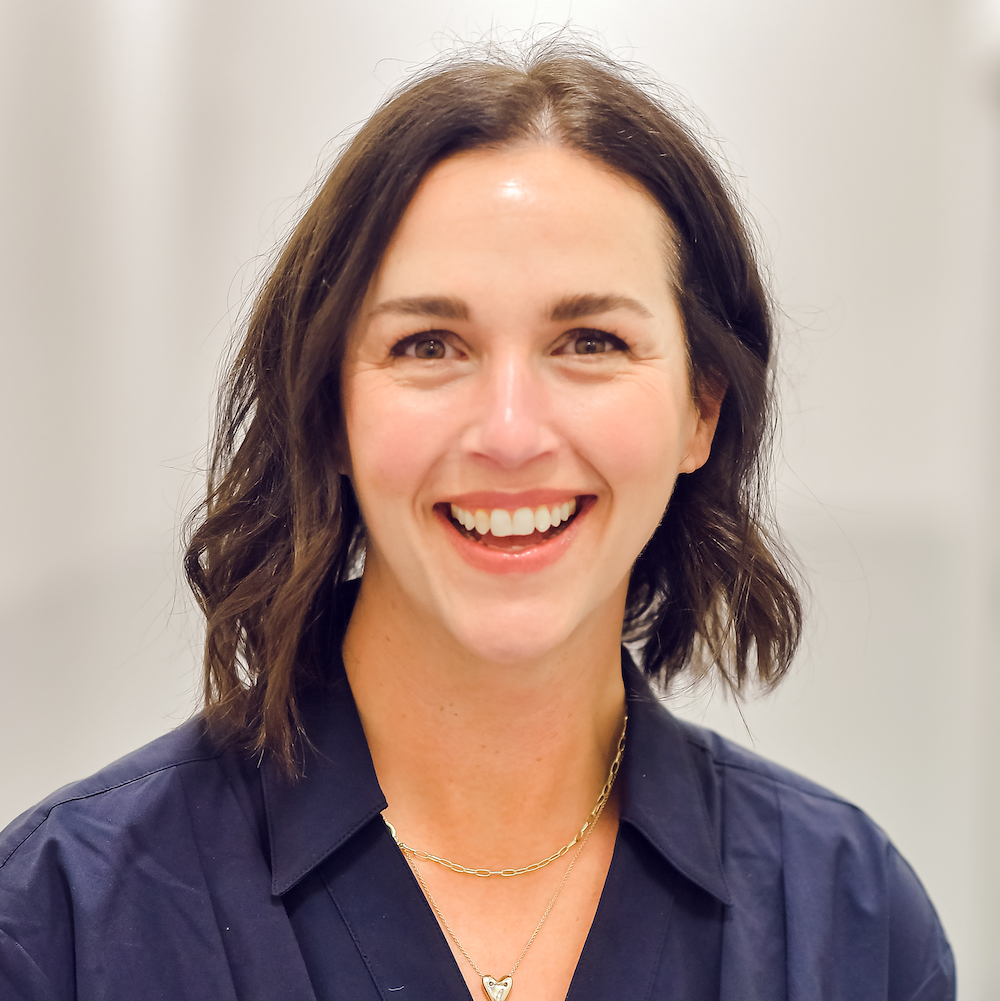
Dr Rebecca Martin, manager of Clinical Education and Training at the International Center for Spinal Cord Injury (ICSCI) at Kennedy Krieger Institute
Can you explain the concept behind activity-based rehab?
Activity-based rehab is based on the science that shows recovery is possible, but it is activity dependent. Traditional models of rehab give somebody a wheelchair, and a sliding board, and whatever it is that they need, but that actually discourages healing, and produces a disorganisation within the spinal cord which leads to all kinds of problems down the road.
The spinal cord wants to do its job, but it needs both inputs and outputs below the level of the lesion to do that. Our job is to provide repeated near-normal input both above and below the level of the injury, to first optimise the nervous system for recovery, and second offset the chronic complications that occur in patients with spinal cord injury. Clinically, our job becomes moving a body that doesn’t move on its own.
We’re lucky in that we have a lot of stimulation devices where we’re able to provide that input below the level of the lesion at near-normal intensities, and as close to normal kinematics as we can manage, so that patients can then show us what they can do in terms of output.
Can you tell me about some of the research you are doing in this area?
Where most of my research is focusing now, is on how to increase excitation in the central nervous system so that we can amplify the volume on the remaining connections. The good news is, after an injury some connections remain, but those connections are not carrying information efficiently enough, or with enough volume to create voluntary effort. My current research is in how to amplify the volume of those remaining connections through changing central excitability.
I study transcutaneous spinal cord stimulation (TSCS). That stimulation is applied across the surface of the skin to increase local spinal circuits via the dorsal root reference. As the dad of one of my patients put it, we are introducing some noise into the system to amplify the volume on the remaining connection.
And what are your findings showing so far?
What we’re showing is that we can increase spinal excitability. We can immediately elicit involuntary motor responses at lower levels of stimulation and then train on top of it and encourage recovery and the formation of new connections. We have studies where patients have recovered walking function, they have recovered ball and bladder function and they recovered sensation. It’s not perfect, but we’re headed in the right direction.
What potential do you think this therapy holds for improving outcomes in SCI patients?
Activity-based therapy, in combination with the stimulation that we’re studying, has really been the biggest change I have seen neurorehab over the last 18 years. It is engaging the nervous system in a way that we couldn’t before and it’s making change in these patients and it’s amazing to see.
I’ve been here for 18 years, and this is the first thing that has made an immediate, measurable improvement, in a way that I can access it as a therapist. TSCS in particular, is the first thing that is clinically relevant, feasible, safe and efficacious.
You’re also exploring how activity-based therapy can be particularly impactful in paediatric SCI, can you tell us more about that?
Children inherently have more plasticity in their nervous system that we can tap for recovery. But they also represent an additional challenge because we have to take into account recovery and development. Particularly for children who are injured really young, we have to help them develop the pathways for these skills, whereas in adults, we’re just recovering them. While it is an additional challenge, it’s also this opportunity that we can create more lasting change.
However, I could count on one hand the number of places in the world that I know to be doing this with children and I think that’s a real missed opportunity. I would encourage people that if you would consider it for an adult patient, you should consider it for a child.
How accessible is activity-based therapy to patients right now?
Much to my protest and disappointment the use right now is limited in its implementation. As somebody who straddles the clinician/researcher line, it’s really important for me to study interventions that are clinically meaningful, relevant and poised for rapid translation.
The truth is that TSCS with clinically available off-the-shelf stimulators is possible and efficacious, but for whatever reason therapists are hesitant to push it along. The original research and the proof of principle for TSCS is 20-years-old and was done with a particular stimulator that used carrier frequency. There is this misconception that it has to be with that one device. It’s not beyond the realm of possibility that there are clinics and hospitals that already have these devices in place, they just don’t know it or they don’t know how to use it.
Having a specific device that gives more control over both the type and location of stimulation will improve the intervention, but I hope that therapists see that they don’t have to wait for that. They probably have a stimulator in their clinic that could do it. Many clinics already have exoskeletons which are very popular with patients, but it’s not actually activity-based because you’re not engaging the nervous system so it becomes a passive intervention. The addition of TSCS makes it more beneficial and if they’re able to initiate the weight shift, show some hip flexion and take more weight through their lower extremities, then it becomes an active intervention, which leads to recovery.
What are the biggest barriers preventing more widespread access?
SCI is always the last to be studied because it is a relatively small population and research money is spent on how you minimise that initial damage.
But there are 250,000 people living in the United States with chronic SCI and so being able to offer them something is really important to me. The density of the neurological damage and the resultant disability is pretty high for these patients and if you figure it out in SCI, my bet is that it’ll generalise to cerebral palsy, spina bifida even some brain injury and stroke, which are much bigger markets.
The other barrier is that for SCI there is such a wide range of functional impairments and almost every study has to be multi-centre, which again is more time and more money. We see about 800 unique patients a year, which is a huge volume of SCI and it takes me years to get 20 patients who have the same, or close enough presentation. to run a study. There is a statistic that says it takes 17 years to get an intervention from study into practice, my patients don’t have that long to wait.
How does the fact that you still see patients daily in the clinic impact your research?
I’m in a unique position where I straddle both this academic research world and the clinical world, and think that gives me a really unique perspective because I have patients and their families to answer to every day. My job is a huge privilege to be able to shepherd patients and families through this time in their life, and to help them create physical change, as well as emotional and mental.
I have seen people grow up with their SCI. The first patient I saw on my first day here at Kennedy Krieger is now 30-years-old and has grown into this beautiful accomplished woman. I have seen her through all these phases of her life, but she still operates largely at the same physical capacity as she did 18 years ago and I’m not okay with that. I need to help these patients get better faster. I have a sense of urgency as a researcher because of my clinical work.
What sort of timeline are we looking at before this treatment could be available more widely?
I think in the next two years there will be devices commercially available specifically for TSCS. There are companies working really hard at it and I hope that alongside it comes more awareness and more education in pushing patients towards more active interventions, whether that’s TSCS or not. My hope is that in five to 10 years, every therapist working in SCI and particularly paediatric SCI has an expectation that their patients will recover.
What would be your main takeaway for clinicians working in this space?
We’ve already proven that TSCS is a really safe and easy add-on to what you’re already doing, so as a clinician it’s five more minutes of setup and you might already have the device. I want to keep clinicians’ thinking: ‘What more can I do?’ Sometimes we have this reputation of saying less is more but in this case more is more and the nervous system is dependent on our input, because it can’t generate its own—for now.
Find out more about Dr Martin’s work and research here