A neurosurgeon is suing McLaren for more than £14m after suffering brain injuries in a snowmobile crash during a luxury Arctic driving trip.
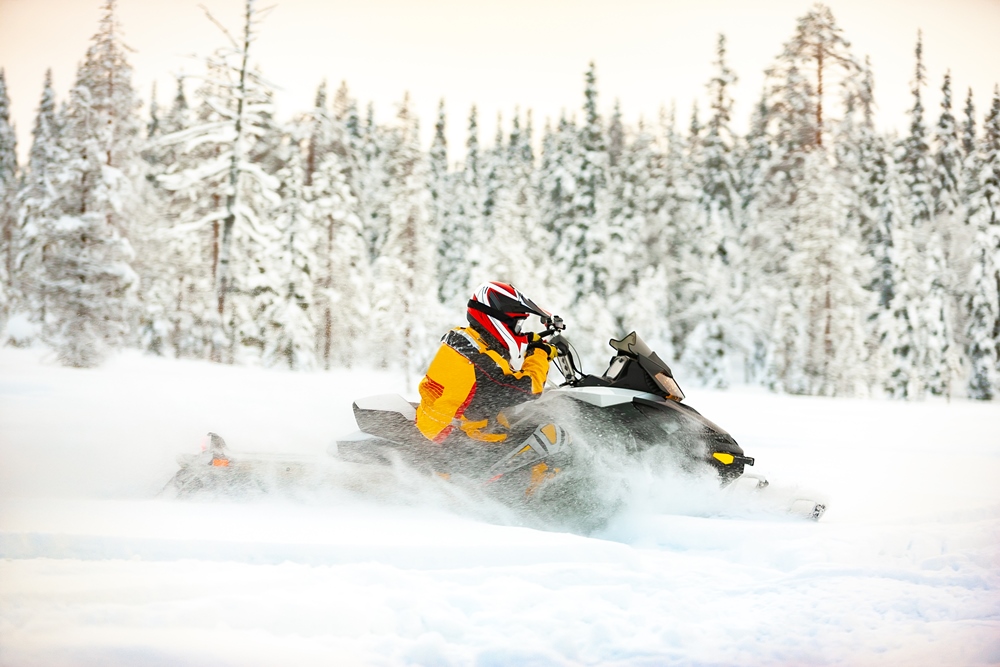
Dr Andrew Cannestra, 54, is taking legal action against McLaren Automotive Events Ltd after crashing a snowmobile while taking part in the £23,000 Pure McLaren Arctic Experience in Lapland.
The spinal specialist struck a tree on a forest trail after losing control of the skidoo, leaving him unconscious for 30 minutes and suffering a brain haemorrhage, leg injuries and a worsening of a pre-existing hand tremor.

He is now suing for more than £14m, claiming the crash severely affected his ability to work.
He was earning around £1.6m a year before the incident and has since had to give up brain surgery, although his lawyers say he “continues to work to a limited extent”.
His legal team told London’s High Court he has lasting problems with word-finding, comprehension, memory and fatigue.
McLaren denies responsibility and is contesting both liability and the scale of the claim, arguing its guides delivered appropriate safety briefings and that Dr Cannestra was “eager” to go faster.
Defence barrister Matthew Chapman KC said: “There is a certain irreducible risk associated with taking part in a snowmobile safari on a snowy track – even a track as innocuous and well-prepared as the index track.
“If this activity did not present any such risk then it’s unlikely that it would be an attractive option for a person who enjoys driving powerful supercars on ice.”
Neil Block KC, representing Dr Cannestra, told the court that both riders were “absolute novices” and that the route through the forest should have been explained more thoroughly.
The crash happened after a stop, when Dr Cannestra set off again with his guide, who had changed the skidoo’s drive mode to allow for higher speeds.
Mr Block said: “(The guide) admits that he was driving at speeds of up to 60km per hour on the straight sections. Mr Cannestra was finding it difficult to keep up.
“He had no prior knowledge of the layout of the track and tried to keep up with his guide.
“Within a few minutes of setting off – at about sunset – the snowmobiles approached a series of left-hand bends separated by a straight of approximately 32 metres.
“Mr Cannestra had lost sight of (his guide).
“He was unaware of the track layout, and as he entered the second bend he lost control of his snowmobile and veered off the track into deep snow and collided with a tree.”
The impact caused a brain haemorrhage and severe leg injuries and worsened his previously controlled hand tremor.
Mr Block argued the guide should have maintained a slower pace so a novice rider could follow safely, or failing that, provided warnings like flags or signs on sharp bends.
McLaren’s legal team said Dr Cannestra had appeared fully in control and capable, and that he had specifically asked for faster settings.
Mr Chapman said: “Turn three was a left-hand turn on flat terrain and could safely be negotiated at 20kmh, but could not be safely negotiated at 54kmh or more.
“Whatever his precise speed on approach, he likely lost control because he exceeded the speed at which the turn could safely be negotiated.”
He added that Dr Cannestra had handled the skidoo without mishap over several earlier bends and had control of his speed.
Describing Dr Cannestra as a “power car enthusiast and jet skier”, the defence said he was aware of the risks and sent text messages after the crash suggesting the accident was “his fault”.
But Dr Cannestra told the court those messages were not an admission of fault and disputed being described as a thrill-seeker.
He said: “I have taken part in some track driving events.
“These displays, however, have always been in the form of an exhibition rather than any actual racing – for example during these presentations, there is no overtaking involved.
“Whilst I have experience in driving classic cars, I had no experience of ever riding a snowmobile before, neither did Kaitlin.”
His former partner, Kaitlin Mealor, who was also on the trip, denied calling him an “adrenaline junkie”.
Asked by Mr Chapman whether she had described him that way, she said: “I think I was in shock as well so I just said ‘I’m sure he will be OK,’ and I didn’t use the term ‘he’s an adrenaline junky who gets in scrapes all the time’ – because he doesn’t.”
The judge is expected to deliver a ruling at a later date.