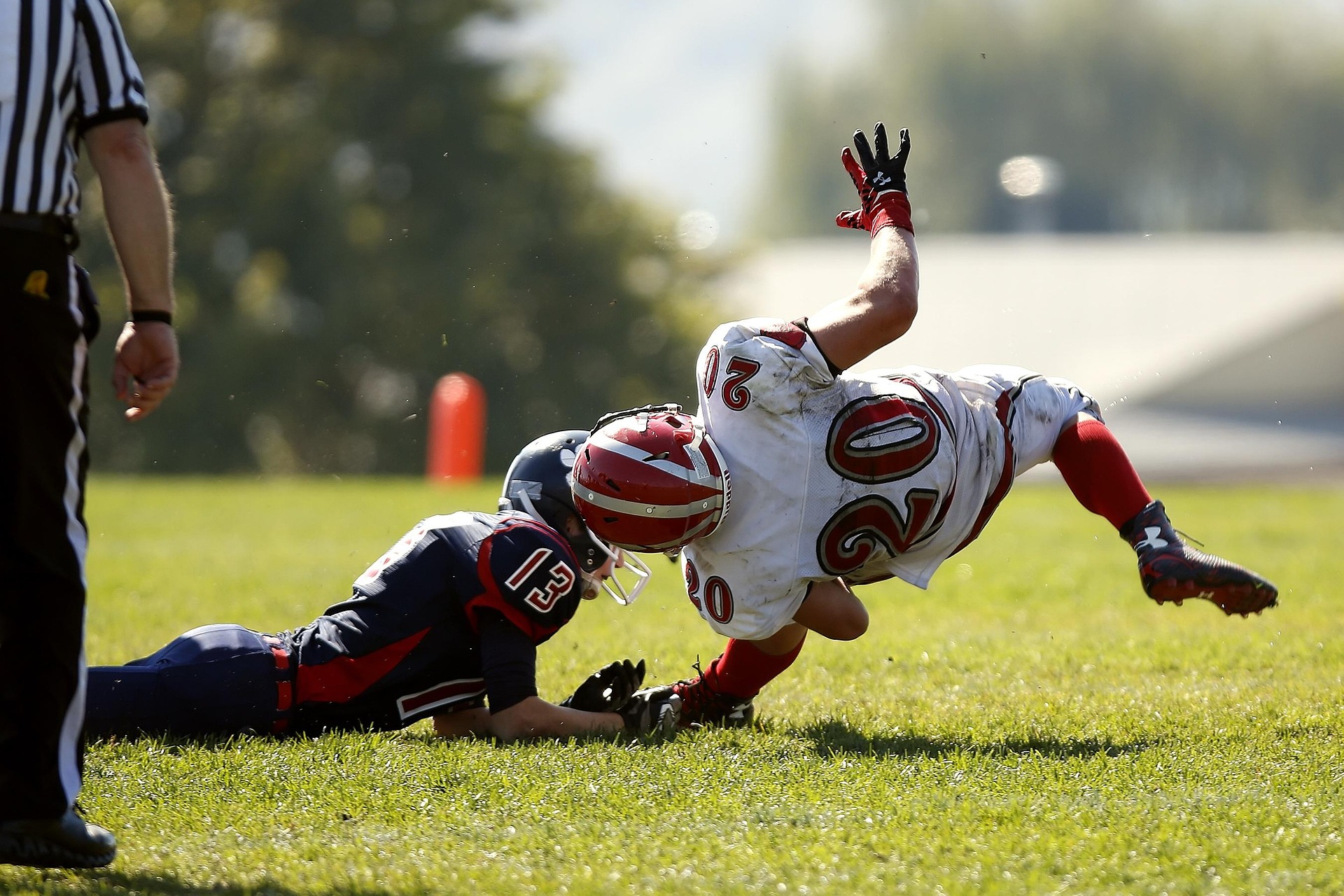
Youth American football accounts for nearly one in five traumatic brain injuries linked to sport in children and young adults in the US, a preliminary study has found.
Researchers analysed more than 70,000 traumatic brain injuries (TBIs), injuries to the brain caused by a blow or jolt to the head, in people aged 25 or under across 17 sports and recreational activities.
Activities included American football, soccer, basketball, cycling, skiing, snowboarding, running, baseball, hiking, roller skating, skateboarding, wrestling, cheerleading, ice hockey, lacrosse, field hockey and volleyball.

American football accounted for 19 per cent of activity-related TBIs. Soccer was second at 11 per cent, followed by basketball at 10 per cent and cycling at 7 per cent.
The average age at injury was 14 years and 32 per cent of cases occurred in girls.
Each athlete with a TBI was matched to an athlete of the same age and sex who had experienced a lower-leg fracture during similar activities but had no history of TBI.
Repeat TBIs were more common in football, occurring in 37 per cent of football injuries compared with 32 per cent across all sports.
Study author Steven Wolf, MD is from Boston Children’s Health Physicians in Hawthorne, New York, and a member of the American Academy of Neurology.
He said: “Traumatic brain injuries from sports are a common, yet preventable, source of long-term neurological and psychiatric issues in children and young adults.
“Our study found that nearly one in five of these injuries occurred in youth football, with these athletes also experiencing more repeat brain injuries than youth in other sports.”
After adjusting for age and sex, researchers found that among American football players, those with TBI had a 23 per cent higher risk of chronic headaches compared with those without TBI.
They also had a 5 per cent higher risk of visual impairment, a 5 per cent higher risk of anxiety, a 3 per cent higher risk of depression and a 1 per cent higher risk of substance use disorders.
Visual impairment included double vision, decreased ability to see and, in rare cases, complete blindness.
Researchers also found that TBIs at younger ages were associated with developmental and mood disorders, while TBIs at older ages were associated with substance use disorders.
“Our findings highlight youth football as a critical public health priority, suggesting that brain injuries sustained during key stages of development may reshape health later,” said Wolf.
“Prioritising safety standards like delaying tackle football participation and finding ways to limit repeat injuries could help better protect developing brains.”
Researchers noted a limitation of the study was that clinical data was used, making it difficult to determine the cause of a TBI since the majority are recorded without a cause.
This may have influenced how TBIs were attributed to particular activities.