The Special Air Service Association has launched a scheme to send special forces veterans with blast-induced traumatic brain injury, or TBI, to the US for diagnosis and treatment.
Blast TBI can be caused by major explosions, but also by repeated exposure to low-level blast over a period of time. Symptoms often emerge many years after the exposure that caused them.
In keeping with the unit’s reputation for secrecy, details of the scheme are not public.
However, the Regiment is known to work closely with Special Operations Command in America, where blast TBI has long been recognised as a serious problem affecting operators and veterans.

Matt Hellyer served for 25 years with the Special Air Service, including operational tours of Sierra Leone, Afghanistan and Iraq. He said that for special forces soldiers exposure to blast is almost routine.
Of his time in Iraq he said: “I underwent 400 operations on those tours, that’s three operations a day. That’s not including the training that we’re doing when we’re not on operations.
“That is a six month period of condensed breaching, explosions, loud bangs.
“The distance between the explosion and the assaulting troops is very small because we are working in small teams, we need to get through gaps and holes that are created by explosions extremely fast.
“So the distances between the explosions and the rest of the troops is very small.
“The amount of ringing in your ears you get after a day on operations is constant. And we are seeing this now that a lot of our veterans are suffering or have been diagnosed with PTSD and we question this because some of the people that are being diagnosed, and I’m not a medical expert, but I know what PTSD looks like. And in some of these cases it is not PTSD that I see in some of my comrades and colleagues.”
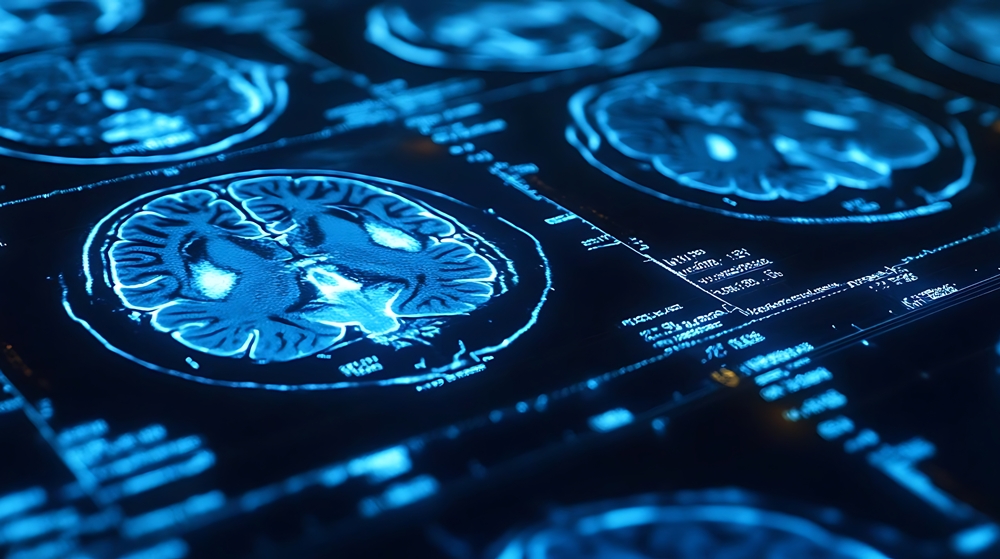
In the US, veterans with symptoms can undergo advanced MEG brain scans, which supporters say can detect the microscopic neurological damage caused by blast exposure that traditional MRI or CT scans cannot see.
There is no cure for blast TBI, but a range of treatments is in development using neuro-stimulation to help the brain repair itself.
In the UK, veterans rely on the NHS, where few doctors have any knowledge of the effects of blast, and TBI is almost never diagnosed unless there is evidence of a “typical” head injury.
MEG scanners are not approved for clinical use, and the government believes more research is needed before it recognises the condition.
As a result, British veterans are routinely diagnosed with PTSD or other psychiatric conditions, even where they have clear neurological symptoms.
The SAS Association’s move to fund diagnosis and treatment for its veterans in America will be seen as a clear signal that at least some in the UK military are not prepared to wait for the NHS to catch up with scientific advances elsewhere.
Hellyer welcomed the move to fund diagnosis and treatment in America.
He said: “The Special Air Service Association is a forward-leaning organisation, as the unit is.
“They’re looking at the evidence and they’re trying to understand what the problem is. It’s not just psychiatric or psychological. There is a physical injury.
“The US have identified this as being a problem within their military and they’ve put in protocols now for explosions, for demolitions operatives and people firing large-calibre ammunition, such as the .50 calibre, and there are restrictions on how many explosions they can face, how many rounds that they can fire because it is damaging people’s brains physically.
“I know that UK Special Forces, and I’m not a spokesman for them, but I just know that they are looking at these explosions and they are trying to limit the exposure that the troops are getting to give duty of care back into our servicemen and women.”
Hellyer now runs a small charity called Pilgrim Bandits which aims to help military and blue-light veterans.
The charity has funded advanced brain scans for ten veterans from various regiments. In each case the patient had a prior diagnosis of PTSD and in each case the scan showed physical damage to the brain.
He called for support to expand MEG scanning to other veterans with relevant symptoms and said he hoped the SAS Association’s move would pressure the big military charities to get involved.