Brain-controlled exoskeleton could help SCI patients walk again
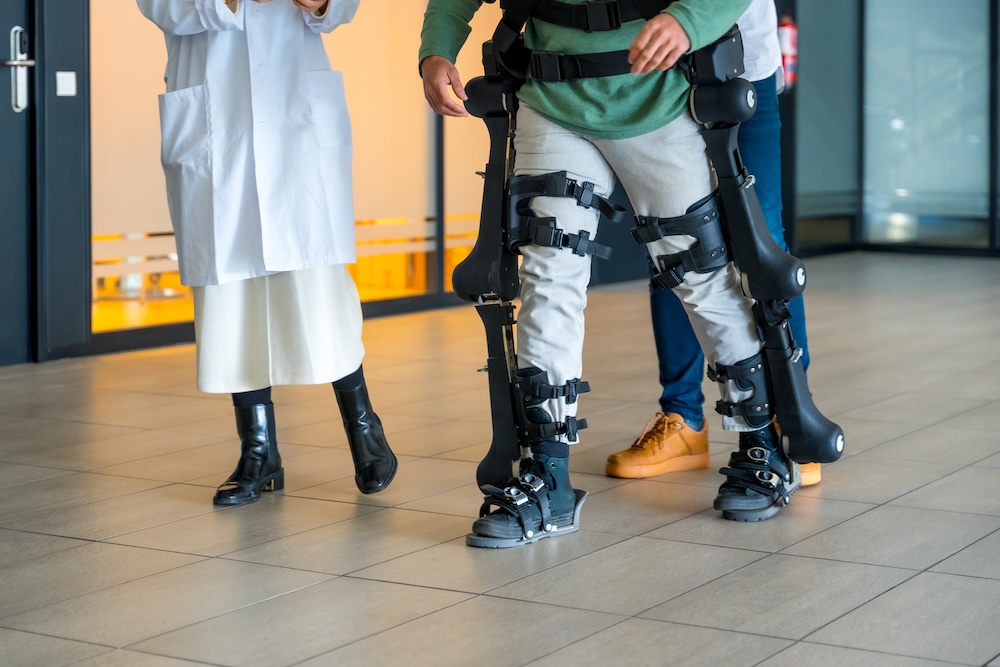
A brain-controlled exoskeleton tested in an early study may one day help people with spinal cord injury walk again.
The system used brain signals to control a robotic walking exoskeleton and sent artificial leg sensations back through direct electrical stimulation, creating a two-way link.
Researchers said this type of setup may help address key limits of current exoskeletons, which rely on manual control and do not provide sensory feedback.

An Do, associate professor of neurology at UC Irvine and co-author of the study, said: “Millions of people worldwide suffer from paralysis from spinal cord injury, with loss of lower-extremity motor and sensory function leading to wheelchair dependence and increased risk of serious secondary conditions including heart disease, osteoporosis and pressure ulcers.”
“Recovering the ability to walk ranks among the highest rehabilitation priorities for paralysed individuals.”
In the study, a 50-year-old woman used the system during epilepsy evaluation, when electrodes had already been placed on the surface of her brain.
She completed 10 exercises and rapidly reached a high level of performance, according to the researchers.
The interface used signals from parts of the brain linked to leg movement and delivered electrical stimulation to areas involved in sensation.
Researchers said this allowed the participant not only to control stepping, but also to feel matching sensations as the left or right leg moved.
In a blind step-counting task, she identified steps with an overall accuracy of almost 93 per cent.
In a separate sensory discrimination task, she identified right leg, left leg and no-stimulation feelings with 96 per cent, 84 per cent and 100 per cent accuracy respectively.
The participant confirmed in all 10 runs that exoskeleton steps triggered matching leg sensations and reported that the sensory feedback aided task performance. No adverse events were noted.
Do said: “This work demonstrates that it’s feasible to restore both the motor and sensory dimensions of walking using a single, compact, embedded brain-computer interface system.
“We believe this lays a critical foundation for the development of fully implantable systems that could one day give paraplegic patients a meaningful and natural sense of movement.”
The researchers said the current system is still at an early stage and that further work will be needed, including testing in people with complete leg paralysis.
They added that a future fully implantable version could remove transdermal components that pose infection risks.