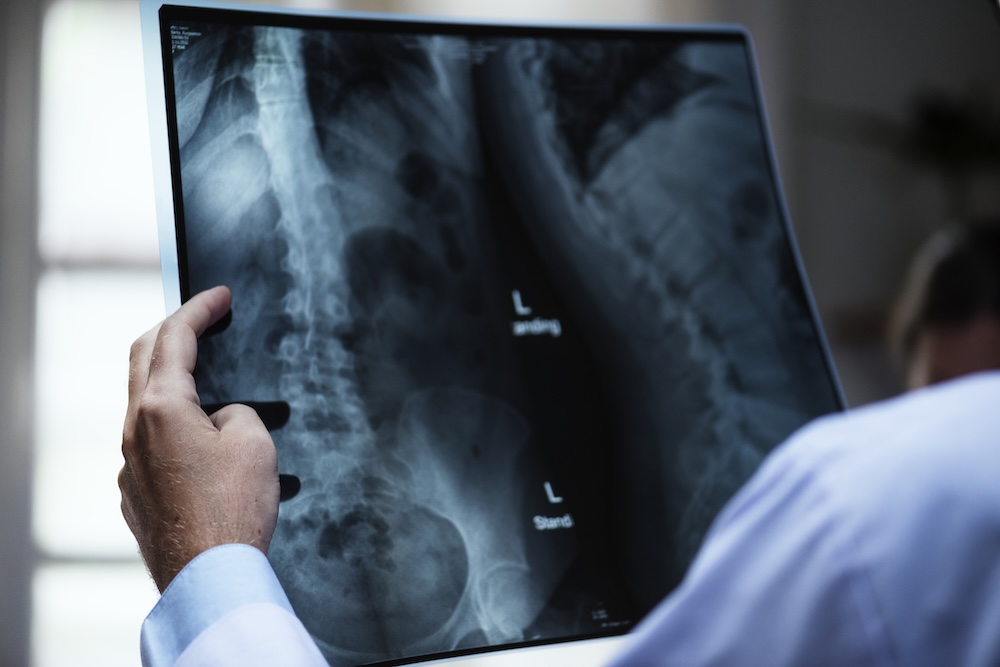
A new spinal treatment may improve recovery after injury by targeting a chemical reaction that can worsen nerve damage in the first hours.
Spinal cord injuries can worsen after the initial trauma, as chemical damage spreads through the nervous system.
The experimental approach aims to interrupt that process early by removing excess glutamate from the bloodstream.
Glutamate is a natural chemical that helps nerve cells communicate, but too much of it after injury can overstimulate cells, trigger inflammation and damage or kill cells.
Researchers at Tel Aviv University developed the method to reduce glutamate levels in the first hours after spinal cord injury.
There are currently no approved treatments that stop this secondary damage process.
The team said: “This study presents an innovative therapeutic approach that significantly reduces early nerve cell damage after spinal cord injury and improves functional recovery. Treated animals achieved up to 80 per cent recovery of motor function, highlighting the therapy’s potential to dramatically improve outcomes after injury.”
In animal studies, the treatment reduced glutamate levels, lowered inflammation and helped protect nerve cells and neural structures.
Treated animals began showing improved movement within two days.
After two months, they recovered up to 80 per cent of normal motor function, compared with about 30 per cent in untreated animals.
The therapy is delivered through a simple intravenous injection, meaning it is given directly into the bloodstream.
Researchers said it remained effective for up to eight hours after injury, raising the possibility that it could one day be given by first responders at the scene of an accident or during transport to hospital.
The approach may also have potential in conditions such as stroke and traumatic brain injury, where further damage can develop after the first event.
Stroke happens when blood flow to part of the brain is blocked or interrupted, while traumatic brain injury is damage caused by an external force, such as a fall or collision.
Scientists cautioned that the findings are still based on animal models and have not yet been tested in clinical trials involving people.
Dr Angela Ruban, one of the study’s co-leaders, said the work focused on reducing secondary damage, including nerve cell death, inflammation, swelling and disrupted signals between the brain and body.
She said: “If we are able to confirm our results in humans, the new approach will represent a true paradigmatic shift, from supportive care alone to treatment that actually reduces and maybe even completely prevents the extent of the damage.”
Tel Aviv University’s technology transfer company Ramot has established a commercial initiative to develop the therapy as a rapid, low-cost intravenous treatment aimed at reducing disability and healthcare burden.