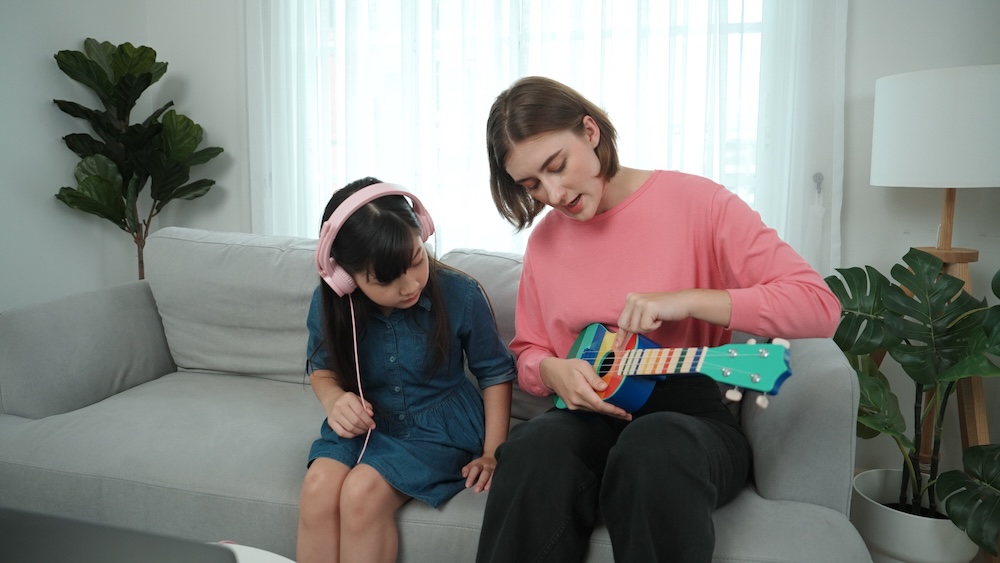
Music therapy with speech and language therapy may support communication in young children recovering from acquired brain injuries, new research suggests.
The study examined how children aged two to six responded to joint therapy sessions delivered during inpatient neurorehabilitation.

Researchers identified three ways the combined approach supported communication development.
Familiar songs encouraged vocal expression, while active musical play strengthened turn-taking and social reciprocity, or the ability to respond to and interact with others.
Musical activities also provided motivating opportunities for children to make choices.
The study was led by the University of Limerick’s Health Research Institute.
Dr James Burns, a University of Limerick researcher and paediatric music therapist at the National Rehabilitation Hospital in Dublin, led the research.
The study found that music could provide structured and enjoyable opportunities for children with acquired communication impairments to re-engage with speech, sound, gesture and interaction.
Burns said the findings were particularly significant because research into collaborative music therapy and speech and language therapy for very young children with acquired communication impairments remained limited.
“What was particularly striking was seeing how music created a space where interaction felt easier and more natural for children,” Burns said.
“Familiar songs and playful musical routines helped children vocalise, take turns and connect more easily with the people around them.”
The children were recovering from complex neurological injuries and conditions, including stroke, encephalitis, hypoxic brain injury and Rasmussen’s encephalitis.
Encephalitis is inflammation of the brain, while hypoxic brain injury occurs when the brain does not receive enough oxygen.
Rasmussen’s encephalitis is a rare condition involving long-term inflammation of one side of the brain.
Researchers observed children progressing from early preverbal engagement and simple vocalisations to producing words, completing phrases and communicating more spontaneously.
“One child initially joined in Old McDonald using only the final ‘o’ in ‘E-I-E-I-O,’ but later progressed to independently singing phrases from Twinkle Twinkle Little Star,” Burns said.
“While these moments may appear small, they represented important steps toward using his voice more intentionally, initiating interaction and participating more actively in everyday communication with others.”
Professor Hilary Moss, study co-author and course director of the university’s MA Music Therapy, said the study demonstrated the value of interdisciplinary rehabilitation in paediatric settings.
“Interdisciplinary research, across STEM and the arts, is crucially important,” Moss said.
“Music therapists are perfectly positioned at the intersection of music and clinical research and practice.
“We welcome interdisciplinary collaboration with our fellow clinicians to ensure services and treatments are developed to appropriately meet client-centred health needs,” she said.
The study was conducted by a multidisciplinary team from the University of Limerick and the National Rehabilitation Hospital.
Researchers said the work moved beyond descriptive case reports by closely examining how communication responses emerged within therapy sessions.
The team hopes the findings will inform future paediatric neurorehabilitation practice and support stronger tools for evaluating communication changes in young children with acquired communication impairments.