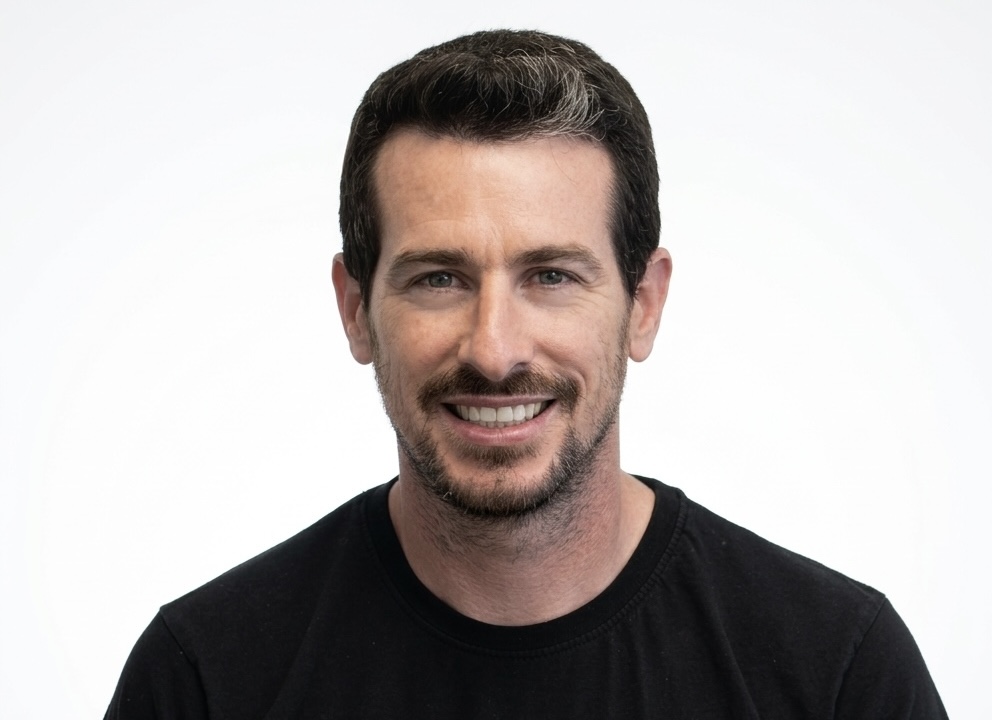
By Eyal Samuel Shachar, CEO, Bioxtreme
In the past stroke rehabilitation plans were centered on helping patients relearn movement by practicing tasks correctly and through repetition. Occupational therapists helped to guide patients toward proper movement patterns and worked to minimize errors that may slow recovery.
Stroke rehabilitation continues to evolve with advances in robotic rehabilitation and recent research has challenged the fundamental therapy assumption that fewer mistakes during rehabilitation lead to better outcomes. In fact, this research shows that the opposite may actually be true. Error augmentation actually amplifies errors rather than trying to eliminate them. This may help stroke survivors recover motor function more effectively by accelerating the brain’s natural learning processes. The continued advancement of robotics, artificial intelligence, and sensor technologies are innovating the frontiers in stroke rehabilitation.
Errors enhance learning
Trial and error is an important part of the learning process. When humans learn to walk, ride a bicycle, or play a musical instrument, the brain continuously compares intended movement with actual movement and makes adjustments based on the difference. This motor learning process is driven by error signals.
When a person has a stroke, the brain’s ability to process and correct movement patterns can become impaired. Traditional rehabilitation attempts to compensate for this impairment by guiding patients toward correct movements through repetitive practice and physical assistance. This can be helpful in recovery, but it can also reduce the error signals that are important in neuroplasty, the brain’s ability to reorganize and form new neural connections.
Instead of trying to minimize mistakes, error augmentation deliberately exaggerates movement errors so patients can more clearly perceive the gap between intended and actual performance. The brain is then prompted to adapt more aggressively, strengthening motor learning and accelerating the recovery process. Error Augmentation primarily engages implicit motor learning mechanisms, allowing the nervous system to adapt instinctively and automatically rather than relying on conscious cognitive strategies. This promotes more natural and durable motor recovery by leveraging the brain’s innate capacity for sensorimotor adaptation.
Robotics and error augmentation
Advances in robotic rehabilitation have helped clinicians to apply error augmentation consistently in therapeutic settings. Robotic exoskeletons, upper-limb rehabilitation devices, and sensor-driven therapy platforms can precisely track patient movements in real time. These systems can detect subtle deficits and introduce controlled resistance or visual distortions that amplify errors during rehabilitation exercises.
If during therapy a patient veers off course several times while reaching for an object, a robotic system may intentionally exaggerate that deviation. The increased error becomes more noticeable, encouraging the patient to make stronger corrective adjustments. Importantly, the perturbations are intentionally subtle, engaging the brain’s implicit motor learning mechanisms so that adaptation occurs instinctively and automatically rather than through conscious cognitive effort. These robotic systems continuously monitor performance and adapt the level of error augmentation to match the patient’s capabilities and stage of recovery, providing a personalized rehabilitation experience that can be more effective than manual therapy alone.
Artificial intelligence and stroke rehabilitation
Artificial intelligence is now touching nearly every industry and is now moving into stroke rehabilitation as it is expanding the potential of error augmentation. Modern rehabilitation platforms are now using AI to analyze movement patterns, identify compensatory behaviors, and personalize therapy interventions in real time. They also further personalize a rehabilitation plan by determining when a patient may benefit from additional challenges, when increased support is necessary, and how error augmentation should be adjusted throughout the recovery process. Each patient recovers from a stroke differently and this adaptive approach offers a more individualized approach. AI-enabled rehabilitation systems provide crucial patient data that will help clinicians learn what would work best for each patient.
Recovery and compensation
One challenge that needs to be addressed in stroke rehabilitation is distinguishing between compensation and recovery. Patients sometimes figure out shortcuts that allow them complete tasks despite impairments that still remain. These compensatory strategies can help them perform tasks and achieve independence, but they also can limit long-term neurological recovery.
Error augmentation supports patients and allows them to work with underlying motor deficits rather than avoid them. When errors are made more visible, patients are then able to develop more normal movement patterns and even strengthen damaged neural pathways. This is a clear shift from helping patients move despite their limitations to actually helping them regain their lost abilities if possible.
The future of stroke rehabilitation
While error augmentation is not a replacement for traditional rehabilitation approaches, when used as part of a personalized therapy plan, it can effectively and quickly help patients achieve independence.
This technology addresses critical challenges in stroke rehabilitation such as slow recovery times, plateaued progress and limited motor recovery.
Future rehabilitation programs may combine AI and data-driven approaches such as:
● Robotic therapy systems
● AI-driven personalization
● Wearable sensors
● Home-based rehabilitation platforms
● Real-time performance analytics
● Error augmentation techniques
Combined with traditional therapies, these emerging technologies have the potential to make rehabilitation more intensive, more personalized, and ultimately more effective. When a patient is highly engaged in their therapy, the higher chances of success.
As hospitals and clinicians seek better ways to address the growing number of stroke-related disabilities, therapy plans that support the brain’s natural learning mechanisms will become increasingly useful.
The future of stroke rehabilitation is not about preventing patient mistakes, but actually highlighting the mistakes that are made, in order to enhance the brain’s miraculous capacity to adapt and recover. The errors can actually increase independence.