About Andrew Mernin

This author has not yet filled in any details.
So far Andrew Mernin has created 640 blog entries.

Tech challenges and opportunities ahead for case managers – report

The use of telerehabilitation has an important role in the future of case management, but a case-by-case approach and better patient education is needed to ensure its continuing efficacy, a new report has concluded.

While it is accepted as a safe and effective means of service delivery for initial triage, immediate needs assessment and subsequent case management and treatment coordination phases - backed by clinical support where needed - the research recommends that a number of factors need to be considered on a patient-by-patient basis to fulfil an effective consultation.

By |2024-07-04T17:46:51+01:0030 September 2020|News, Case management|

When your life gets saved, you know you’re on this earth to help

SameYou is only one year old, but the charity is making real changes to bran injury recovery. Jenny and Emilia Clarke share their ambitions for the charity, and the motivations behind them.

Last year, Game of Thrones actor Emilia Clarke wrote in a New Yorker essay that, while filming Game of Thrones, she had two subarachnoid haemorrhages, a life-threatening type of stroke caused by bleeding into the space surrounding the brain.
She was 24 when the first one struck almost 10 years ago. Around the time the essay was published, Emilia’s mum Jenny Clarke had a subarachnoid haemorrhage too.
By |2024-07-04T17:46:51+01:0025 September 2020|News|

Putting virtual rehab for stroke patients to the test

Researchers at the University of East Anglia have been putting virtual reality rehabilitation for stroke survivors to the test.

They have created a new gaming platform which uses low cost videogame technology to improve the lives of stroke patients suffering from complex neurological syndromes caused by their stroke. And they have been working with stroke survivors and their carers to see how they get on with using the new technology. It is hoped that this type of technology, which can be used in patients’ own homes, could prove particularly beneficial for rehabilitation during periods of lockdown, social distancing and shielding – caused by the Covid-19 pandemic.
By |2024-07-04T17:46:51+01:0024 September 2020|News|

Vestibular problems after brain injury

NR Times reports from the disorientating world of one of the lesser known post-ABI challenges.

Our vestibular system, located in the inner ear, assists with balance and tells the brain what position the body is in; if it’s upright or lying down, for instance. Usually our eyes will turn the opposite way to our head because the vestibular system helps to keep things in focus.
By |2024-07-04T17:46:51+01:0024 September 2020|News|

What’s a Duchess without a G&T darling?”

Laura Nicholls, lead speech and language therapist at The Bridge Neurological Care Centre in Middlesbrough, reflects on the rehabilitative journey of her patient Angela on regaining some normality following a lengthy admission in intensive care.

Firstly there’s a couple of things you need to know about Angela before I can tell you about her journey. She isn’t usually one to let another person speak for her but I have been given full permission to share with you all the ups and downs of her rehabilitative journey. Angela has acquired the very fitting nickname ‘The Duchess’. This comes from her previous occupation as a community matron, her fine eye for detail, her drive for perfection and her tendency towards bossiness.
By |2024-07-04T17:46:51+01:0022 September 2020|Therapy, News|

Music in the key of R

Rehabilitation journeys are increasingly being guided by the rhythmic interventions of music therapists but challenges in opening up access remain; as Chroma's Daniel Thomas explains.

Daniel Thomas, managing director of art therapies provider Chroma, developed an interest in music at a young age. However, he’s concerned that young people today aren’t exposed to enough music education, and that this will have a knock- on effect on music therapy, which can help a range of people, including those with a brain injury. “There have been massive cutbacks, a killing off of music in schools,” Thomas says, “Which has had a huge effect over many years as that side of school life has been systematically eked away and cut back.
By |2024-07-04T17:46:51+01:0022 September 2020|Therapy, News|

Concussion study sheds light on dire complication

Pioneering concussion research has revealed a dire, unknown effect of even mild brain injuries.

Even mild concussions cause severe and long-lasting impairments in the brain's ability to clean itself of toxins, and this may seed it for Alzheimer's disease, dementia and other neurodegenerative problems, new research from the University of Virginia School of Medicine suggests. The discovery offers important insights into traumatic brain injury (TBI), a poorly understood condition that has become a major public concern, particularly in sports and for the military.
By |2024-07-04T17:46:52+01:0020 September 2020|News|

Achieving independent bed access with neurological conditions

Sponsored feature 

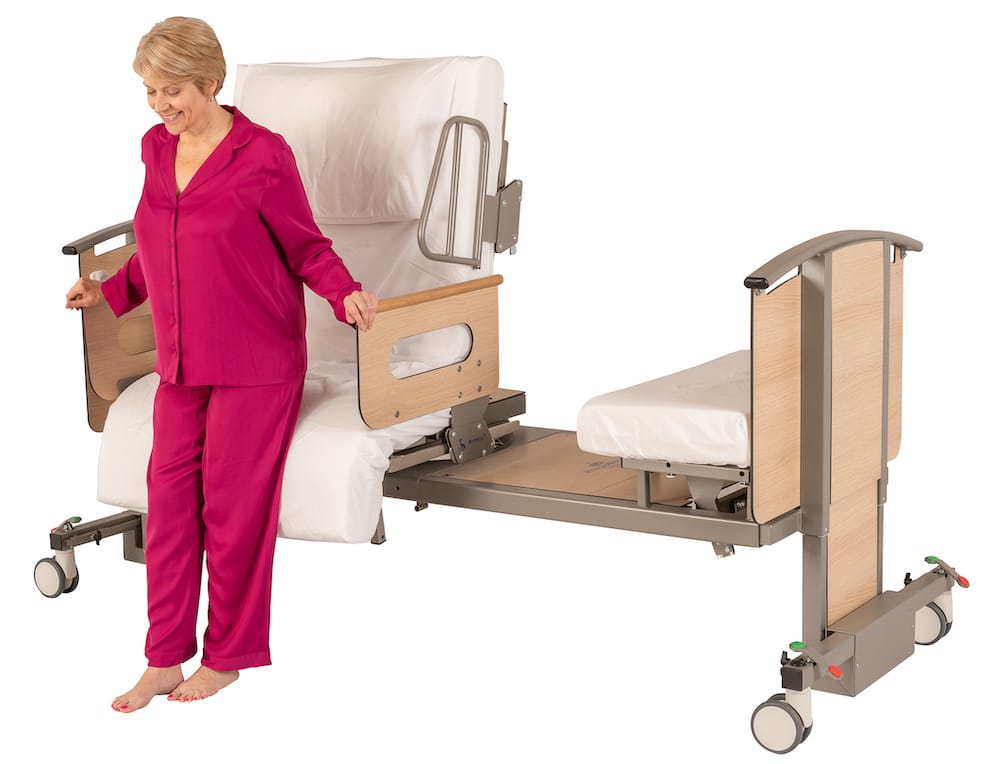
Getting in and out of bed is a common problem for individuals with a neurological condition. With risks from Covid-19 now an added challenge, the desire to achieve independent bed transfers without carers is even more important – made possible by the powered Rotoflex rotational bed range from Theraposture.

An award-winning solution
Theraposture has been a respected supplier of specialist adjustable beds, chairs, and care cots since 1981. It provides the largest selection of tailor-made turning beds for
By |2024-07-04T17:46:52+01:0018 September 2020|Tech & industry, News|

Why redefining who you are after a brain injury could be the most important aspect of recovery

By Rae Hughes, clinical psychologist and Pete Fleming, clinical tutor and consultant clinical neuropsychologist.

Adjusting to life after a brain injury involves coming to terms with, and adapting to, changes, which often span multiple areas of a person’s life, such as hobbies, employment, and interpersonal relationships. Understandably for many individuals, their life following a brain injury can look completely different to before.
By |2024-07-04T17:54:59+01:0018 September 2020|Opinion, Insight, News|

Stroke risk similar in Covid-19 and the flu, research finds

The Covid-19 pandemic has caused growing concern around the associated neurological risks, including stroke. Researchers set out to understand the short-term risk of stroke among patients hospitalised with the virus.

Ramin Zand and Vida Abedi, researchers from the Geisinger Health System and authors of the paper, told NR Times: “Since the emergence of the pandemic, several cases of cerebrovascular events were reported among patients with SARS-CoV-2 and highlighted in the news. However, these observations were based on small studies or limited observations and a large multinational study was needed to have a clear answer.”
By |2024-07-04T17:46:53+01:0017 September 2020|News|
Go to Top