Update: Spinal cord injury research
Research into spinal cord injury (SCI) has continues at pace, with several exciting new findings in recent months, summarised here.

Research into spinal cord injury (SCI) has continues at pace, with several exciting new findings in recent months, summarised here.
A run through the latest developments in concussion in sport research and protocols.
Lake District charity launches UK’s first COVID-19 compliant brain injury rehabilitation programme based on outdoor activities and social distancing.
COVID-19 has undoubtedly had a huge impact on court proceedings [...]
Despite the impact of COVID-19 across many sectors, Parkinson’s research continues at pace with studies across the world shining new light onto the disease, as NR Times reports.
Elysium Neurological, part of Elysium Healthcare, has announced opening of the Avalon Centre, a specialised neurobehavioural rehabilitation service for adults in Swindon.
Every patient seen by a Chroma is different. Each day is never the same. That’s certainly the case for Lucy, who suffered a stroke. She presented to A&E with dense left-sided weakness, aphasia and vomiting. CT scans revealed that she had suffered from a right intracerebral haemorrhage. Lucy was referred to Chroma for Neurologic Music Therapy to address poor breath support, reduced voice volume and monotonous voice quality.
Suffering a TBI can affect people in different ways. In some cases, the patient can be affected so severely that they are deemed to be in a vegetative state. This is the case for many patients referred to Chroma. Ahmed was admitted to the prolonged disorders of consciousness unit for assessment at a private London hospital and was deemed to be in a vegetative state. He was unable to track objects, localise sounds or recognise objects or familiar voices. This is an all too familiar case seen by therapists within Chroma and their work in the private healthcare sector.
The admissions team invest a lot of time in developing our contact base of social workers, solicitors, case managers and other professionals who can refer people to our homes. We accept people from across the whole country, so we’ve created a national network over several years. This is enabling us now to reach out to as many people as possible who may need our support. Richardson Care was established over 30 years ago and the provision for adults with acquired brain injury has increased significantly in the last seven years. It has taken some time to build up our network of contacts but our aim is to grow at a sustainable rate.
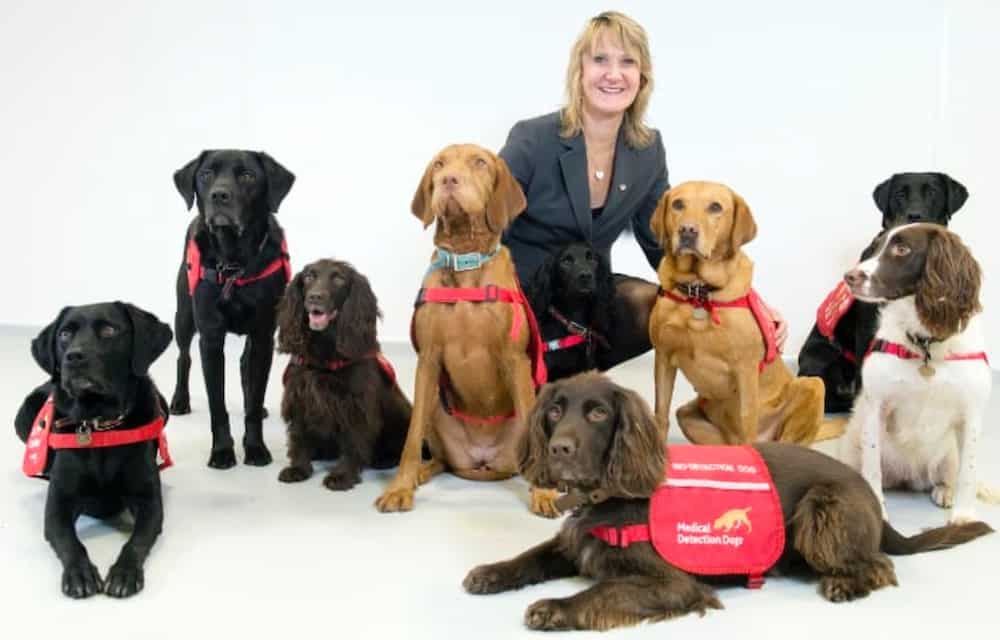
For several years, Medical Detection Dogs, based in Milton Keynes, has been harnessing the canine ability to detect disease in its earliest stages. As well as aiding diagnosis of a number of cancers and identifying malaria and pseudomonas, common bacteria that can cause infections, the dogs have also been trained to detect Parkinson’s – as we reported in 2018 here. And now trials to test whether the dogs can detect COVID-19 in humans, even before symptoms appear, are getting underway.
Other Aspect Health Media Titles


Copyright © 2025 Aspect Health Media Ltd