About Andrew Mernin

This author has not yet filled in any details.
So far Andrew Mernin has created 640 blog entries.

Meet the Moodmemo…

It has been widely acknowledged for many years that the arts can play an integral role in aiding brain injury recovery and in managing neurological conditions. Now brain injury survivor Byron Konizi is aiming to enhance their impact through a new concept called the 'Moodmemo', which is being pioneered by the London charity he founded, UDAV. Byron explains: “The ‘Moodmemo’ is essentially a memory of a mood that somebody has captured and recorded or materialised in an art form of some kind – be it music, film, poetry or art." Social distancing-permitting, Moodmemos will be utilised at UDAV's centre in Hackney to support its members, including those with brain injuries and conditions, in overcoming day-to-day challenges.

By |2024-07-04T17:47:04+01:0015 May 2020|News|

AI successfully used to identify different types of brain injuries

The researchers, from the University of Cambridge and Imperial College London, have clinically validated and tested the AI on large sets of CT scans, and found that it was successfully able to detect, segment, quantify and differentiate different types of brain lesions. The results could be useful in large-scale research studies, for developing more personalised treatments for head injuries and, with further validation, could be useful in certain clinical scenarios, such as those where radiological expertise is at a premium. Head injury is a huge public health burden around the world and affects up to 60 million people each year.

By |2024-07-04T17:47:04+01:0014 May 2020|News|

Help for prisoners with ABI during pandemic

The Disabilities Trust has created “Neurorehabilitation Intervention Packs” to address some of the cognitive, behavioural, emotional and psychological symptoms of brain injury. These in-cell intervention strategies can help to reduce the impact of isolation by providing activity and distraction. There are nine individual packs for problems such as anxiety, depression, memory, anger, impulsivity and fatigue. They will be distributed with HMP Cardiff and made available nationally to all prisons and other criminal justice settings. Each document contains a summary of the difficulty faced after brain injury and then interventions that the user can try to implement to reduce this.

By |2024-07-04T17:47:04+01:007 May 2020|News|

Stroke protocols for coronavirus published

The report, produced by the University of Cincinnati (UC), is timely as more data emerges that patients with COVID-19, even young, otherwise healthy patients, are experiencing strokes. The authors emphasise that diagnosis with COVID-19 should not prevent patients from receiving this time-sensitive treatment. Author on the report, Dr. Aaron Grossman, says: "Endovascular treatment for stroke involves the use of small catheters inserted from the groin or the arm into the blood vessels of the brain to remove a clot and restore blood flow to the brain. "Opening a brain artery can reverse the effects of the stroke, and for some patients, leads to a quicker recovery time. In this current climate, the treatment presents challenges that doctors never previously needed to consider."

By |2024-07-04T17:47:05+01:007 May 2020|News|

Newly approved Parkinson’s drug delayed by virus

Sarah Elsayed, pharma analyst at GlobalData, says: “While GlobalData expects that the market for new Parkinson’s disease (PD) products aimed at treating motor fluctuations holds great potential, it will be hard for most companies to meet their drug’s commercial launch expectations under these circumstances. “GlobalData forecasts that if the drug launches in late 2020, it will have a slow uptake in its first year, but is then expected to grow, reaching its peak global sales of US$303m in 2025. “Neurocrine’s decision to delay Ongentys’ launch is the appropriate move to alleviate COVID-19 consequences on its new drug’s uptake for a number of reasons.

By |2024-07-04T17:47:05+01:006 May 2020|Research, News|

Parkinson’s breakthrough raises prospect of dyskinesia treatment

Many people with Parkinson’s disease eventually develop debilitating movements called dyskinesia, a side effect of their much-needed dopamine replacement medication. The mechanism underlying this unwanted symptom has been unknown, until now. But an international collaboration led by US-based Scripps Research has found a key cause, and with it, potentially, a new route to providing relief. Dopamine replacement therapy makes Parkinson’s symptoms much better at first, but eventually treatment gives way to uncontrollable, jerky body movements.

By |2024-07-04T17:47:05+01:006 May 2020|News|

Protecting Parkinson’s voices in the crisis

The Parkinson Voice Project, a nonprofit speech therapy clinic headquartered in Texas, has moved to protect people living with Parkinson's everywhere from speech loss and life-threatening swallowing complications. It has been running Facebook LIVE "SPEAK OUT! Home Practice Sessions", Monday to Friday and awareness is spreading, with thousands of people getting involved. Ninety per cent of individuals with Parkinson's are likely to experience speech difficulty. If left untreated, the speech muscles become weaker, and the disease starts to affect the ability to swallow.

By |2024-07-04T17:47:05+01:006 May 2020|News|

Vital win for zebra crossing accident survivor

The individual was crossing the road when the driver failed to stop or spot them, sending the pedestrian careering forward before the vehicle accidentally ran over the person again as the driver attempted to stop. Winn Solicitors acted for the claimant and helped to co-oridnate their medical treatment. The client spent approximately six months in hospital after suffering a number of injuries. A physiotherapist, neuropsychologist and support workers were all arranged. Due to the severity of the brain injury sustained, a Court of Protection Deputy was also brought in to help the client manage their property and financial affairs.

By |2024-07-04T17:47:05+01:006 May 2020|News, Legal|

“The accuracy of the sniff test is remarkable”

The findings have raised the prospect of a simple and inexpensive ‘sniff test’ that could help doctors to accurately diagnose and determine treatment plans for patients with disorders of consciousness. As explained in the paper, our sense of smell is a very basic mechanism which relies on structures deep within the brain. The brain automatically changes the way we sniff in response to different smells - for example, when presented with an unpleasant smell we automatically take shorter, shallower breaths. In healthy humans the sniff-response happens in both waking and sleeping states of consciousness.

By |2024-07-04T17:47:05+01:006 May 2020|News|

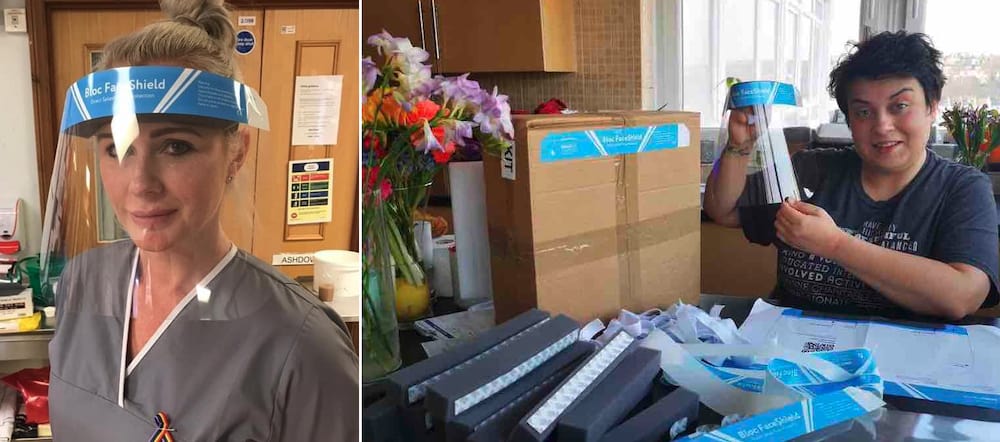
“NHS staff saved my life – I had to do something to help”

Demelza, 42, sustained a traumatic brain injury (TBI), among other multiple injuries, as a pedestrian in an horrific road accident in 2016 when she was hit by a car and it rolled over, crushing her. The first responder arrived on the scene within a minute of a 999 call to find her trapped beneath the vehicle, her heart already in cardiac arrest. It took three minutes for nearby residents to help retrieve her from under the car and then, reportedly, a further five to eight minutes to get her heart started again.

By |2026-02-11T11:48:38+00:006 May 2020|News, Commissioning|
Go to Top