About Andrew Mernin

This author has not yet filled in any details.
So far Andrew Mernin has created 640 blog entries.

State of the rehab nation

Deborah Backus is navigating rush hour traffic when she takes a cross-Atlantic call from NR Times. She’s understandably busy. The organisation she oversees is about to host the biggest rehab research event on the planet. But president of the American Congress of Rehabilitation Medicine (ACRM ) is just one hat she wears.
By |2024-07-04T17:59:19+01:0014 January 2020|Interviews, Insight, News|

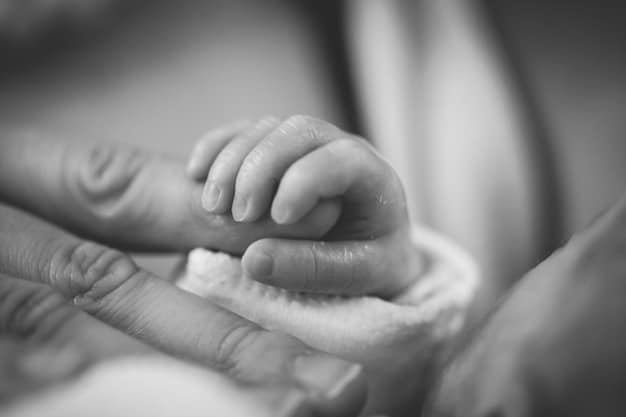
New treatment hope for baby injury cases

An estimated three out of every 1,000 newborns will suffer a brachial plexus injury during birth, damaging the bundle of nerves that connect the brain and spinal cord to the shoulders, arms and hands. In the most traumatic cases, even with surgery and physical therapy as an infant, there is no treatment that can guarantee a full recovery. However, a new study from the University of Notre Dame has identified a strategy that may support the regeneration of nerves affected by a brachial plexus injury. The findings show that there could be a new path forward for a full behavioral recovery. "Early on, our model showed that the nerve regeneration process after a brachial plexus injury differed from how these nerves connect the peripheral and central nervous systems during early development," said Cody Smith, the Elizabeth and Michael Gallagher Assistant Professor of Biological Sciences and co-author of the study.

By |2024-07-04T17:47:57+01:0012 January 2020|Research, News|

Summersaulting out of the comfort zone

We all know that taking exercise has both physical and mental health benefits. Staying active is easy for some, and not so easy for others. The current campaign run by the Chartered Society of Physiotherapy is “Love activity, Hate exercise”. Taking this principle we try to prompt and increase where possible, general activity for all our patients at our St Neots neurological service. For some this may be encouraging them to be more involved on the ward generally, in group activities or on outings. For the more physically able patients, we were looking for a fun way to engage and push them outside their comfort zone to see if this could potentially improve their function or mobility.rehab opportunities when they had a gold standard idea...

By |2024-07-04T17:47:58+01:0011 January 2020|Therapy, Insight|

Are you playing your part in the pursuit of vital research?

The British Association of Brain Injury and Complex Case Managers (BABICM) research group is encouraging all case managers to make the leap back into research. Engaging in research and staying up to date in evidence-based practice is fundamental to BABICM’s competency framework, which is required for effective practice for all case managers. This ensures case managers continue to enhance service user’s outcomes and experiences.

By |2024-07-04T17:47:58+01:009 January 2020|Research|

World first as artificial neurons developed to cure chronic diseases

Artificial neurons on silicon chips that behave just like the real thing have been invented by scientists – a first-of-its-kind achievement with enormous scope for medical devices to cure chronic diseases, such as heart failure, Alzheimer’s, and other diseases of neuronal degeneration. Critically the artificial neurons not only behave just like biological neurons but only need one billionth the power of a microprocessor, making them ideally suited for use in medical implants and other bio-electronic devices. The research team, led by the University of Bath and including researchers from the Universities of Bristol, Zurich and Auckland, describe the artificial neurons in a study published in Nature Communications.

By |2024-07-04T17:47:58+01:008 January 2020|News|

“I am able to enjoy every day”

  https://www.youtube.com/watch?v=3-GiDOXvU-c Cambridgeshire dad Jason was on holiday in Portugal in 2012 when his life changed forever. A car hit him during an early morning bike ride, breaking his back, legs and ribs and severing his spine. Jason, from Littleport, received treatment for three weeks in Lisbon, before being moved to Cambridge. He then spent a further three months at Northern General Hospital in Sheffield. Here specialists gave him the devastating news that he would never walk again. Jason and his family contacted Irwin Mitchell’s specialist serious injury solicitors about making a claim to help fund his ongoing care needs.

By |2024-07-04T17:55:02+01:0023 December 2019|Legal, Opinion, Insight|

Football and the brain research breakthrough

The inquest of former footballer Jeff Astle in 2002 famously concluded that his death following dementia was a result of industrial disease caused by heading footballs. Since then various studies have provided further evidence of such links but nothing as comprehensive as the University of Glasgow’s recent effort. The research, published in October, has produced one of the first pieces of truly credible evidence to contribute to this subject. Since then various studies have provided further evidence of such links but nothing as comprehensive as the University of Glasgow’s recent effort. The research, published in October, has produced one of the first pieces of truly credible evidence to contribute to this subject. The FIELD (Football’s Influence on Lifelong Health and Dementia Risk) study analysed the medical records of over 7,000 former professional male footballers in Scotland from 1900 to 1976 and compared them against those of the general population.

By |2024-07-04T17:47:59+01:0012 December 2019|Research|

Biting back against a common threat

Dysphagia is an all-too common adversary of neuro-rehab patients, and the professionals who care for them. Some studies suggest the swallowing disorder is experienced in as many as 93 per cent of people admitted to brain injury rehab centres (Hansel et al, 2008). It will affect around one in two stroke survivors, according to the Stroke Association, and roughly at least a third of people with MS. Meanwhile, over 80 per cent of people with Parkinson’s may be affected (Suttrup et al, 2016).

By |2024-07-04T17:55:02+01:0018 November 2019|Opinion, Insight|

Court in the wheels of progress

The Court of Protection (CoP) makes decisions on financial and welfare matters for people lacking mental capacity. It was created under the Mental Capacity Act 2005 and has a range of responsibilities, including deciding whether an individual has mental capacity, and appointing deputies to make decisions for people who lack it. Deputies may be a friend or relative of the individual, or a professional such as a solicitor or accountant appointed by the court. The CoP can significantly influence the work of professionals with clients with brain injuries and neurological conditions.

By |2024-07-04T17:47:59+01:0018 November 2019|Legal|

Winging it in the rehab world

“Trust in God and you will be alright,” read a sign that greeted Professor Barbara Wilson on a recent trip to a Nigerian hospital. This was an instant reminder to the neuropsychologist of how attitudes towards healthcare are so varied around the world. She was there to share her experience gained from more than 40 years in the brain injury rehabilitation field. Joining her were fellow eminent professors Wayne Feng and David Good from the US and Caterina Pistarini of Italy. The trip, last December, was the latest stop of the globe-trotting initiative, the Flying Faculty. The scheme is run by the World Federation for Neuro-rehabilitation (WFNR) and delivers expert training programmes in neuro-rehab across the world.

By |2024-07-04T17:47:59+01:0015 November 2019|Insight|
Go to Top