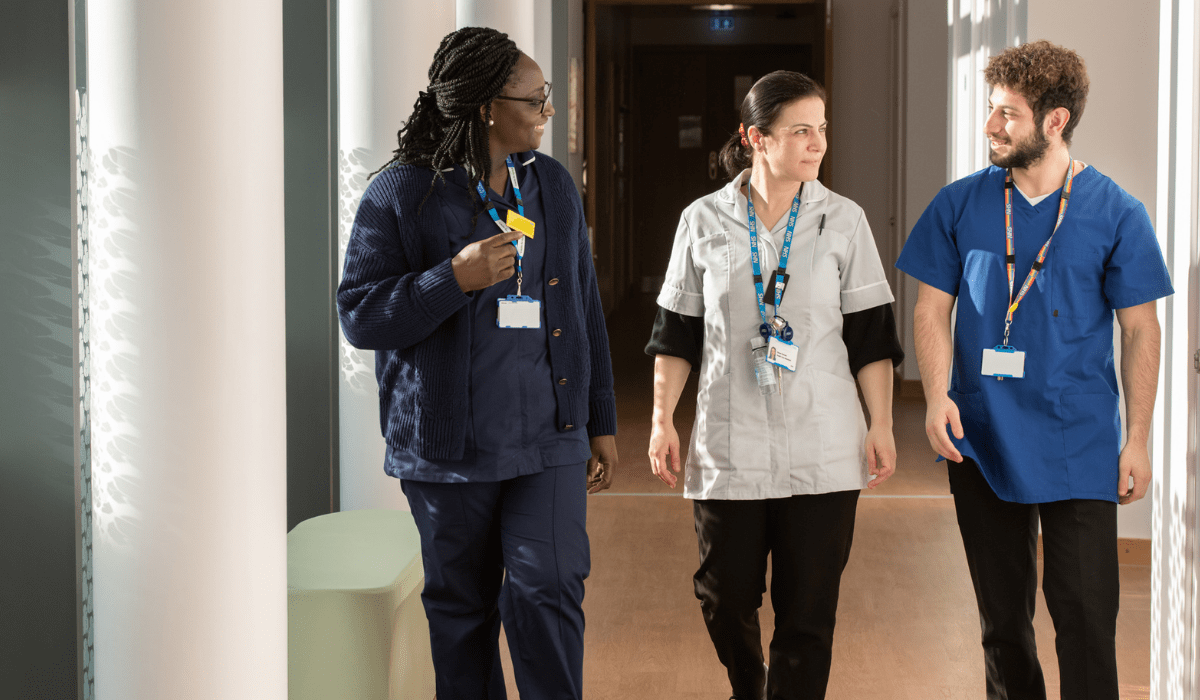

NHS hospitals in North Midlands remember colleagues lost to COVID with memory trees
Reflective gardens and ‘memory trees’ installed at hospitals in the North Midlands to mark the death of colleagues and loved ones during COVID.
The tree contains the names of those who have died in the past year. The reflective gardens will offer staff at Royal Stoke University Hospital in Stoke-on-Trent, and County Hospital in Stafford, a place to spend their breaks in quiet contemplation. Five staff members have passed away due to COVID-19 and their names have been engraved on the commemorative trees.
Could our driving help to diagnose Alzheimer’s Disease?
Researchers have combined Global Positioning System-based (GPS) with AI to detect early-onset Alzheimer’s in drivers, revealing a high level of accuracy in diagnosis.
The DRIVES Study at Washington University in St. Louis, led by Catherine Roe and Ganesh Babulal and funded by the National Institute on Aging. They proposed that those who had been diagnosed would make different decisions when driving in comparison to those without the disease. Alzheimer drivers may drive for shorter periods of time, stick to commonly used routes, travel less at night and make abrupt changes to their driving. AI has the advantage of being able to read from large amounts of cases and diagnoses without bias or judgement. It is thought that this could lead to more correct diagnosis.
Footballers’ position and length of career could increase dementia risk – study
A landmark study on footballers from the University of Glasgow revealed that goalkeepers only suffer dementia as much as the general public but defenders are five times more likely to be diagnosed.
The research analysed the health records of around 8000 former professional footballers in Scotland. It found that outfield players were almost four times as likely as ordinary members of the public. It also discovered that defenders develop dementia later in life at a rate of five times the general public.
The results did not vary depending on the era that the footballers played in. The study included data on players who played in 1930 all the way to the 1990s. This shows there has been no change to the risk of neurodegenerative disease despite changes to technology and head injury management over decades.