About Opinion Editor

This author has not yet filled in any details.
So far Opinion Editor has created 178 blog entries.

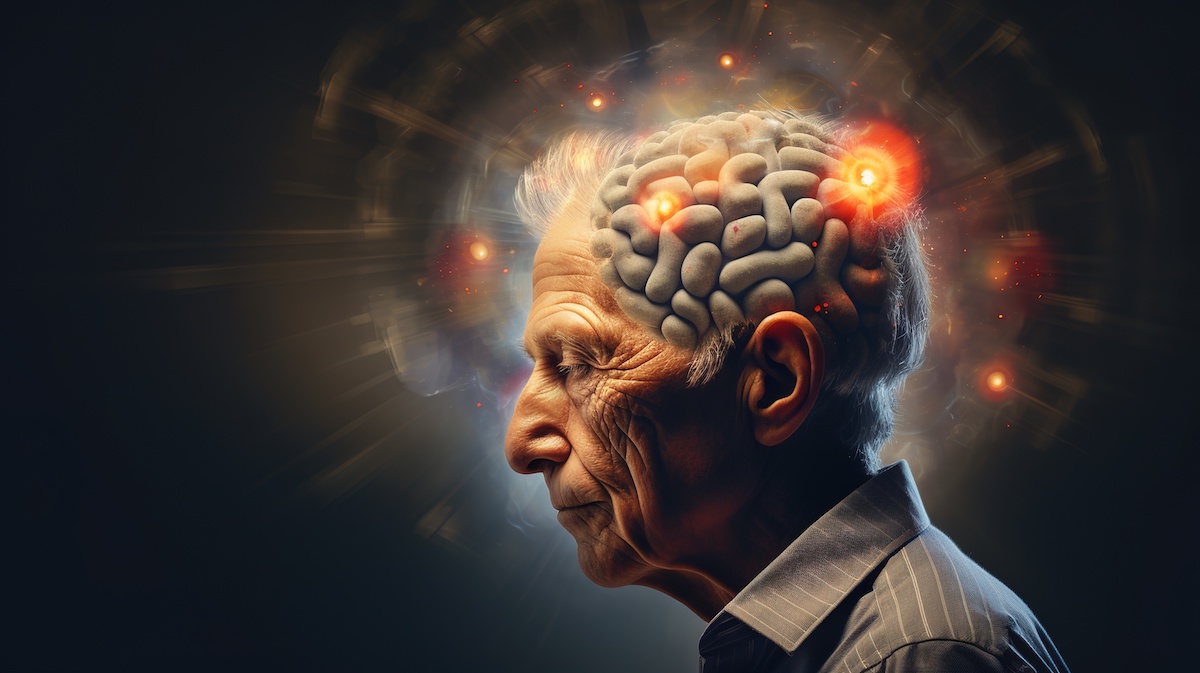
Why pursuit of meaningful Alzheimer’s therapies is gathering pace

In World Alzheimer’s Month, expert Peter Schüler reflects on the potential implications of new Alzheimer’s therapies on the research landscape.

World Alzheimer’s Month offers an opportunity to reflect on the progress made in the search of effective treatments for this enormously burdensome disease and align our visions for the future. This year, there is much progress to consider as we expect two further medicines, donanemab and lecanemab, to come to market. These drugs offer more treatment alternatives to aducanumab as disease-modifying (DM) treatments in addition to the long-existing symptomatic therapies. In addition to slowing the progression of the disease by 25-35% per year, the successful developments of these drugs provided some additionally encouraging results – namely that the countless disappointments in the past 20 years have led to valuable lessons learned which, in turn, helped to refine the methodologies for Alzheimer’s Disease (AD) drug development.
By |2024-07-04T17:29:07+01:006 September 2023|News, Dementia|

NR entrepreneur: “We never set out to ‘crack the NHS’, we set out to help people. Start with that”

Entrepreneur Ian Pearce shares the lessons he learned on the journey to establishing his innovation, Neuro ProActive, within the NHS. 

My journey for the last six years has been interesting. After my father had a stroke, I experienced a lot of the frustrations that hundreds of thousands of people do each year. It seemed to me that while many of these challenges needed basic solutions, those challenges were numerous and long standing. In late 2017, while having a shower, I started to think about a single digital platform which would be all encompassing for NHS and private practice clinicians, as well as patients and family members. Most of my best ideas happen in the bathroom. It’s the only place where men can multi-task and escape young children. For any potential supplier to want to “crack” the NHS, I’d make two points. Firstly, this is the wrong mindset. The NHS doesn’t want to be “cracked”. Secondly, it’s a huge mistake to see the NHS as one organisation. It’s also important to appreciate that the views in this article are my own, based on my experiences over a five-year period.
By |2026-02-11T11:47:51+00:0015 August 2023|Commissioning, Opinion, Insight, News, Brain injury, Leadership|

Recognising the role of the support worker

While support workers play a key role in care and rehab provision, do they really have the profile and recognition they deserve? Lucy Fallon, co-founder of Ariya Neuro Care, discusses how to build a culture that properly appreciates these professionals and enables them to thrive In a multi-disciplinary team, we all have our role to play. To ensure we deliver the person-centred care we aspire to, a quality partnership must be built so everyone can work together for the good of the client. Within this team is the valuable and actually quite vital role of the support workers. The ones who tie together the rehabilitation, who are the ‘ever presents’ on the ground delivering the round-the-clock care, and really being at the forefront of the whole team effort. But often, the role of the support worker is not valued as it should be. While they are playing a key role in the MDT, their contribution can be seen as ‘less important’ than others. This is not new, and is something that persists - but is something that can be damaging to the support worker, their ability to do their job, to the work of the whole team, and to the rehab a client receives.

By |2024-07-04T17:29:08+01:0020 July 2023|News|

NR Notes: Physical therapy in hemiplegia

Physiotherapist Harpreet Kaur provides a useful summary of physical therapy interventions for hemiplegia.

Hemiplegia is a condition that involves paralysis or weakness of one side of the body due to damage to the brain or spinal cord. Rehabilitation is an integral part of treatment for hemiplegia. The focus is to help the affected individual regain as much movement and independence as possible through various therapeutic interventions. Rehabilitation for hemiplegia is typically tailored to the individual's specific needs and goals. It may involve a combination of different therapies to achieve the best possible outcome. The following are the common approaches used in hemiplegia rehabilitation:
By |2024-07-04T17:54:55+01:0027 April 2023|Therapy, Opinion, Insight, News|

Behavioural changes after brain injury or stroke – expert guide

Clinical neuropsychologist Dr Lynn A Schaefer provides NR Times readers with an in-depth summary of post-brain injury and stroke behavioural changes.

When I speak to groups about the neuropsychiatric sequelae of brain injury, I always start with the story of Phineas Gage. In the field of neurorehabilitation, the tale of Phineas Gage is both compelling and memorable.  Phineas Gage was a railroad foreman, blasting rock to lay track in the 19th century in Vermont, US. As the story goes, the tamping rod he was using to pack dynamite into the rock was blown through his left cheek when the dynamite exploded prematurely. The rod took out his left eye and exited through the top of his skull. Gage miraculously survived but thereafter was reportedly “no longer Gage.” His behaviour and personality were profoundly changed, although he was able to walk and his memory was unaffected. Read this article in full for an in-depth summary of the wide range of post-brain injury and stroke behavioural changes.
By |2025-07-18T13:35:32+01:0017 April 2023|News, Stroke, Brain injury|

A new era of discovery for Parkinson’s Disease

Alessio Travaglia, director of neuroscience at the Foundation for the National Institutes of Health (FNIH), on the outlook for new Parkinson's treatments.

Parkinson's disease (PD) is a neurological disorder that affects a person's ability to move. When certain cells in the brain start to die, the process causes a decrease in a chemical called dopamine. As a result, individuals with Parkinson's disease may experience difficulty with everyday activities, such as walking, talking and writing, along with common symptoms, like tremors, stiffness, slowness of movement and difficulty with balance. Unfortunately, there is no cure for Parkinson's disease, and the number of patients is rising. The number of Parkinson’s patients is expected to increase to 1.2 million in the U.S. alone by 2030, posing a growing threat to public health. The disease costs the US$52 billion per year in direct and indirect costs. Although the hallmarks of Parkinson's disease are well known, and there are several genetic, epigenetic, and environmental factors associated with PD, the underlying causes are still unknown. Breakthroughs are needed to improve treatment and quality of life for patients, but no disease-modifying drugs have been approved for Parkinson's disease despite extensive research. Drug discovery is a complex and time-consuming process involving the identification of new compounds that can be used to treat a particular disease. Read on to find out how the Accelerating Medicines Partnership Program Parkinson’s Disease (AMP PD) is working to advance PD drug discovery.
By |2024-07-04T17:54:55+01:0013 April 2023|Opinion, Insight, News|

Comment: “Don’t let fear of false hope kill overachievement in neuro-rehab”

By Dr Robert Masson, neurosurgeon and co-founder of medical AI company Expanded Existence.

There are several aspects to neurological rehabilitation after traumatic brain injury, severe brain illness, brain tumour management and spinal cord injury. They all are profoundly different and yet there is a core value which is common to all. The bottom line is optimism and hope for best possible scenario is critical to the best recovery.
By |2024-07-04T17:54:55+01:006 April 2023|News, Opinion, Insight|

How client-centred science uncovers the complexity of post-injury sleep

By Professor John A Groeger and Kate Bosak of Nottingham Trent University's Sleep Well Science project.

Sleep responds systematically to gradual biological changes that see us develop from being children into adolescents, from women who might give birth to no longer ovulating, and as we approach and hopefully enjoy old age. We conceptualise these changes in our capacity to have restorative sleep as the waxing, waning, and interplay of two pervasive influences - circadian fluctuation and the build-up and release of sleep pressure. Abrupt challenges to either process, such as losing a night’s sleep or intercontinental travel, immediately bring home the easy dependence we typically have on these continuous influences on our lives.  For most of us, these challenges are either temporary, which allows us to re-adjust, or gradual, which allows a more easily paced adaptation of life’s demands, lifestyles and the sleep which enables recovery and change. This is not the case for those who encounter events which result in major trauma- which NICE defines as “an injury or combination of injuries that are life-threatening and could be life changing because it may result in long-term disability”.  What we may not realise is that the profile of those living after major injury has changed very dramatically over the last couple of decades.
By |2024-07-04T17:54:55+01:0016 March 2023|Research, Opinion, Insight, News|

Stemming the tide – regenerative medicine’s growing influence in TBI approach

Traumatic brain injury (TBI) is a leading cause of ongoing disability worldwide. It occurs when an external forces traumatically injure the brain, leading to structural damage, related functional changes, and neurological deficits.

The severity of TBI can range from mild, moderate, to severe, with symptoms ranging from headaches, dizziness, and confusion to seizures, paralysis, and coma. But let’s be clear, even a “mild” traumatic brain injury can be associated with disabling symptoms. Unfortunately, there has been no cure for TBI, and the available treatments focus on supportive care and symptom management. It was traditionally taught that there may be improvements for 12-18 months after brain injury through various types of retraining and therapy, through a process called “plasticity,” where under-used parts of the brain can take up duties of injured parts.  However, recent advances in regenerative medicine have sparked excitement in the use of exosomes and stem cells as a potential assistive approach to address the lingering and previously considered permanent effects of TBI.
By |2024-07-04T17:33:56+01:0014 March 2023|News, Research|
Go to Top