About Sarah Sinclair

This author has not yet filled in any details.
So far Sarah Sinclair has created 156 blog entries.

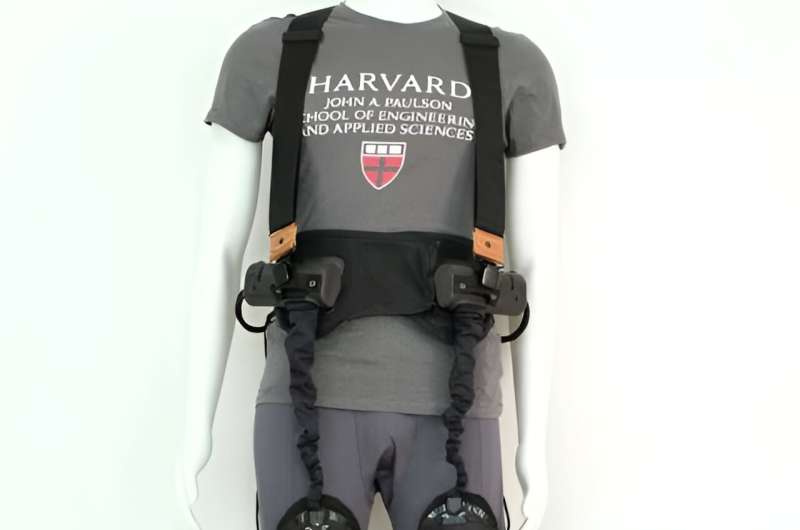
The wearable robot taking on Parkinson’s ‘freeze’ threat

Researchers have developed a soft, wearable robot to help people with Parkinson’s walk without the threat of freezing.

When individuals with Parkinson’s disease freeze, they suddenly lose the ability to move their feet, often mid-stride, resulting in a series of staccato stutter steps that get shorter until the person stops altogether. These episodes are one of the biggest contributors to falls among people living with Parkinson’s disease. Today, freezing is treated with a range of pharmacological, surgical or behavioural therapies, none of which are particularly effective. Researchers from the Harvard John A. Paulson School of Engineering and Applied Sciences (SEAS) and the Boston University Sargent College of Health & Rehabilitation Sciences have used a soft, wearable robot to help a person living with Parkinson’s walk without freezing.
By |2024-07-04T17:28:54+01:008 January 2024|Parkinson's|

Project aims for life-changing intervention for people with SCI

A new research project is aiming to make a groundbreaking contribution to the development of treatments for people with paralysis caused by spinal cord injury.

A coalition of charities, hospital and university researchers is working together on the potentially life-changing ImPRESS project at the London Spinal Injuries Centre (LSIC). The study will investigate whether spinal cord stimulation technology can help recover bowel function.
By |2024-07-04T17:28:55+01:008 January 2024|Uncategorised|

Search for progressive MS treatments stepped up

An international project aimed at finding new treatments for progressive MS within the next 5 years has been announced. In progressive MS, mitochondria – the energy-producing powerhouses in cells including nerves – don’t function properly. This means nerves don’t get the energy they need and they die. The loss of these vulnerable nerves leads to permanent disability in progressive MS. A team involving the University of Edinburgh and researchers Cleveland, US will use mice to explore what happens to mitochondria and their energy production in nerve fibres and nerve cells in MS.

By |2025-10-24T07:32:19+01:004 January 2024|Multiple sclerosis|

Could harnessing the body’s own cells yield new TBI treatment?

An emerging potential traumatic brain injury (TBI) treatment has been shown in a study of pigs to shrink brain lesions by 56 per cent and significantly reduced local inflammation levels.

The approach uses macrophages, a type of white blood cell that can dial inflammation up or down in the body in response to infection and injury.
By |2024-07-04T17:28:55+01:004 January 2024|Uncategorised|
Go to Top