Brain implant paves way for more personalised Parkinson’s therapies
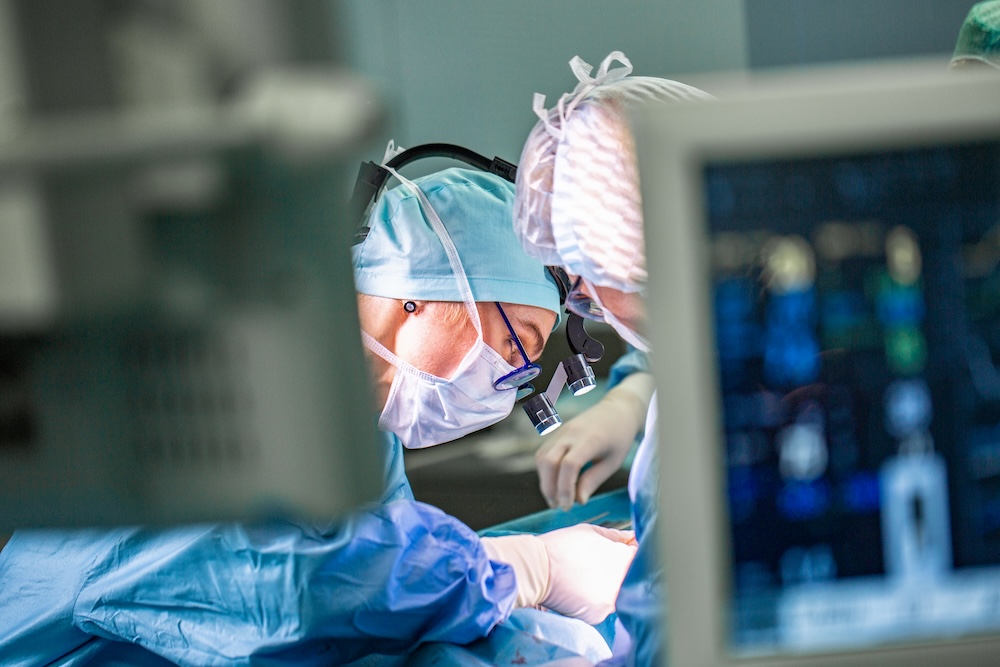
A brain implant detected walking in people with Parkinson’s at home with more than 95 per cent accuracy, a study has found.
Researchers said the findings could help pave the way for more personalised and responsive therapies for Parkinson’s, which is caused by the loss of nerve cells that produce dopamine, a chemical involved in movement.
Doris Wang, a neurosurgeon and associate professor of neurological surgery at the university and senior author of the study, said: “This is the first demonstration that a fully implanted device can be used to detect a specific movement state in humans during real-world activity.
“Our findings show that it is possible to identify meaningful neural signals outside the laboratory, which is an important step toward more personalised and responsive neuromodulation therapies.”

People with Parkinson’s often experience walking problems, including short, shuffling steps, difficulty starting to move and instability when turning.
These issues can fluctuate through the day and may not respond to deep brain stimulation, a surgical treatment that uses implanted electrodes to send continuous stimulation to targeted brain areas and help ease symptoms.
Researchers at the University of California, San Francisco used an implantable bidirectional neurostimulator that could send electrical activity to the brain and record neural signals from two movement-related regions, the motor cortex and the globus pallidus. It was synchronised with wearable sensors to measure motion.
Four participants with Parkinson’s, two men and two women, were included in the study. All were undergoing evaluation for deep brain stimulation.
Two received implants in the left side of the brain, while the other two received implants in both sides. During the study, participants received conventional stimulation therapy.
Synchronised neural and movement data, including gait, posture, speed and movement variations, were collected during more than 80 hours of natural, at-home daily activity.
The data were analysed using machine learning, a form of artificial intelligence that spots patterns, allowing researchers to identify brain activity associated with walking.
The system was able to distinguish walking from non-walking using neural signals alone, with accuracy above 95 per cent.
The patterns varied across individuals, but the system had sensitivity above 94 per cent for correctly identifying those who were walking, and a similar specificity for identifying those who were not.
Wang said: “We identified personalised neural biomarkers associated with gait and demonstrated that these signals can be used for real-time movement state classification within the constraints of an implanted device.
“This establishes a framework for future adaptive DBS systems that could adjust stimulation in response to a patient’s activity state.”
The researchers said the study was small and designed to evaluate the system’s feasibility rather than its clinical efficacy.
The team is now planning trials to assess whether stimulation settings optimised for walking can be dynamically applied using the identified patterns of brain activity.
The researchers wrote: “The insights gained from naturalistic data collection will advance therapy for [Parkinson’s] and [have] the potential to accelerate [brain-computer interfaces] across a multitude of debilitating conditions.”