


Brain injury
‘I lost my sense of smell through brain injury – I’m grateful COVID has shone a light on its impact’
Having been in a near-fatal car accident, Sally Smith has recovered physically, but a brain injury resulted in the permanent loss of smell. Here, she discusses how the once-tricky subject has now become much more accessible through its association with COVID-19.
I used to love the smell of Christmas. I honestly think that was my favourite part. The mulled wine, the spicy fragrances, the turkey dinner cooking - that really made Christmas for me.
The UK Acquired Brain Injury Forum (UKABIF) recently hosted a two-day virtual summit exploring the issues faced by the neuro-rehab community. The conference brought together academics, politicians and practitioners to discuss topics such as brain injury in sport, domestic abuse, training and education.
Two years after the launch of the All-Party Parliamentary Group (APPG) on Acquired Brain Injury's report, ‘Time for Change’, UKABIF hosted a virtual conference to update on the group’s progress since. The two-part ‘Time for Change’ summit took place online in November.
Around 200 delegates were welcomed to the virtual event which featured speakers from the USA’s National Institutes of Health, The Walton Centre in Liverpool, St George’s Hospital in London, University College London and the Defence and National Rehabilitation Centre.
A team of New Jersey researchers have shown that gait training using robotic exoskeletons can improve motor function in adolescents and young adults with acquired brain injury.
Behind the study are Drs Kiran Karunakaran, Naphtaly Ehrenberg and Karen Nolan from the Center for Mobility and Rehabilitation Engineering Research at Kessler Foundation, and JenFu Cheng and Katherine Bentley from Children’s Specialized Hospital. Drs. Karunakaran, Nolan, Cheng, and Bentley are also affiliated with the Department of Physical Medicine and Rehabilitation at Rutgers New Jersey Medical School.
A “wind of change” in personal injury litigation is enabling the traditional way specialist claims into brain injuries and other major cases are handled to be revolutionised, new research has revealed.
The COVID-19 pandemic has forced major change in the way claims are handled, with much of it being done remotely out of necessity amidst ongoing restrictions on travel and meetings. However, new research has revealed that as a result of this, litigation has become more efficient, with remote case management conferences, joint settlement meetings and low value trials all set to become the ‘new normal’ post pandemic.
Fruit flies have helped researchers in the US better understand the impact of small brain injuries on the nervous system.
Scientists from Oregon Health & Science University (OHSU) used the flies to examine how damage to a small amount of neurons can cause a chain reaction across the brain, stopping activity in neurons that were uninjured.
The creator of the world’s first smartphone-operated pedestrian crossing has now devised the means to revolutionise the customer service experience for people with disabilities through the launch of a new app.
Gavin Neate has created WelcoMe, which enables people to contact businesses in advance of their visits to alert them to their visit and any special requirements they may have. The app also provides businesses with information about the person’s disability or condition, enabling them to be fully prepared to welcome them and deliver the best possible customer service.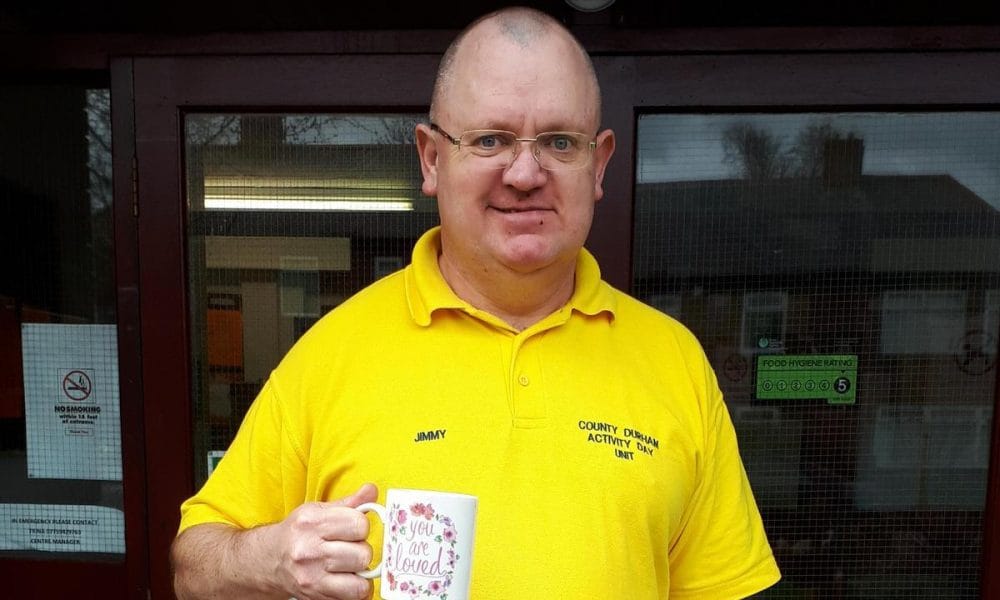
NeuroActiveUK was established after the lack of specialist support became clear when Jimmy Gustard was diagnosed with a brain tumour. Founder Debra Mitchell discusses how the charity is providing vital services to brain injury survivors, and how its work is being done as an ongoing tribute to its inspiration. A charity and community service established [...]

Researchers have made advances in studying how the brain re-wires itself in neurological disease, which could yield breakthroughs in rehabilitation and therapy as a result.
Previously, scientific knowledge has revealed that the polio virus affects the spinal cord, but not the brain. However, a team from Trinity College Dublin has now discovered previously unknown changes also occurring in the brain networks. The findings suggest, say the team, that brain networks engage in an abnormal but active communication with muscles in patient groups studied.
Signs of traumatic brain injury, dementia and schizophrenia could be detected at an earlier stage as a result of the development of a new sensor which measures weak magnetic signals in the brain.
Through the development of the new Optically Pumped Magnetometer (OPM) sensor, scientists are hopeful of enabling a greater understanding of connectivity in the brain, which could have significant benefits in the chances of early diagnosis.

In the hours and days after a traumatic brain injury, inflammation inside the brain can accelerate to the point that more brain damage occurs, says a scientist working to better understand the acceleration and whether interventions like cannabinoids can improve patient outcomes.
While some TBI patients do well, most would benefit from therapy to create a better balance between the vigorous inflammation needed in the immediate injury aftermath to clean up the site and the deceleration needed to complete healing and avoid more brain damage, says Dr. Kumar Vaibhav, translational neuroscientist in the Department of Neurosurgery at the Medical College of Georgia. "You cannot suppress the entire pro-inflammatory process otherwise it would be difficult to recover from your injury," Vaibhav says. But in this case, there is too much inflammation, a major factor in the reality that one-third of hospitalized patients with a TBI die from damage that continues after their acute injury.


