Care & services
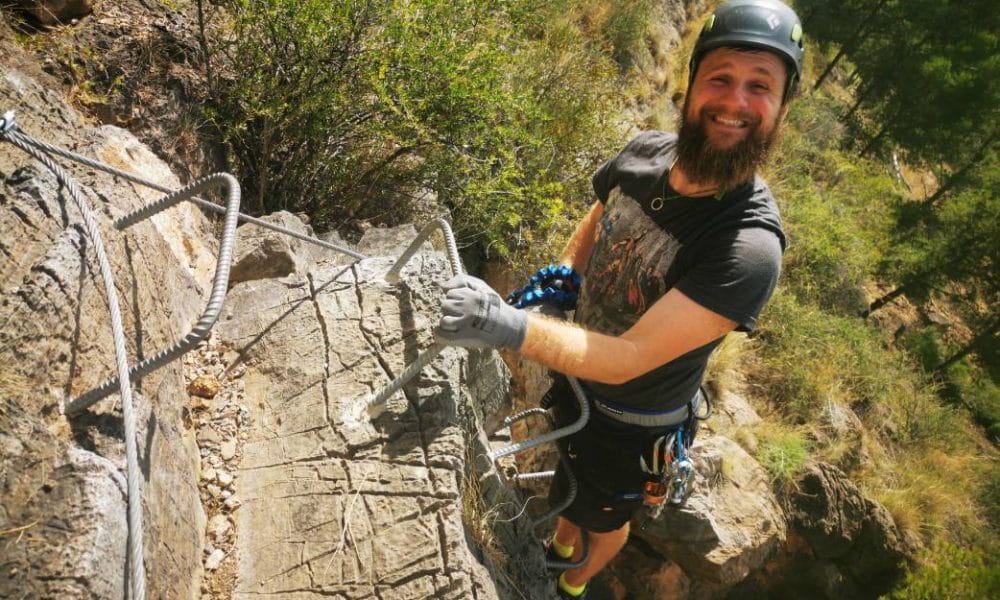
A stroke survivor is drawing on his own personal experience to help others recover from life-changing injuries at the UK’s first brain injury rehabilitation centre focusing on outdoor activities.

The offering for service users at a Recovery College is being expanded after a successful first year in operation. Heatherwood Court, a low security hospital offering treatment and rehabilitation for men and women on a forensic mental health pathway, launched its Recovery College in 2020. The Recovery College offers service users a broad range of courses encouraging them to develop new skills to aid them in their recovery and to help with their return to the community. The college is co-managed by service users themselves, giving them an active role to play in its production and delivery, putting them at the heart of its success. Becoming firmly established within its first 12 months, the team at Heatherwood Court - located near Cardiff and owned and managed by specialist healthcare provider, Ludlow Street Healthcare - have now developed a new prospectus with a wider course offering to reflect the requirements of service users.

There are many things to consider when finding the right home for someone living with dementia. It needs to be the right choice for both the individual and their close family and friends. Things such as one-to-one support, specialist requirements and staffing should be taken into consideration, as well as the overall environment in which the person will be living. Many specialist buildings, like care homes, are now being designed with dementia in mind, but even spaces that are not purpose built can be adapted to better the lives of those living with dementia. Considerations can include anything from new technologies and innovations to simple tweaks like rearranging furniture or adjusting colours and lighting. There are many symptoms of dementia that can make completing everyday tasks confusing or frightening for those living with it. Designing a space that is dementia-friendly helps those living with dementia to maintain their independence for as long as possible, reduces stress and anxiety and significantly improves day-to-day mental wellbeing.
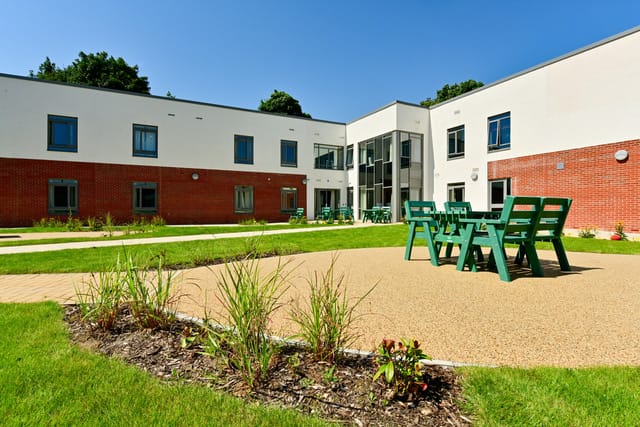
As an established healthcare provider, Cygnet Health Care has more recently moved into neurorehabilitation and continues to build its presence in the area. NR Times finds out more Introducing Cygnet Health Care into the Neurological Rehabilitation sector has been an exciting journey over the last 3 years. Cygnet Health Care has long been recognised as offering a wide range of services for individuals experiencing a variety of mental health conditions. However what has not been so widely known is that since 2012 Cygnet has also offered a clinically led evidence based neuropsychiatric rehabilitation pathway provided by dedicated and experienced interdisciplinary teams. Cygnet offers those individuals presenting with behaviours that challenge as a result of an Acquired Brain Injury a safe place to aid recovery, in addition to offering a caring and supportive placement to help manage the progression of the more behaviourally challenging symptoms which some Neurodegenerative conditions can cause. Quietly establishing a number of sites across the country, Cygnet Health Care Neuropsychiatry services have provided a vital role within the neurorehabilitation pathway nationally. Originally under the name of Cambian, the first eight bedded service was launched on the outskirts of Nottingham to great success. Its sister service the Grange opened a couple of years later providing a further 8 beds in the locality.
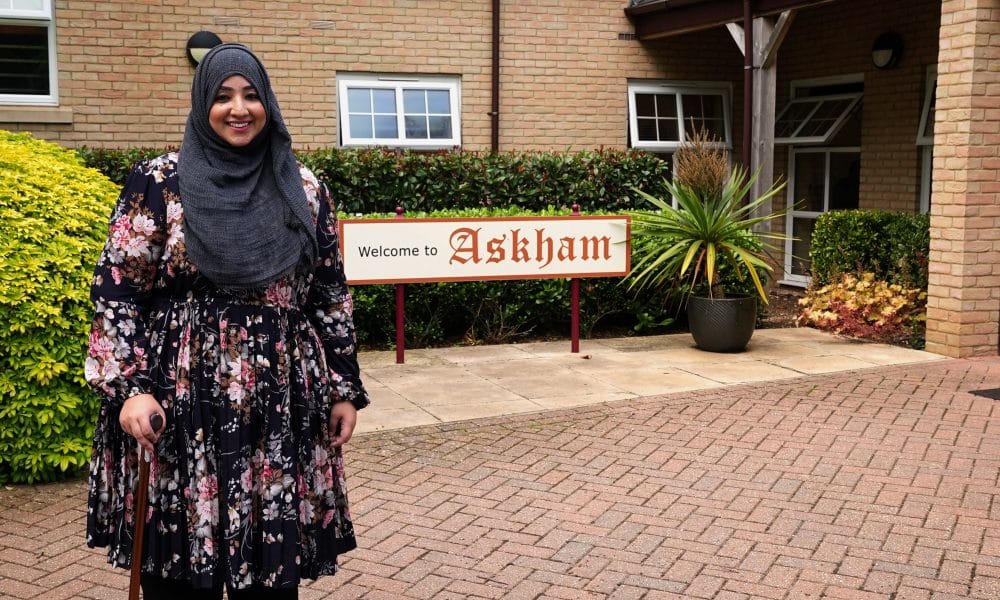
A mother who gave birth hours before falling into an induced coma for six weeks - after her oxygen levels dropped to dangerously low levels due to COVID-19 - is cradling her newborn son once again after specialist neurorehab therapy enabled her recovery. Hajrah Aslam caught Coronavirus in January 2021 when she was 35 weeks [...]

Neuro-physio provider Neurocare Physiotherapy, based north west England, is now part of complex case management and rehabilitation specialist A Chance for Life Ltd. For almost two decades, Neurocare Physiotherapy has treated patients across the North West for neurological conditions such as stroke, MS, Parkinson’s, foot drop, head injury and other disorders.

Outdoor activities are being included in the rehabilitation plans for clients with brain injuries by the vast majority of insurers and defence solicitors, it has been revealed.
The newly-opened neurorehabilitation centre Calvert Reconnections polled 112 defence solicitors during June and July 2021, with 81 per cent saying they include outdoor activities in their rehabilitation plans. In further findings, 82 per cent said that funders and referrers face a lack of choice in relation to brain injury rehabilitation options, while 88 per cent highlighted a specific shortage in residential-based programmes.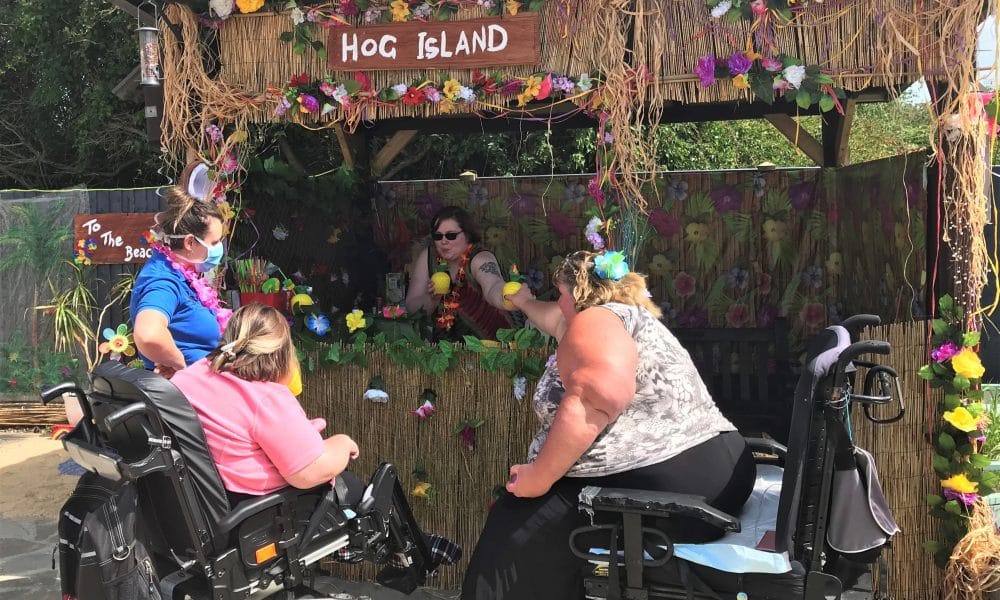
Residents of an Essex care home have been able to enjoy the beach in spite of ongoing restrictions after it was brought to them.
While a trip to the local beach was not possible, Mid-Meadows created an island paradise of their very own in the garden of their Frinton-on-Sea site.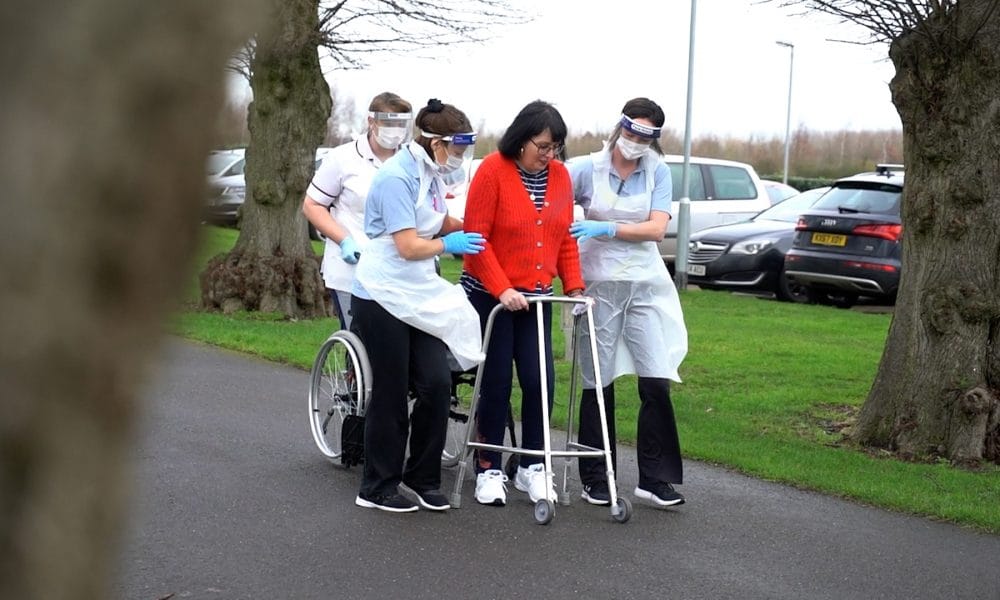
When Hayley Trotman walked out of Askham Rehab into her husband’s arms, having been able to move only a couple of her fingers four months earlier after being struck by Guillem-Barre Syndrome (GBS), her recovery marked a huge achievement.
As well as the remarkable progress made by Hayley, who had exceeded all expectations for her progress in that timeframe, her journey also showed what can be possible with specialist rehabilitation, even during the COVID-19 pandemic and its stringent restrictions. While for many patients around the UK and indeed the world, their rehabilitation was paused or delayed, at Askham, if anything, the team’s work with their residents intensified, ensuring that even during some of the most challenging conditions healthcare has ever faced, their recovery was allowed to continue.