



Concussion
Sports and mild traumatic brain injury.
 Concussion24 Mar
A free concussion mod for an American football video game simulates symptoms on screen to highlight the dangers of staying on the field injured. The mod, called MODDEN 26, was released during Brain Injury Awareness Month by the Derek Sheely Foundation. It depicts common concussion symptoms including blurred vision, dizziness, headaches, nausea, light sensitivity and [...]
 Brain injury5 Mar
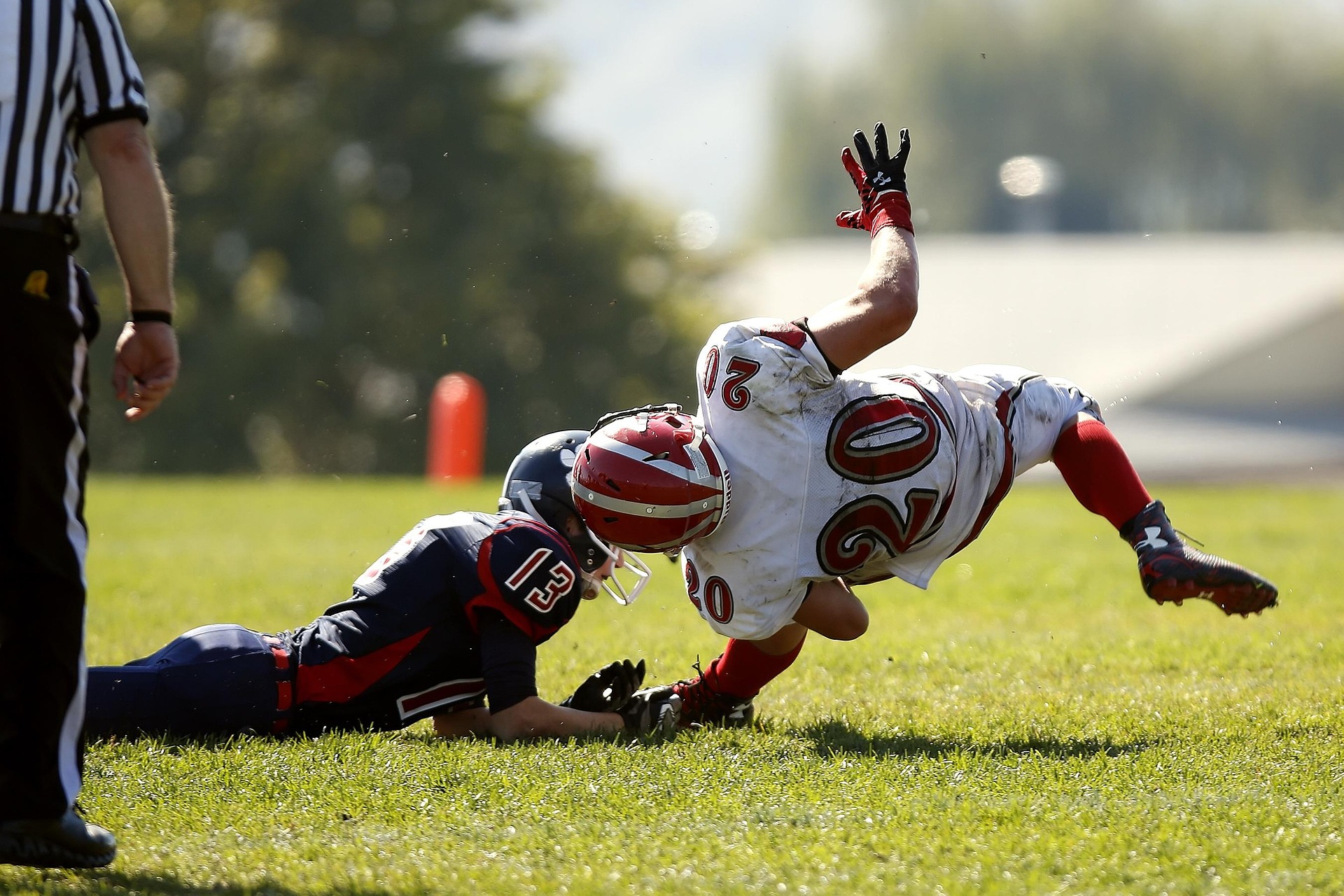
Youth American football accounts for nearly one in five traumatic brain injuries linked to sport in children and young adults in the US, a preliminary study has found. Researchers analysed more than 70,000 traumatic brain injuries (TBIs), injuries to the brain caused by a blow or jolt to the head, in people aged 25 or [...]
 Concussion3 Mar
Eye movement tests may detect brain changes in military veterans more than a decade after concussion, according to new research. The study evaluated 78 military veterans, including 38 with a history of mild traumatic brain injury, often called TBI, a brain injury caused by a blow or jolt to the head, and 40 without. Participants [...]
 Concussion25 Feb
The brain may reinforce seizures during sleep by treating them like memories, according to new research. A study analysing long-term brain recordings from implanted devices in 11 people with epilepsy found that after a seizure, the brain entered a prolonged deep sleep state similar to how it stores new memories. This process mimics memory consolidation, [...]
 Concussion11 Feb
Clinical chart reviews suggest adding a rotational chair device to therapy sped concussion recovery up to eightfold in patients with persistent symptoms. Multi-site retrospective reviews examined chronic post-concussion cases treated with GyroStim, a computer-controlled, multi-axis rotational chair, alongside standard rehabilitation. Higher treatment frequency was linked to faster improvement, indicating a dose-response effect. The [...]
 Brain injury13 Jan
A tiny head impact sensor that detects dangerous blows instantly could reshape safety monitoring in sport, transport and other high-risk settings. The device acts like a safety switch that activates in response to sudden acceleration (a rapid change in speed), sensing forces from any direction and gauging their severity in real time. Roughly the size [...]
 Brain injury5 Jan
New research links domestic violence to lasting brain injuries, with survivors facing memory loss and long-term cognitive problems. The study found survivors who had repeated head impacts or non-fatal strangulation (choking that reduces oxygen to the brain) were more likely to show behavioural and cognitive changes, including impaired memory, seizures and slurred speech. The findings [...]
 Brain injury17 Dec
Children with mild traumatic brain injury (TBI) may later develop ADHD, pointing to the need for longer follow-up, a study suggests. Researchers reviewed patients seen at a paediatric concussion clinic from 2010 to 2023. Of 284 screened cases, 86 children were included in the final analysis, split into 10 who developed secondary ADHD after injury [...]
 Brain injury16 Dec
In a recent study, Johns Hopkins University researchers used mice to explore how the visual brain system recovers following traumatic injury. The researchers monitored connections from cells in the eye to the brain after injury. They discovered that surviving cells compensated for cell death by sprouting extra branches to make connections with more neurons in the brain. This sprouting occurred to such an extent that connections [...]
 Concussion15 Dec
Scientists are building a mobile quantum brain scanner, claimed to be the first of its kind, to measure blast effects on military personnel in real time. The UK Ministry of Defence has put in £3.1m for the device, allowing researchers to assess brain function within minutes of a blast and to monitor recovery at training [...]


