




Interviews

Hopelessness can’t be predicted within the first three days a brain injury, says Dr John Whyte. Yet, as he has learned in decades of working with disorders of consciousness (DOC), many doctors assume otherwise. Faced with an unconscious head trauma survivor and their devastated loved ones, all too often decisions are taken to unplug the machine; halting potential recovery journeys before they’ve begun.

Deep-rooted in the rehabilitation field is the scourge of the “black box”. It prevents research progress, hinders patient outcomes and makes it harder to justify spending on rehab services. Its origins as a popular phrase among healthcare professionals can be traced back to the early 90s. Its relevance has endured to present day, however; much to the dissatisfaction of a band of clinicians and researchers in the US.

“How many kids in a wheelchair get to see the world from the top of a mountain, and then slide down it?” says Chris Loyn, who first saw his son Jack’s face light up as he hurtled down a ski slope four years ago. “To be out of his wheelchair and suddenly flying freely down a mountain, the fresh air blasting in his face, it was just awesome.” Jack, now 30, suffered a brain hemorrhage at just two weeks old and was left wheelchair bound as a result of spastic quadriplegic cerebral palsy. In 2015 Chris heard of an organised ski trip taking people with severe brain injuries and complex disabilities to France for an adventure he hadn’t thought possible.

High above the M25, a buzzard cuts through the December sky. Scanning the tarmac below, it spots something edible and begins its rapid descent. At ground level, Michelle Munt is driving her smart car, completely unaware that her life is about to change forever. Traffic ahead suddenly slows. She takes her foot off the gas. The lorry behind should be slowing too. But in those crucial seconds of reaction, the buzzard has smashed beak-first into its windscreen. The driver can’t see the road, or Michelle, and sends her relative tin can of a car flying into the crash barrier.

When Michael J Fox was diagnosed with Parkinson’s Disease aged only 29, the world was shocked to see a high-profile celebrity struck down with such a cruel condition. At the time, few probably realised that Parkinson’s could affect someone so young. Again, when Muhammad Ali revealed he had the condition, diagnosed aged 42, there was widespread anguish at his plight at being diagnosed at such a young age. But the harsh reality is that, while these two cases attracted huge attention, this is happening to people around the world every day. Figures from Parkinson’s UK suggest a rising population with the condition - currently standing at 145,000, with 1,757 people aged under 50 living with the disease.

Josh Wintersgill was enjoying a drink by a Tenerife pool when the entrepreneurial spark hit him. He been pondering how to make travelling easier for people with disabilities; a quandary close to his heart. Josh, now 25, has spinal muscular atrophy (SMA) type three – a progressive muscle wastage condition affecting every muscle in the body. His physical capabilities have reduced with age and, since age nine, he has required a wheelchair on a daily basis. Yet Josh loves travelling and so has experienced the often-undignified, stressful and uncomfortable process of being transferred on and off aircraft. In the Canary Island sunshine he imagined a device that would bring an end to the barriers of air travel for many people with reduced physical mobility.

Dr Tom Balchin’s mission to help UK stroke survivors was forged in tragedy. In late 1996, his twin brother Alex died aged 21 after falling from a building during a night out in London. Three months later Tom suffered a serious subarachnoid haemorrhage stroke, which he believes may indeed have been triggered by the stress [...]

Having had a career as an elite athlete abruptly ended through a freak accident, Drew Graham now dedicates himself to inspiring others through exercise. Drew’s Pop Up Gym - a dedicated facility in the North of England for people with spinal and neurological injuries, alongside a number of outreach sessions across the region to bring the service closer to those who need it - illustrates his passionate advocacy of fitness as a means of rehabilitation. Research has shown the benefits exercise can bring to people who have suffered brain injuries, with improved weight and stress management, emotional regulation, and increased strength, energy and attention all being directly linked to regular fitness sessions.

“Numbers are our biggest challenge as a profession,” says Diane Playford as she ponders the current state of the nation for rehab medicine physicians. “Many medical specialties are small in the UK compared to our European colleagues, but rehab medicine is disproportionately small.” November 2018 brought an end to Playford’s two- year tenure as president [...]
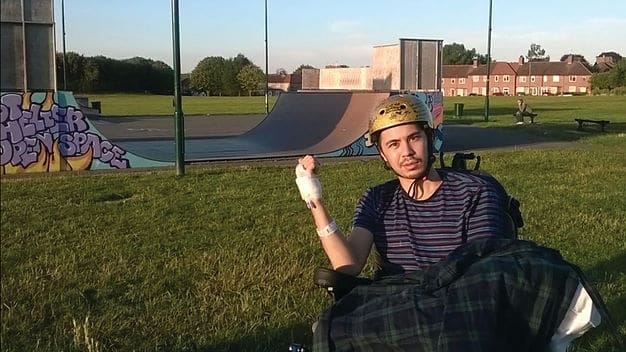
Skating fanatic Rob Glanville’s life- changing injury wasn’t the result of some perilous stunt at the outer limits of his ability. In fact, the manoeuvre that sent him hurtling down his own neuro-rehab pathway was so simple to him, he could practically have done it blindfolded. The accident happened in 2015 on a Hammersmith pavement. [...]


