



Interviews
When lockdown began, many people with a traumatic brain injury (TBI) were faced with their treatment and support being paused, or having their face-to-face services moved online.
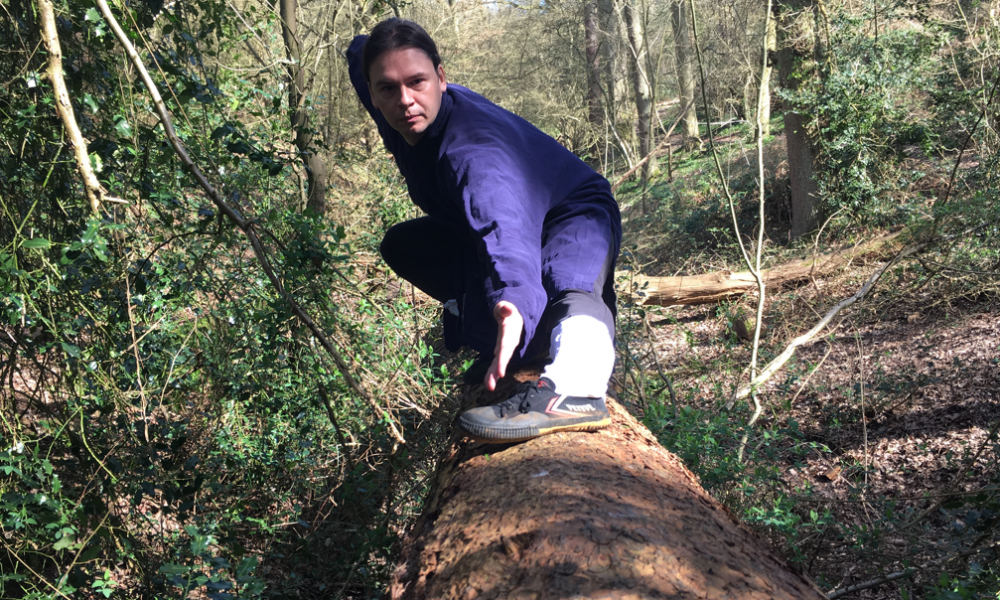
Giles Yeates, consultant clinical neuropsychologist and tai chi instructor, spoke to NR Times about how he’s wasted no time in moving his classes online. Yeates hosts online tai chi classes, which are streamed live on the charity Different Strokes’ Facebook page and YouTube channel. The classes are moderated by Alison Smith, who had a stroke last year. Tai chi involves physical routines to strengthen the body and improve flexibility, achieve regulated breathing and focus on the body to improve inner energy, which in turn, is believed to improve circulation. It’s based on attaining a flow state of mind, which is said to be achieved when people become fully immersed in what they’re doing.
After having a stroke two years ago at the age of 39, former international swimmer Craig Pankhurst founded the charity Stroke of Luck to support stroke survivors through activity and exercise. Jessica Brown reports.
“Stroke survivors are in one of two places – they either see themselves as a victim, with a not very positive outlook,” Pankhurst says. “Or they see their stroke as a bump in the road, but that no one will stop them from having a fulfilled life, just one that’s different to the one they were leading before. “We put in a halfway line to move people from the victim to survivor mentality.”
The unusual case of a man who can’t see numbers has led researchers to argue that the brain can process things without a person being aware of what they’re looking at.

Domestic violence survivors in hospital should automatically be tested for traumatic brain injury (TBI) because they, and doctors, may not be aware of the symptoms.

Two of the most powerful ingredients of Accessible Dreams’ work are the very things that are restricted right now. Travelling to exciting horizons, and being able to hang out with friends new and old once there, are at the heart of the experiences the group creates. And at the time of writing, one is currently impossible from the UK, while the other is enabled only in a world of separation, screens and clever apps. But Nicola Cale, who runs Accessible Dreams, sounds surprisingly chipper when NR Times calls her.

"It’s not the cards you’re dealt that matters, it’s how you play them that counts.” For Jessie Ace, this is a mantra that inspires her every day. It has helped her overcome her career dreams and confidence being shattered by her multiple sclerosis (MS) diagnosis, and underpins the positivity that now enables her to inspire so many others with chronic illness around the world.

After being assaulted in 1998, Dean Harding’s life was turned upside down. Years of rehabilitation followed to help him cope with his traumatic brain injury. But the world of work seemed a place he would never return to, believing that he “wasn’t capable”.
However, the birth of his son 17 years later changed his whole outlook on life.
“I didn't want him growing up thinking, ‘why isn't my dad working?’,” remembers Dean.
“Most people work, or they’re supposed to. It gives me a sense of feeling like a ‘normal’ person, although I've still got my disabilities.”

“I was hearing the same story over and over again,” says neuropsychologist Dr Sherrie Baehr. “It was one of isolation, sadness and loss of direction.” These accounts came from brain injury survivors who, with depressing regularity, told Sherrie how society was rejecting them post-injury. After one such tale too many, she decided to take affirmative action by launching a charity that enables people with brain injuries to help themselves by helping others.

Byron Konizi wants to do away with the word ‘rehabilitation’. He believes he has a better term for brain injury recovery. But this is no lexical whimsy. His conclusion comes after a decades-long journey into the world of neurological treatment, to the brink of death and back again. It started with a bike ride at age six that sent him freewheeling onto another life trajectory. He fell off, sustaining a head injury - the first in a series of traumatic brain experiences in his life. These dark chapters have shaped a new organisation that wants to bring about a post-brain injury revolution in the UK.

Deborah Backus is navigating rush hour traffic when she takes a cross-Atlantic call from NR Times. She’s understandably busy. The organisation she oversees is about to host the biggest rehab research event on the planet. But president of the American Congress of Rehabilitation Medicine (ACRM ) is just one hat she wears.


