



News
The latest news from across neurorehabilitation.
 News2 Oct
In this edition of the Curious Case Manager Vicki talks to Jane Kingston, advocacy manager at ‘Connected Voices Advocacy’.
Jane provides an interesting overview of advocacy in the UK and outlines the role of the advocate in supporting clients to have a voice, access the services they need and to ensure their rights are upheld. Vicki and Jane discuss their collaboration on commissioning and providing specialist advocacy services for individual clients with neurological conditions and cover topics such as: the impact of the Mental Capacity Act, the ‘watching brief’ approach, the Deprivation of Liberty Safeguards, using an assets-based approach and the impact of the coronavirus crisis on working with clients in the community and in hospital settings.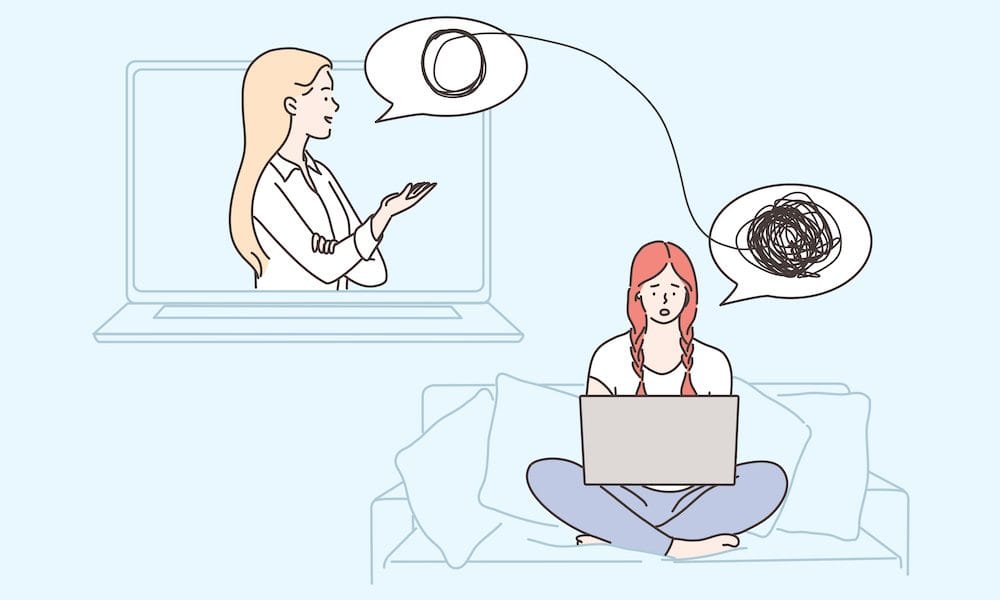
New research has found that intensive therapy is not necessarily best when it comes to treating the loss of language and communication in early recovery after a stroke.
Published in the International Journal of Stroke, the research found that unlike physical and motor skill rehabilitation, recovering lost language caused by a condition known as aphasia after stroke is a marathon, not a sprint. It also showed that early intervention is crucial. Opinion30 Sep
A day in the life of Peggy, the resident feline at Stanley House, Elysium Neurological’s care centre in Herefordshire.
Who said ‘cats have it easy’? It’s really not that simple, after all not all the staff and residents here speak or understand ‘Felis catus’. For those who aren’t acquainted with Latin, the language of all well-educated feline divas, it simply means domestic cat. So you can see how exhausting it can be trying to get my own way, lots of long luxurious rests are the name of this game! Legal30 Sep
The guidelines seek to redress this lacuna and are reflective of the broader efforts across society to understand and de-stigmatise such conditions. The guidelines stipulate that “the fact that an offender has an impairment or disorder should always be considered by the court, but will not always have an effect on sentencing”. Each case will be fact specific and an individualistic approach to sentencing is encouraged, taking into account the wide range of disorders and the varying levels of impairment between individuals.
 Case management30 Sep
The use of telerehabilitation has an important role in the future of case management, but a case-by-case approach and better patient education is needed to ensure its continuing efficacy, a new report has concluded.
While it is accepted as a safe and effective means of service delivery for initial triage, immediate needs assessment and subsequent case management and treatment coordination phases - backed by clinical support where needed - the research recommends that a number of factors need to be considered on a patient-by-patient basis to fulfil an effective consultation.
 Case management25 Sep
The UK faces a “tidal wave” of brain injury rehab need post COVID-19, with a huge increase in reliance on private and charitable sectors due to stretched NHS resources, new research shows.
The extent of the expected impact on resources over the coming months is laid bare in newly-released research, which reveals 89 per cent of case managers across the UK expect a deluge in demand for rehabilitation resources.
 Legal25 Sep
By Alice Hall, serious injury solicitor at Irwin Mitchell.
Neurocognitive deficits caused by traumatic brain injury (TBI) can be one of the more challenging injuries to prove and as a Claimant solicitor; it is my client who bears the burden of proving every aspect of their injuries and resultant losses. I have seen that it is often the case that mild TBIs are just one of many injuries, whilst other injuries may present as far more life-threatening, particularly during the emergency stage of treatment. Sometimes, therefore, mild TBIs are either not fully diagnosed at the outset, or they are noted but are not treated as a priority in comparison with other more seriously recognised injuries at the time, which may be more obvious and more pressing. News25 Sep
SameYou is only one year old, but the charity is making real changes to bran injury recovery. Jenny and Emilia Clarke share their ambitions for the charity, and the motivations behind them.
Last year, Game of Thrones actor Emilia Clarke wrote in a New Yorker essay that, while filming Game of Thrones, she had two subarachnoid haemorrhages, a life-threatening type of stroke caused by bleeding into the space surrounding the brain.She was 24 when the first one struck almost 10 years ago. Around the time the essay was published, Emilia’s mum Jenny Clarke had a subarachnoid haemorrhage too. News24 Sep
Researchers at the University of East Anglia have been putting virtual reality rehabilitation for stroke survivors to the test.
They have created a new gaming platform which uses low cost videogame technology to improve the lives of stroke patients suffering from complex neurological syndromes caused by their stroke. And they have been working with stroke survivors and their carers to see how they get on with using the new technology. It is hoped that this type of technology, which can be used in patients’ own homes, could prove particularly beneficial for rehabilitation during periods of lockdown, social distancing and shielding – caused by the Covid-19 pandemic. News24 Sep
NR Times reports from the disorientating world of one of the lesser known post-ABI challenges.
Our vestibular system, located in the inner ear, assists with balance and tells the brain what position the body is in; if it’s upright or lying down, for instance. Usually our eyes will turn the opposite way to our head because the vestibular system helps to keep things in focus.


