



News
The latest news from across neurorehabilitation.
 Brain injury16 Sep
‘No Man’s Land’ was the theme for this year’s Brain Injury Social Work Group (BISWG) conference where almost 100 delegates gathered at King’s College Hospital in London, a centre of excellence in neurorehabilitation. Spaces between services and systems and the challenges caused by those gaps came under the spotlight at the conference which also saw [...]
 Stroke16 Sep
Women who undergo hysterectomy face up to an 18 per cent higher risk of stroke, especially if both ovaries are removed, according to new research. A meta-analysis of data from more than 2 million people found that removing the uterus and cervix alone raises risk by 5 per cent, while combining this with removal of [...]
 Spinal injury16 Sep
Scientists have restored movement in rats with severed spinal cords using a 3D-printed scaffold containing stem cells. The research suggests new possibilities for tackling paralysis caused by spinal cord injuries, which currently have no cure. These injuries occur when neurons – nerve cells that transmit messages through the body – die and cannot regrow across [...]
 Brain injury16 Sep
An AI-powered platform launching this week analyses brain function in real time and is the first product designed to handle both the complexity of the brain and the dynamic nature of brain injury. The Moberg Clinical Platform (MCP) brings together data from multiple monitoring devices to track brain activity and help intensive care teams make [...]
 Spinal injury15 Sep
Researchers in South Korea have identified the molecular “brake” that halts spinal injury repair. They found that GABA, a chemical messenger that normally dampens nerve signals, is produced in excess by astrocytes, star-shaped support cells, after injury. This happens through the enzyme monoamine oxidase B (MAOB), which becomes overactive. GABA was shown to [...]
 Dementia15 Sep
Emerging research is exploring the potential of photobiomodulation (PBM) - a light-based therapy targeting the gut-brain axis- as a promising new treatment for Parkinson’s disease. A recently published clinical trial, conducted on 60 participants in Canada, reported clinically significant improvements in multiple Parkinson’s symptoms following treatment with photobiomodulation (PBM) therapy. The results, presented last month at [...]
 Brain injury12 Sep
A fundraiser whose friend was supported by brain injury charity Headway Jersey has been praised by staff for helping to keep it running. Harry Mcalinden has raised thousands of pounds each year by taking part in extreme endurance events. He set up the annual race Run for Frubbs in memory of his friend, which has [...]
 Parkinson's12 Sep
New artificial intelligence software can spot subtle movement changes in Parkinson's disease from video recordings before they are visible to clinicians. The technology analyses finger-tapping movements to find changes invisible to the human eye, potentially enabling earlier diagnosis and treatment. The AI system, called VisionMD, was developed by a team at the University of Florida [...]
 Community neuro rehab12 Sep
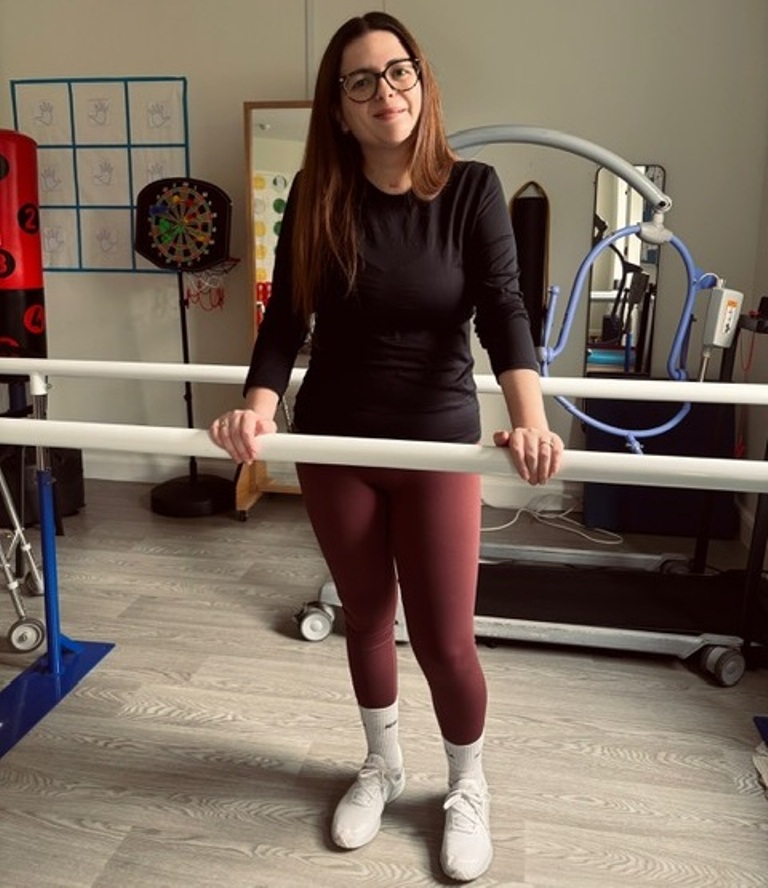
By CHD Living At CHD Living, we believe rehabilitation is about more than recovery – it’s about restoring independence, dignity and purpose. Our specialist centres in Bagshot and Kingston are designed to deliver transformative outcomes for people recovering from complex neurological conditions. One such story is Lucy’s. When 31-year-old Lucy walked out of Bagshot Park [...]
 MND / ALS11 Sep
Dr Oscar Wilkins has received the inaugural Rob Burrow Early Career Researcher Prize for his work on motor neurone disease treatments. The annual award, launched by the MND Association in honour of its late patron and rugby league legend Rob Burrow CBE, recognises outstanding UK-based researchers early in their academic careers. Dr Wilkins received the [...]








