



Parkinson’s

Having been diagnosed with Young Onset Parkinson’s aged 34, fashion designer Genna Douglas was left isolated and confused about how to get on with her life. To make sure no one else suffers a similar fate, she has teamed up with Parkinson’s UK and clothing giant Next to create a range of products that are raising both money and awareness.
The ordinary task of doing the washing up one day would prove to be a huge moment for Genna Douglas, after she noticed her hand was not moving properly. While on maternity leave having just had her second daughter, doctors originally thought the problem was a damaged nerve and she was placed on a course of medication to deal with it.
Pioneering research is underway to develop a drug that could slow the development of Parkinson’s disease.
The project is a partnership between Parkinson’s UK and the University of Sheffield, and is backed by up to £1.2million in funding from the charity. The research aims to create a world-first drug that can protect the dopamine-producing brain cells that are lost in Parkinson’s by targeting mitochondria.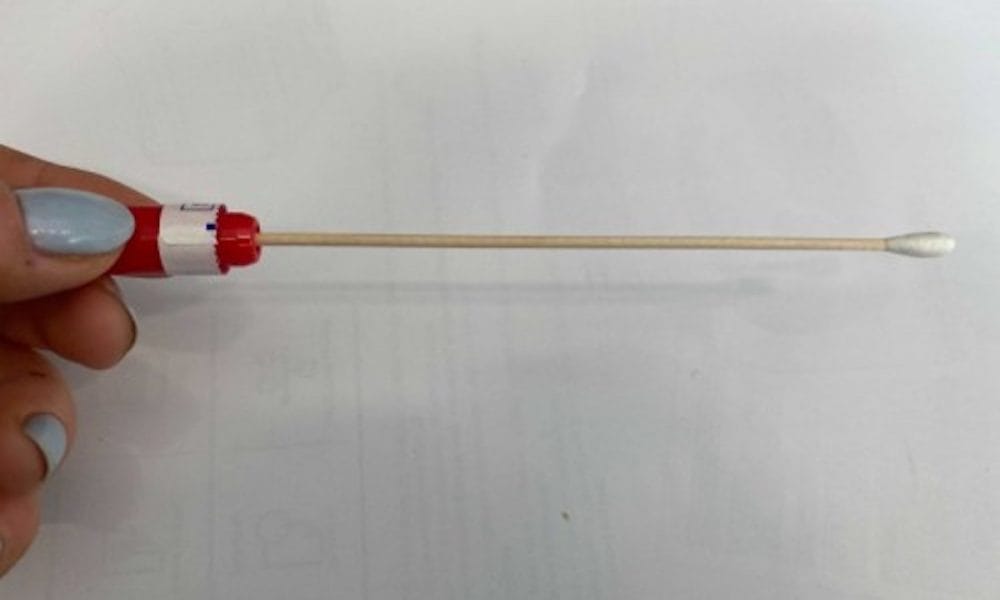
Diagnosis of Parkinson’s disease could be made through a skin swab procedure, after research confirmed it it possible to identify the condition from compounds found on the surface of the skin.
Scientists at The University of Manchester have developed a world-first technique which works by analysing compounds found in sebum - the oily substance that coats and protects the skin - and identifying changes in people with Parkinson’s disease. “We believe that our results are an extremely encouraging step towards tests that could be used to help diagnose and monitor Parkinson’s,” says Professor Perdita Barran, from the University of Manchester, who led the study. “Not only is the test quick, simple and painless but it should also be extremely cost-effective because it uses existing technology that is already widely available.
Immune cells in the blood influence the brain during early development of Parkinson's disease, new research has found.
Until now, Parkinson’s disease has always been considered a brain disorder, but through new research into a sleep disorder, a close link has been established between the disease and certain immune cells in the blood.
A chemical commonly found in discarded waste from the sesame seed oil manufacturing process could have protective effects against Parkinson’s disease, new groundbreaking research has found.
Sesaminol, abundant in the empty shells of sesame seeds which are discarded after the fatty oils are extracted, could have a role to play in protecting against neuron damage in the brain, researchers from Osaka City University have revealed.
Charity Parkinson’s UK is to launch a new company dedicated to driving forward research into Parkinson’s disease.
Vivifi Biotech has been created to lead and plan preparations for a new trial into the role of the restorative protein glial cell-derived neurotrophic factor (GDNF) in Parkinson’s. Launched through the charity’s drug development arm, Parkinson’s Virtual Biotech, up to £800,000 will be invested over the next two years as efforts continue to find a life-changing new treatment for people living with the disease.
The function of a ‘mystery protein’ in brain cells of people with Parkinson’s has been discovered, in new research hailed as being “vital” in long-term efforts to find a cure for the disease.
Alpha-synuclein is a protein which forms clumps that affect motor and cognitive abilities in pathological conditions, but its role in what it does to neurons in the brain in Parkinson’s has remained unknown. In new research, published today, the ‘mystery protein’ alpha-synuclein “sticks like glue” to the inner face of the plasma membrane of nerve cells, but not to the outer.
The potential for a drug to slow down the progression of Motor Neurone Disease (MND) is to be explored after trials secured funding from the Medical Research Council (MRC).
The development of M102, a drug candidate for the treatment of MND, has been given a £1.6 million grant, with researchers from the University of Sheffield’s Institute for Translational Neuroscience (SITraN), in partnership with Aclipse Therapeutics, looking to advance its potential.
Aware that many people with Parkinson’s wanted to be more challenged with their physical activity, Neuro Heroes was created to do just that. Here, co-founder Laura Douglas tells NR Times about why their service is badly needed and warmly welcomed.
While the benefits of exercise for people with Parkinson’s are well known, that exercise usually comes in the form of yoga or tai chi, something which is certainly active but at the more relaxing end of the scale. But for Neuro Heroes, their definition of exercise for people with Parkinson’s is different. “We have a group of people who want to be challenged and pushed, as well as building their fitness,” says Laura Douglas, co-founder of the group.
A breakthrough discovery has been made in the fight against Parkinson’s disease, with researchers discovering a protein which could slow down or stop its progression.
The protein BMP5/7 has been discovered to be significant in the advancement of the condition, which affects over 10 million people worldwide. The development of treatment in this area could yield the long-awaited breakthrough in the ability to halt the progression of Parkinson’s, with work now advancing further in this field to bring it to clinical application.


