



Spinal injury

A newly-developed device which can be implanted into the spinal column to treat severe pain could also be a potential treatment for paralysis.
The ultra-thin inflatable invention, which is about the width of a human hair, can be rolled up into a tiny cylinder, inserted into a needle, and implanted into the epidural space of the spinal column - the same area where injections are administered to control pain during childbirth. Once correctly positioned, the device - developed by engineers and clinicians at the University of Cambridge - is inflated with water or air so it unrolls like a tiny air mattress, covering a large section of the spinal cord. When connected to a pulse generator, the ultra-thin electrodes start sending small electrical currents to the spinal cord, which disrupt pain signals.
Understanding suicidal risk and supporting professionals to deal with such a hugely difficult topic is to be tackled in an event being held next week.
Life-changing brain, spinal cord and complex injuries can be significant factors in increasing this risk, as a result of the huge spectrum of difficult emotions a person faces in dealing with their new reality. And for the professionals dealing with clients going through such trauma, suicidal thoughts and acts can cause great distress to them and it can be difficult to know how to react and what action to take. Through the ‘Understanding Suicidal Risk - A Guide for Professionals’ event, held by Sphere Memory and Rehabilitation Team, advice and guidance will be offered to empower those working in complex injury to deal with such situations.
Health tech business ONWARD has secured its third Breakthrough Device Designation status as it continues towards its goal of commercialising its technology which could allow paralysed patients to walk again.
The venture secured Breakthrough Device Designation for its ARC-IM platform for blood pressure and trunk control in people with spinal cord injury. It is the third such status awarded to ONWARD from the US Food and Drug Administration (FDA), following previous awards for ARC-EX for upper extremity function and ARC-IM for mobility. ARC-IM consists of an implantable pulse generator and lead that is placed near the spinal cord. The system is operated via a tablet programmer and smartwatch.
People living with spinal cord injury can experience lasting pain relief through the injection of micro-fragmented adipose tissue (MFAT) for rotator cuff disease, new research has revealed.
A team of specialists in regenerative rehabilitation have shown through a pilot study that MFAT can deliver benefits to wheelchair users who experience shoulder problems. In the study, nearly 80 per cent of participants saw a meaningful decrease in pain symptoms through an ultrasound-guided injection of MFAT, and all but one reported some improvement in pain and function. Scores also declined steadily over the first three months for all metrics, and over the entire year for the BPI-17 pain metric, suggesting that this intervention has long-lasting effects.
Exoskeletons could help people with spinal cord injury improve their bowel function, new research has revealed.
Physical intervention plans which included exoskeleton-assisted walking were shown to help people with SCI evacuate more efficiently and improved the consistency of their stool. Rehabilitation professionals have traditionally managed bowel dysfunction using approaches that target the gastrointestinal system or require manual intervention, but some newer research suggests that physical activity and upright posture may enhance bowel motility. However, few studies have explored the possibility that exoskeletal-assisted walking - in which a person with spinal cord injury wears a robotic suit, enabling them to stand and walk - may be an effective addition to existing intervention plans.
A new Transatlantic alliance has been formed to expand support further for the spinal cord injury community.
The Christopher & Dana Reeve Foundation has collaborated with Spinal Injuries Ireland (SII) to foster sharing of best practices, expand services and educational content, and enable joint fundraising opportunities in the US and Ireland. This Reeve-SII collaboration follows an alliance with the International Spinal Research Trust (ISRT), announced earlier this year, as a joint strategic approach to research with a focus on accelerating the progress of therapies and their delivery to the millions of people around the world living with the life-altering effects of paralysis. As the only support and service agency for those who sustain a spinal cord injury in Ireland, SII provides support for injured people and their families and friends at every stage, with counselling, community outreach, peer mentoring and activity programs.
Writing for HT World, Brian O’Shea, continuing healthcare advisor at the Spinal Injuries Association, urges commissioners to embrace change for the good of the patient.
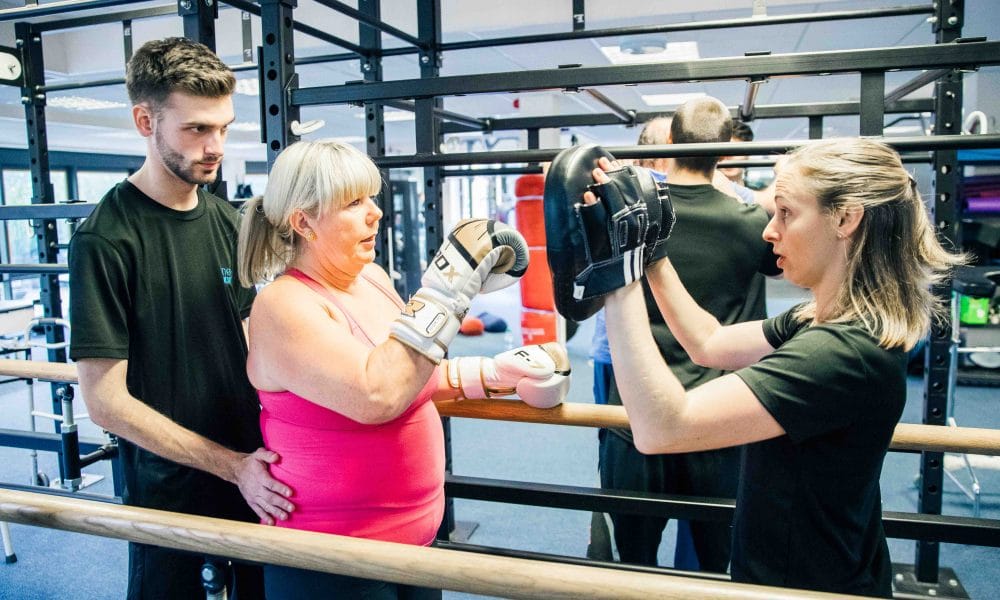
Established using best practice in spinal cord injury therapy from around the world, the rehabilitation offered by Neurokinex is helping to redefine the possibilities for people living with paralysis. NR Times learns more about its neuroscience-inspired work
“We want to help change people’s outlook on life.” Jane Symonds’ summary of the work of Neurokinex, and its approach to redefining possibilities for people living with paralysis, is a powerful one. For aside from the work the rehab provider does with patients physically, using techniques to stimulate the whole body rather than only the functional areas, the impact its neuroscience-inspired approach has mentally is possibly even greater.
As chief executive of Spinal Research, Harvey Sihota’s focus is to advance global efforts to develop treatments for paralysis through its funding of medical research. Here, Harvey tells NR Times why efforts to turn academic discoveries into clinical realities must be stepped up, and how both investment and expertise is crucial to that Back in 2009, when a freak accident led to Harvey Sihota being left paralysed, the outlook for spinal cord injury patients being able to walk again was less than optimistic. “It was considered to be final, a lifelong condition. When the consultant came to my hospital bed and told me I’d never walk again, it was very black and white,” he recalls.

A neurophysio provider which aims to improve life quality and outlook for people with paralysis has won an award in recognition of its work.
Neurokinex brings together specialist rehab programmes, the latest technology and neuroscience-led thinking; and has built up a reputation for its work with spinal cord injury patients. The charitable trust and social enterprise builds programmes involving the whole body in exercise - optimising the strength and endurance of functioning muscles, while stimulating the muscles that have been most affected by injury or neurological condition. It has also built a reputation on an international scale, with affiliation with the Christopher and Dana Reeve Foundation Neurorecovery Network.


