



Stroke
Stroke care, recovery and rehabilitation.
 Stroke19 Sep
University of East Anglia researchers are launching a trial to see if the commonly prescribed antidepressant Sertraline could reduce emotional changes caused by having a stroke. When a stroke happens, it can damage areas of the brain that regulate emotional expression - causing sudden uncontrollable episodes of laughing or crying. This condition is known as [...]
 Stroke16 Sep
Women who undergo hysterectomy face up to an 18 per cent higher risk of stroke, especially if both ovaries are removed, according to new research. A meta-analysis of data from more than 2 million people found that removing the uterus and cervix alone raises risk by 5 per cent, while combining this with removal of [...]
 Stroke11 Sep
Strokes are increasingly striking people in their 20s and 30s, with health services on both sides of the Atlantic struggling to keep pace. Recent reports have highlighted a sharp rise in the number of young adults experiencing strokes, with delays in diagnosis and treatment compounding the risks. In the US, stroke incidence among adults aged [...]
 Stroke9 Sep
By SweetTree Home Care Services After a stroke in 2021, Samuel’s mobility on the left side of his body was affected, which had an impact on his day-to-day life and resulted in his early retirement. When Samuel reached out to SweetTree to organise ongoing specialist support, the Brain Injury and Neurological Conditions team identified some [...]
 Stroke8 Sep
Millions of Britons face a higher risk of stroke or heart failure because of air pollution, with those in the worst-affected areas 7 per cent more likely to suffer strokes. People living in the most polluted areas also faced a 27 per cent greater risk of developing heart failure compared with those in areas with [...]
 Stroke4 Sep
Patients with atrial fibrillation living in food deserts face more than double the risk of ischaemic stroke and nearly four times the risk of death, new research has found. Food deserts – areas where residents live more than a mile from a full-service supermarket – were linked to worse outcomes in people with irregular heart [...]
- Stroke2 Sep
Half of all people who experience a stroke in England will now recover thanks to an AI scanning system rolled out across all 107 NHS stroke centres. The software analyses CT brain scans in about a minute, quickly telling doctors if they need to perform emergency surgery or give drugs – and can triple the [...]
 Stroke1 Sep
A new treatment has been shown to significantly lower blood pressure in people whose levels stay dangerously high, despite taking several existing medicines, according to the results of a Phase III clinical trial. Globally around 1.3 billion people have high blood pressure (hypertension), and in around half of cases the condition is uncontrolled or treatment [...]
 Stroke29 Aug
A Plymouth doctor who had a severe stroke which left him with a range of physical difficulties has amazed his family and friends by winning a gruelling international cycling challenge on his recumbent bike. Jimmy Hubbard’s achievements have been described as “inspirational” by the Stroke Association, a charity which supports stroke survivors across Devon. Jimmy [...]
 Stroke29 Aug
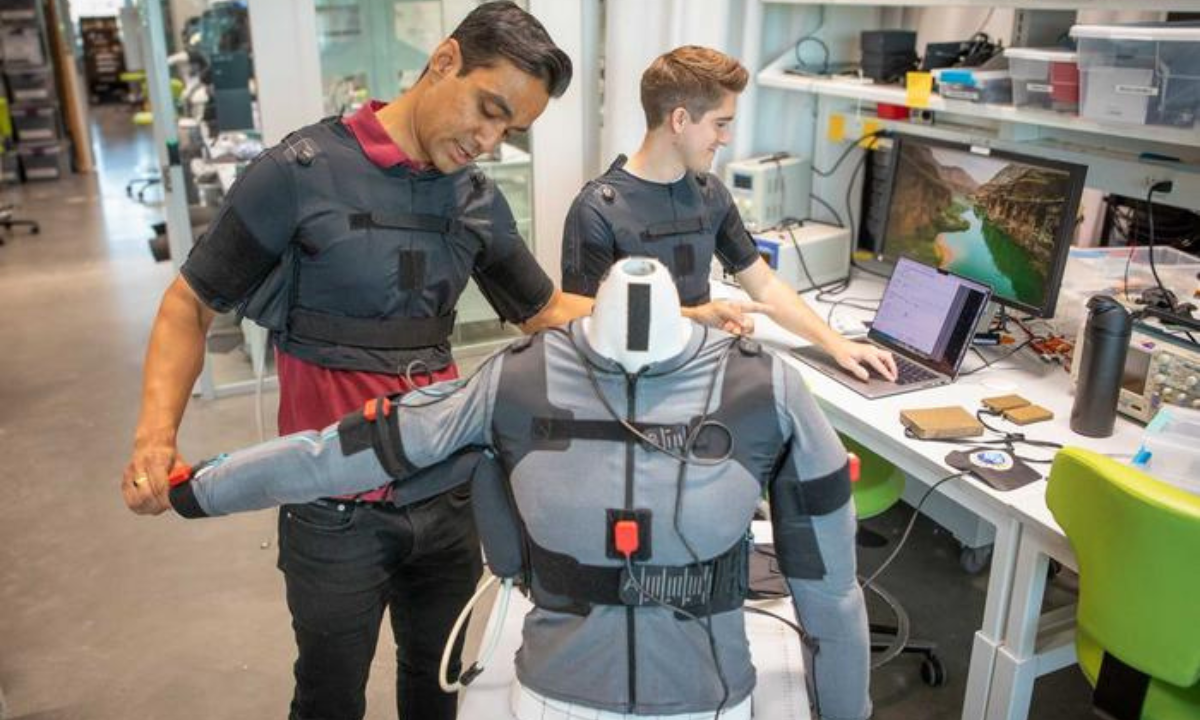
Harvard researchers have created a soft, wearable robotic device that provides personalised movement assistance for individuals with upper-limb impairment, such as stroke and ALS patients. The latest version of the robot combines machine learning and a physics-based model to learn each user’s unique movements and provide support for daily activities like eating and drinking. The [...]


