


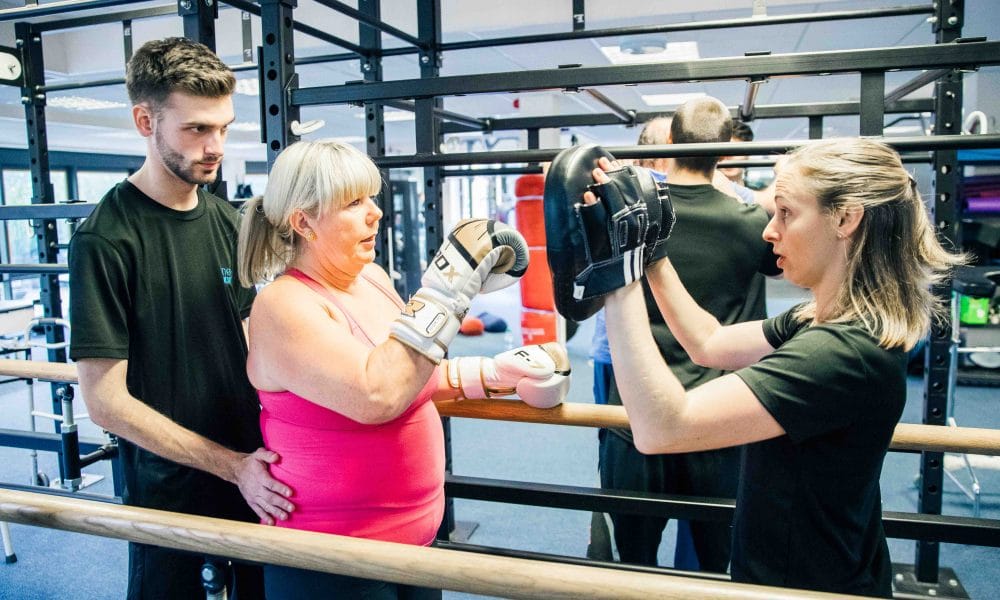
Established using best practice in spinal cord injury therapy from around the world, the rehabilitation offered by Neurokinex is helping to redefine the possibilities for people living with paralysis. NR Times learns more about its neuroscience-inspired work
“We want to help change people’s outlook on life.”
Jane Symonds’ summary of the work of Neurokinex, and its approach to redefining possibilities for people living with paralysis, is a powerful one.
For aside from the work the rehab provider does with patients physically, using techniques to stimulate the whole body rather than only the functional areas, the impact its neuroscience-inspired approach has mentally is possibly even greater.
In enabling people who are paralysed to have hope that one day they may walk again or at least make significant gains in their mobility and independence – and being at the cutting edge of developments which could enable this – Neurokinex is inspiring patients from well beyond the geographical reach of its centres in Hemel Hempstead, Gatwick and Bristol.
Founded in 2013 by Harvey Sihota, now chief executive of Spinal Research who himself lives with spinal cord injury, not-for-profit Neurokinex was born from his extensive research into best practice and latest innovation in spinal cord injury therapies from around the world, to give hope and renewed confidence to those living with paralysis.
“I think the biggest thing is the difference in outlook,” says Jane, clinical lead physiotherapist at Neurokinex.
“Most people who come to us have been injured relatively recently, although some people have lived with paralysis for quite a long time. Some are elderly and we also work with children but whatever their age, the realisation of what they can do and can achieve is huge.
“We do have some tears when we see what can be possible, it’s very moving. To see people regaining their confidence during their time with us, so they want to go out again or feel they can return to work or get back to driving, is very special. We want people to live their lives to the full once again.”
Progress, particularly in terms of their outlook and expectations, is something the Neurokinex team is committed to supporting people to achieve, says Jane.
“The expectations are quite low among people when they first come to us, many of whom have just come out of hospital,” she says.
“Hospitals are really cautious in their approach, and don’t want to give false hope, which is understandable – but hope is so important.
“Several of our team are used to doing rehab with professional sports players. They take that expectation of what people can do with the right mindset, combine it with the power of encouragement that enables people to achieve, and applied it to what they do here.
“I worked in a spinal unit for eight years and found it quite frustrating that when people left, they were considered rehabbed and done. But they weren’t as fit and strong as they could be, their function wasn’t as good as it could be and with the right support they could do so much more.
“Often it can be the case that people leave their daily physio in hospital and then face anything up to an 18 week wait for their community provision to begin.
“Without the right support, it’s easy for people to go backwards, to lose any progress they had made and put on weight, experience pressure sores, and a whole host of other consequences. It’s very hard to regain what is lost.
“But with intervention, they can make great progress. Through working with our team, we can help make gains in their function, strength and endurance, which can have a hugely positive impact on people’s lives.”
And as part of its commitment to delivering the very latest innovation to its clients, Neurokinex is part of trials of technology developed by ONWARD, expected to commercialise as early as 2023, which is set to enable paralysed patients to regain movement.
“We’re really hopeful this will make a difference and it is very interesting to be part of this study. We are always looking to what can be done to change the lives and outlooks of people living with paralysis,” says Jane.
“Our approach is inspired by what Harvey created here. He constantly surprises us with what he achieves. He is so positive and to him nothing is impossible. That’s what we try to instil in the people we work with.”
Whilst striving to offer cost-effective services, part of the not-for-profit enterprise’s work is funded by the Neurokinex Charitable Trust, with fundraising activities helping to sustain its work.
One of its key initiatives in accessibility is the Step Up Scheme, which offers six free sessions following NHS referral.
“Through the Step Up Scheme, we underwrite the costs of those six sessions as we don’t want anyone to be excluded through cost, and we appreciate it is very hard for those who have to self-fund,” says Jane.
“Every year we are growing in numbers, which is fantastic, but we have to work harder to find ways to sustain that.
“With COVID, we were very worried about losing the scheme, but we had a big fundraising appeal which lots of our clients got involved with, and that raised over £50,000 which meant we could continue.
“Our paediatric area in Gatwick was also created through fundraising. It’s a lovely space which challenges kids while keeping them safe. That was a big project for us but one which is so well used and valued, and we’ll keep on developing what we can offer through generating the means to do that.”


