



Combined effects of physiotherapy and the GIGER MD machine: A case series

By Urvisha Lunagariya, Ascot Rehabilitation Ltd
Rehabilitation for patients with neurological and musculoskeletal conditions often requires a multi-modal approach.
While physiotherapy remains the cornerstone of recovery, technological innovations like the GIGER MD machine are showing promise in enhancing outcomes.
Our recent retrospective case series explored the combined effects of physiotherapy and the GIGER MD device in improving mobility and exercise tolerance in patients with complex neuro-musculoskeletal conditions.
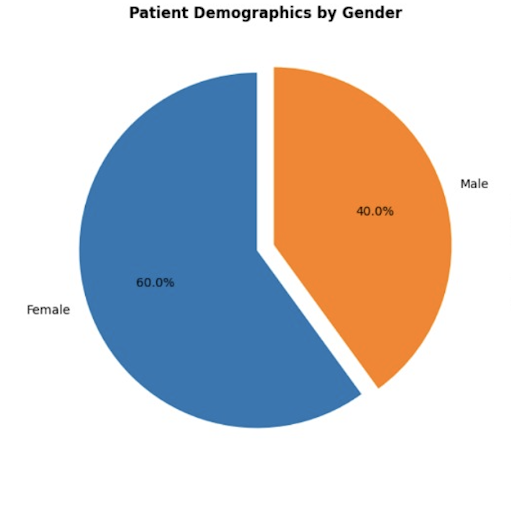
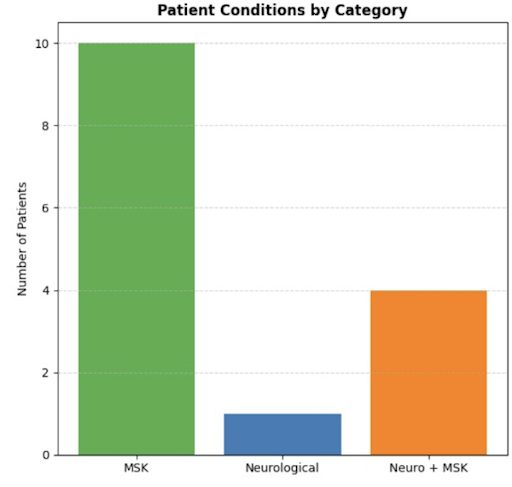
The study included 15 patients aged 13 to 64 years, presenting with conditions ranging from cerebral palsy, stroke, and traumatic brain injury to post-operative shoulder rehabilitation, chronic back pain, and carpal tunnel syndrome.
Each patient underwent a program of combined physiotherapy and GIGER MD sessions, with additional therapies such as occupational therapy and orthotic support provided where needed.
The GIGER MD machine works on the principle of neuroplasticity. Patients lie supine and perform repetitive, pain-free bilateral limb movements in a closed kinetic chain.
By engaging in thousands of coordinated repetitions, new motor pathways are stimulated in the brain, strengthening existing movement patterns.
This not only aids functional recovery but also enhances endurance, balance, and coordination.
Importantly, because the exercise is performed in a gravity-minimised position, patients can tolerate longer sessions without exacerbating pain or fatigue.
Key Findings
Two primary outcome measures were used:
- Functional Independence Measure (FIM) – assessing patients’ ability to perform daily living activities.
- Performance graphs from the GIGER MD – showing energy expenditure, revolutions, coordination (harmonic movements), and heart rate response.
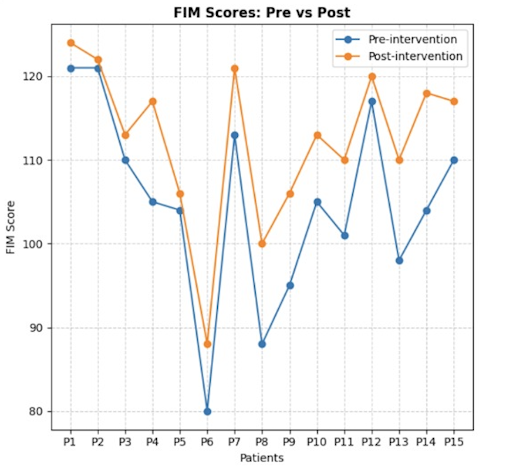
Across the cohort, there was a consistent improvement in FIM scores, indicating enhanced independence and mobility. For example:
- A 22-year-old female with bilateral hip dysplasia and cerebral palsy improved her sitting tolerance from 10 minutes to 25 minutes and reduced hip pain from 5/10 to 2/10 after just five combined sessions.
- A 46-year-old male with post-COVID foot drop and reflex sympathetic dystrophy increased his sitting tolerance from 5 minutes to 45 minutes, alongside notable improvements in walking endurance.
- A 16-year-old with traumatic brain injury regained partial finger movement and improved walking tolerance after 16 sessions, highlighting the role of repetitive movement in neuroplastic recovery.
Overall, all 15 patients demonstrated functional gains, whether through reduced pain, increased range of motion, improved endurance, or greater independence in activities of daily living.
Broader Implications
This study suggests that combining GIGER MD therapy with physiotherapy may provide additional benefits compared to physiotherapy alone.
It allows patients not only to train muscle strength and flexibility but also to stimulate neurological recovery through intensive, repetitive, and pain-free movement training.
Importantly, the results highlight that:
- Age is not a limitation – patients from early adolescence to older adulthood benefited.
- The approach is versatile – it supports rehabilitation for neurological, musculoskeletal, and mixed conditions.
- Patient engagement improves – visual feedback from the GIGER MD graphs motivates patients and tracks progress in real time.
Limitations and Future Scope
As a retrospective case series, this study does not allow for statistical comparisons across groups.
Further research should explore larger controlled trials to quantify outcomes and separate the individual contributions of physiotherapy versus GIGER MD.
Nevertheless, these findings provide real-world evidence that integrated rehabilitation using advanced neuro-rehabilitative devices can enhance mobility, exercise tolerance, and independence in patients facing complex recovery challenges.
Below is a sample graph showing the pre- and post-intervention FIM scores of the 15 participants:
Find out more about Ascot Rehabilitation at ascotrehab.com



