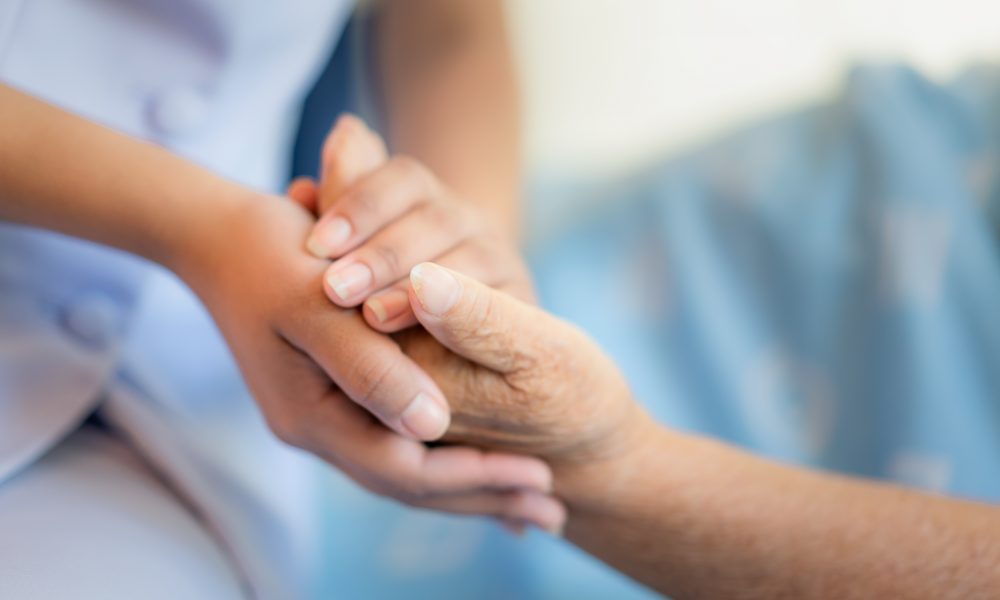
Pre-existing dementia complicates cancer care and increases the risk of worse clinical outcomes and inferior patient experience, according to a review of studies.
People living with dementia are more likely to have cancer diagnosed at an advanced stage and receive no or less extensive cancer treatment, which negatively affects survival after cancer diagnosis.
In addition to presenting an overview of dementia and cancer, the review authors, who are from the United Kingdom, Ireland and Australia, as well as the United States, make pragmatic recommendations for clinicians treating cancer in patients with dementia.
Dementia prevalence increases steeply with age, approximately doubling every five years after the age of 65-years-old.
Review co-author, Regenstrief Institute and Indiana University School of Medicine faculty member, Nicole Fowler, PhD, said:
“An increasing number of people are living longer, and advanced age is one of the biggest risk factors for both dementia and cancer; the co-occurrence of these two diseases is increasing as the population ages.
“It’s a tough scenario for patients, their caregivers and clinicians.
“People with dementia may not be able to describe symptoms that might alert a physician early-on to a developing or existing cancer.
“Also, screening for cancer and cancer treatment can add additional burden to patients with dementia and their caregivers.”
Dr Fowler continued:
“Few guidelines exist to support oncologists’ understanding of how best to talk with patients with dementia, identify their ability to participate in decision-making about cancer treatment and work with families to identify their goals for cancer care and treatment.
“Oncologists need to navigate carefully between underdiagnosis and undertreatment and overdiagnosis and overtreatment, ensuring that a dementia diagnosis informs, but doesn’t automatically rule out or specify, any particular course of action.”
She added:
“Optimal cancer care for people living with dementia needs quality indicators and targets that recognise the patient’s functional status – a cancer patient with moderate cognitive impairment may be treated differently than someone in the end stage of the disease – and the personal preferences of the patient and family caregiver.”
Supporting an individual living with dementia through cancer treatment and making care decisions contribute significantly to the caregiver’s burden, adding additional pressure to already stressful responsibilities.
The paper includes a dozen pragmatic recommendations for oncologists treating patients living with dementia:
- Identify pre-existing dementia in patients as soon as possible and document it in patient records.
- Involve caregivers and support their emotional, financial and other needs.
- Review decision-making capacity and legal decision-making powers as well as verify advance medical directives.
- Consider and make reasonable adjustments to cancer-related care and treatment.
- Minimise the risk of poorly controlled pain and other symptoms and side effects including dementia decline.
- Reduce the risk of emergency presentation for medical care.
- Increase dementia knowledge and training among cancer clinicians.
- Provide information and communicate in dementia-friendly ways:
- Use simple language, pictures and recap.
- Supply take-away summaries.
- Give warm, empathetic, non-verbal communication.
- Communicate directly with other involved clinicians and keep them updated.
- Allow more time for patients with dementia.
- Make clinical environments more dementia friendly.
- Minimise and improve care-related travel for people with dementia including remote and mobile care options and parking.
- Establish features, pathways and models of cancer care that support caring for people with dementia.
The authors note:
“Protection from harm is an intensified concern because of the increased vulnerability of people living with dementia to the potential harms inherent in receiving cancer screening, diagnosis, and treatment and because of concerns about additional harms uniquely related to pre-existing dementia.”
They conclude:
“Coming years are likely to see cancer care for people with dementia become a bigger and more salient challenge because of population aging and as medical advancements (e.g., single blood test multi cancer screening, targeted therapies with lower toxicity) potentially improve the feasibility and tolerability of cancer detection and treatment options.
“We make comprehensive recommendations for clinical practice and future research to help clinicians and providers deliver best and equitable cancer care for people with dementia and their families.”