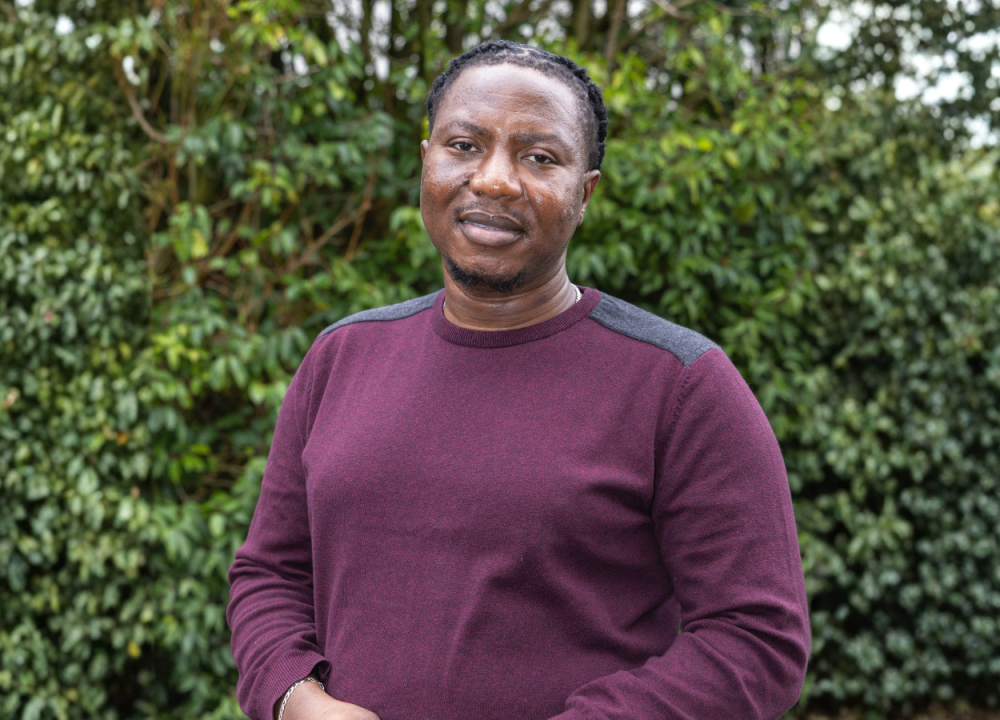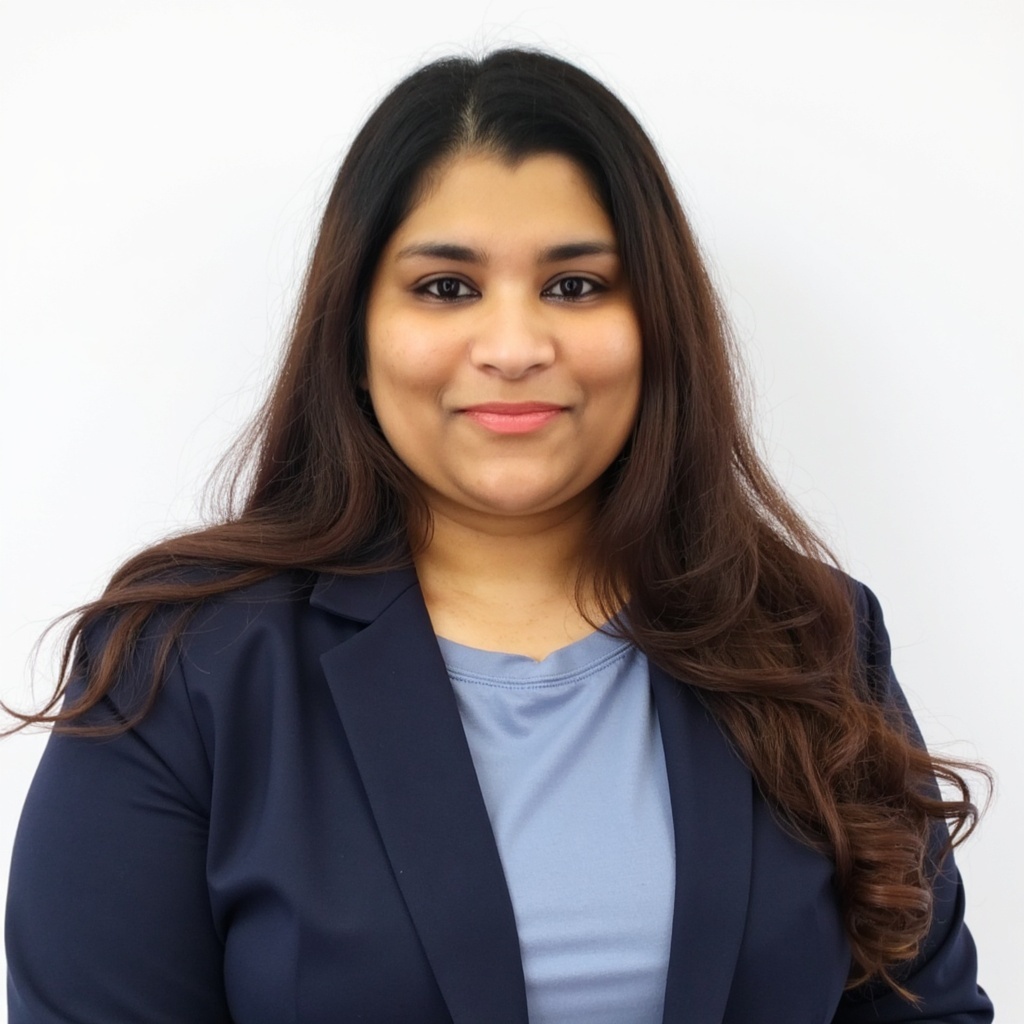
Dr Somya Pandey, Specialty Doctor in Psychiatry at Cygnet Hospital Harrow, has shared her experience of being diagnosed with Autism and ADHD as part of Autism Acceptance Month, offering a personal perspective on neurodivergence within the healthcare workforce.
Dr Pandey, who works across a general adult acute inpatient ward and previously in an autism and learning disability rehabilitation service, received her diagnoses just weeks ago after years of reflection, self-enquiry and professional dedication to understanding neurodivergence.
She said her story highlights the importance of recognising neurodivergence not as something to be “fixed”, but something to be understood, both within healthcare systems and wider society.
“The journey to self-acceptance often involves looking into the deepest, darkest corners of your mind and making sense of your shadows in a way that inspires you to move not just forward, but upwards in your life,” she said.
For Dr Pandey, this journey began during medical school, following a series of difficult experiences that led her to turn inward in search of understanding.
“I committed to the work, boldly and wildly. I went inward, I stayed there, and I kept going deeper.
“And yet, through all of it, one question remained unanswered. Why do I feel so different? It wasn’t for lack of trying. I had done the work, genuinely and deeply.
“But this particular question had a different quality to it. Turning inward to sit with it, I slowly realised it didn’t need fixing. It needed recognising.”
It was not until she began working in an autism and learning disability service that aspects of her experience began to make sense.
“I enjoyed working with my autistic patients so much that the ward and the shared space felt like home,” she explained.
“The rhythms of communication made sense to me in a way that felt intuitive, almost cellular. I didn’t have to translate myself. I didn’t have to perform ease. It just was.”
However, a later transition into a general adult acute ward brought new and unexpected challenges, including a prolonged period of anxiety and a sense of disconnection.
“On one ward, I had felt like I belonged. On this one, I felt like I was perpetually stuck in a loop, looking in from the outside but never quite fitting in.”
Initially, Dr Pandey attributed these challenges to differences in experience or training, undertaking further learning and development in response. However, she soon recognised a deeper explanation.
The relentless investigator that I am, I came to the conclusion that what was at play lived not in my skills, but in the fundamental nature of how I experienced the world.”
A pivotal moment came during a conference, where discussions around supporting neurodivergent colleagues resonated strongly with her own experiences.
Dr Pandey said: “Somewhere in the middle of a session, a doctor began speaking about how they support their colleagues with neurodivergence. I remember trying very hard not to cry.
“It was the particular ache of recognition of hearing your own private experience spoken aloud by a stranger, in a room full of people, and realising it had a shape, a name, a home.
“They were describing my life. The exhaustion I couldn’t explain. The environments that nourished and the ones that quietly drained. The years of trying harder when trying harder was never the answer. And here were so many others, feeling it too.
“In the weeks that followed, I found blogs and articles written by other doctors about their lives as neurodivergent professionals, and it felt like they were singing the song of my life.
“I understood then that I needed to find out whether the inkling growing within me had a genuine basis.”
This moment prompted Dr Pandey to seek a formal assessment, but said she experienced significant uncertainty along the way.
“The journey to finally getting an assessment was full of self-doubt.
“What if this was ‘just trauma’ that needed to be worked on? What if I was just being lazy and avoidant of certain aspects of my work?
“What if this was just an excuse I was latching on to, to explain my lack of zeal and confidence in general adult acute? What if I was trying to take up space in a community where I didn’t belong? And how intensely would I be shamed for doing so?”
Following a comprehensive diagnostic process, she received diagnoses of Autism and ADHD, an outcome she describes as “profoundly validating”.
She explained: “When I received my diagnoses of Autism and ADHD, what I felt wasn’t shock. It was something closer to relief with depth. Like a key turning in a lock I hadn’t known was there.
Suddenly, the years of exhaustion that had no visible cause made sense. The way I had always needed more recovery time than others after social demands.
“The hyper-focus that could make me extraordinary and the transition costs that could floor me.
“The texture of environments how some nourished and some depleted in ways I had never been able to articulate suddenly made sense too. My whole history rearranged itself into a more honest shape.
Dr Pandey highlights that while self-acceptance is an internal process, the role of supportive colleagues and inclusive workplace cultures is critical.
“The presence of genuine acceptance in your immediate community can be life-giving.
“There’s something to be said about the ease with which you are able to embrace yourself when you feel accepted by others.”
Marking Autism Acceptance Month, Dr Pandey is calling for greater compassion, understanding and inclusion across healthcare environments.
“Truly, self-acceptance for neurodivergence starts within. But how fortunate would we all be if we each had friends, colleagues, and communities that welcomed what we think are our sharp edges with open arms?
“Neurodivergence is not a problem to be solved. It has always been a person waiting to be known.”
“When we create spaces where every mind is welcomed every person is allowed to exhale.”