Earwax could help detect Parkinson’s earlier, study suggests
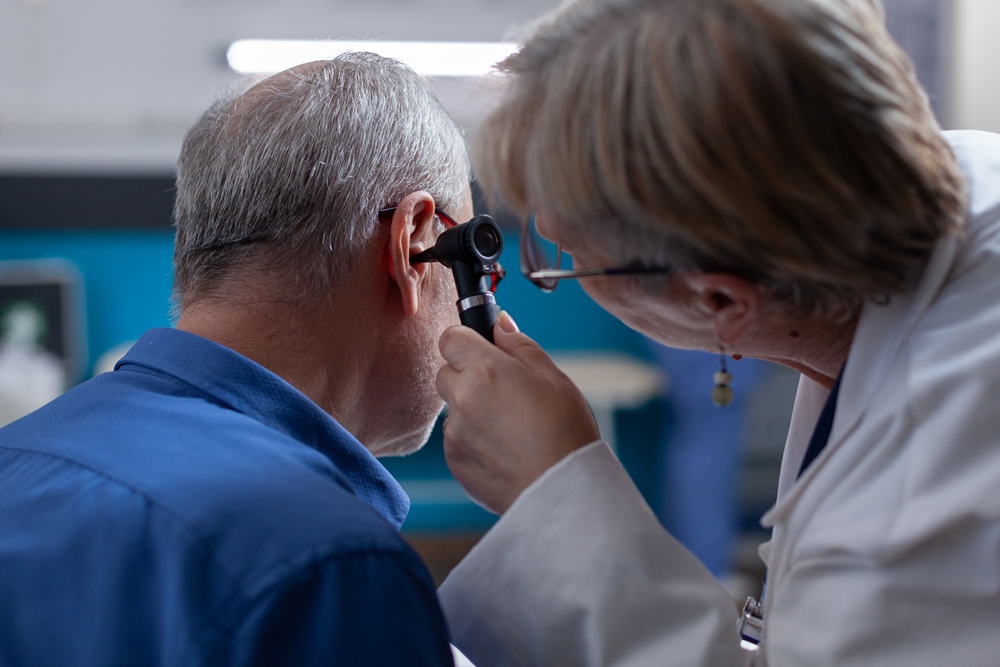
Chemicals in earwax may hold clues to early signs of Parkinson’s disease, with a new study reporting over 94 per cent diagnostic accuracy using these biological markers.
Researchers examined how volatile organic compounds (VOCs) – substances released by the body through natural processes – are altered by inflammation and nerve damage associated with Parkinson’s.
The team from Zhejiang University in China analysed earwax samples from 209 people, including 108 with a confirmed Parkinson’s diagnosis, building on earlier research showing that Parkinson’s can subtly alter body odour through changes to sebum – the oily substance that moisturises skin and hair.

They identified four key VOCs that differed between those with and without the disease: ethylbenzene, 4-ethyltoluene, pentanal, and 2-pentadecyl-1,3-dioxolane.
The researchers trained an artificial intelligence model on this data, achieving a reported 94 per cent accuracy in detecting Parkinson’s from earwax samples.
Compared to sebum, which can be influenced by air and environmental factors, earwax provides a more stable medium that protects VOCs from contamination.
The study follows a 2019 case involving a Scottish woman who was found to have the rare ability to detect Parkinson’s by smell.
Scientists at the University of Manchester later identified specific molecules on the skin that contributed to this scent, which they said could support earlier diagnosis.
Hao Dong, a biochemist at the Nanjing University of Aeronautics and Astronautics, said the next step would be to test the method in larger, more diverse populations, and at different stages of Parkinson’s.
Researchers believe the identified VOC changes may serve as a chemical fingerprint when used alongside other biological markers, potentially helping to diagnose Parkinson’s earlier or monitor how it progresses.
They also hope the work could one day lead to a simple ear swab test, offering a less invasive and more accessible alternative to lengthy clinical assessments and brain scans.