Over time, someone with Huntington’s disease may develop symptoms that mean living at home becomes unsafe.
While many people in the early stages of Huntington’s disease are able to live at home or in ‘mainstream’ residential homes or supported living, those in the middle and end stages of the disease may thrive in care homes that specialise in care for people with these complex health care needs.
Kingfisher View, part of Exemplar Health Care, is one of these specialist services that has the trained teams and facilities to support those with Huntington’s disease.
The specialist care service has a unique layout, with seven single and dual occupancy apartments which are fully equipped to maximise independence, and an in-house team of health care assistants, registered nurses and life skills coordinators who are trained in supporting those living with Huntington’s disease.
The team also has the expertise to support people who display complex behaviours of concern, which is often a symptom of those living with the disease.
This specialist care is bringing lots of benefits for the residents living there.
Meet Emma – Kingfisher View resident
 Emma lives at Kingfisher View care home in Castleford. She has a diagnosis of Huntington’s disease which impacts her daily living.
When Emma moved to Kingfisher View, she didn’t feel there was anything ‘wrong’ and didn’t want any support from the team.
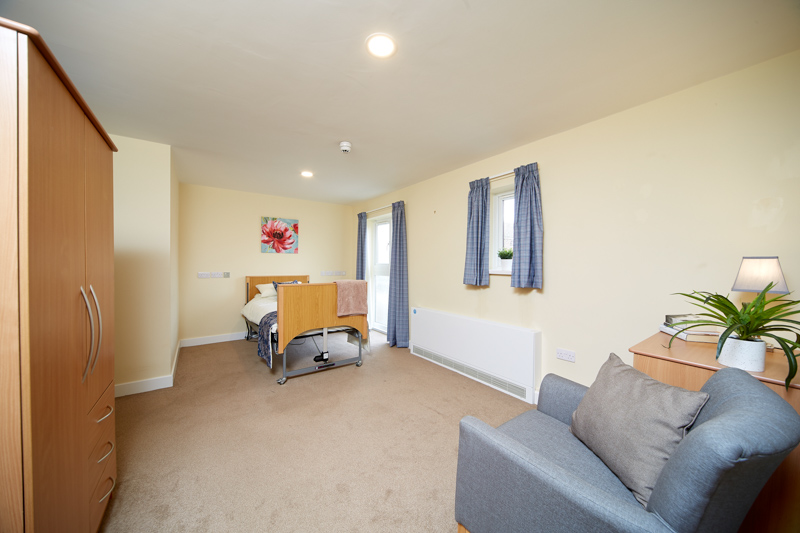
At the home, Emma has her own shared flat with a kitchen, lounge and en-suite wet room.
With 1:1 support from the nurse-led team and input from the activities team, Emma enjoys living a fulfilled life that’s full of meaningful activities.
She’s the life of the party and has recently enjoyed a holiday with support from the team, something she never thought she’d do again.
Living with Huntington’s disease
Emma has a diagnosis of Huntington’s disease which impacts her daily life in a huge way, including her cognition, mobility, speech and swallowing. She’s no longer able to remain at home with her two young sons.
Emma was hospitalised under a section after care in her own home failed. After being in hospital for a short period of time, she was soon ready to return to the community.
However, she refused to accept that she required any assistance or support, and felt that her condition had been created in order to keep her in hospital. All Emma wanted was to move back to her flat – the hospital environment was too much for her as she didn’t feel there was anything wrong.
Emma is only 38 and has lots of life left to live. She didn’t want to move into a ‘traditional’ nursing home, particularly one with others who are at the later stages of the disease, and needed something a bit different.
A community-based home
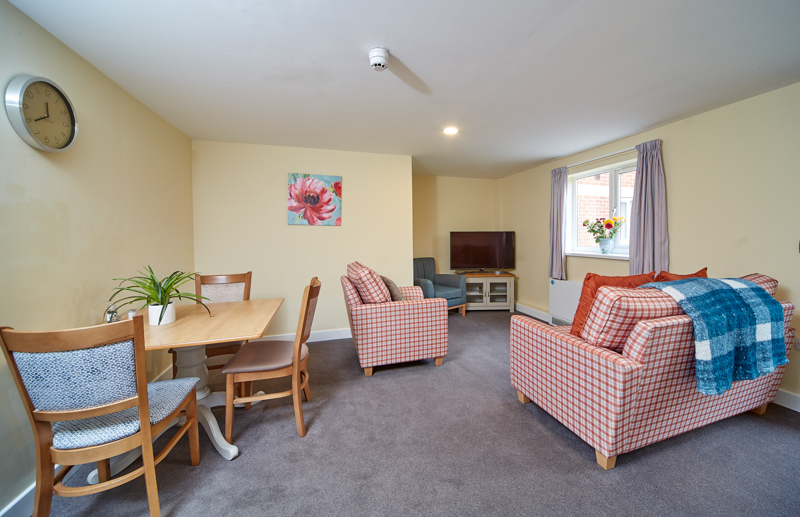
Kingfisher View was able to offer Emma a placement in a self-contained flat, sharing with another person with Huntington’s disease.
Here, she has a full kitchen, lounge, bedroom and en-suite wet room which allows Emma her own space.
When Emma arrived at Kingfisher View, she declined support, reporting that she didn’t need it.
The flat environment enabled staff to maintain a low profile, often offering her something to eat or drink with minimal engagement, at Emma’s choice.
This has allowed Emma to grow and build trust with the team in her own time.
Trained nurse-led teams
Emma is supported by a skilled clinical team with knowledge of Huntington’s disease and the skills to treat her physical care needs.
The high staffing levels at Kingfisher View enable the team to build trust with Emma and support her holistic needs.
Meaningful activities
Emma has a great sense of humor and enjoys a laugh with others.
The activities team and health care assistants support Emma to live a varied life that’s full of fun.
When Emma moved to Kingfisher View, she didn’t want to take part in group activities or access the community.
Over time, Emma started to trust the team and ask for support – now, they help her to clean her room, get dressed and make food.
A few months later, Emma’s favourite activities include visiting the local town centre to have her nails or hair done, clothes shopping, and day trips out to places such as The Deep and the local petting zoo. She often goes to the shops to complete her shopping list, which usually consists of ice cream and cigarettes!
Communal activities
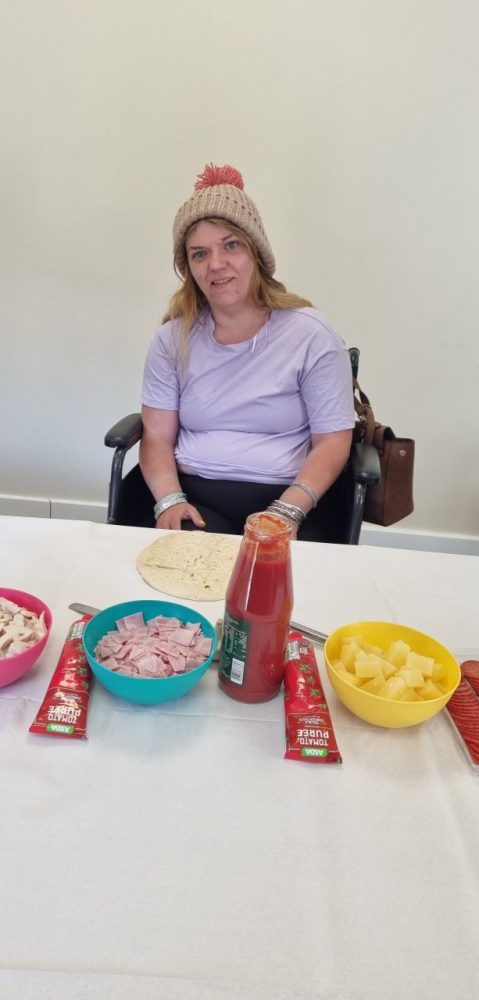
Kingfisher View offers communal activities and spaces outside of the self-contained flats, through which Emma has built relationships with her peers.
When she first moved to Kingfisher View, Emma enjoyed spending time on her own in the garden or reading her book.
Over time, she started to build friendships with other service users and chatting to staff.
Now, Emma loves joining in group meals, having a boogie at the disco and attending our special ‘bar nights’ where her favorite tipple is a gin and tonic or a Prosecco!
These events are tailored for our service users and allow them to enjoy a drink in a safe manner that still feels like a night drinking with friends.
Emma has established relationships with health care assistants of a similar age who feel like friends to her. This means that she gets all of the joy of a day out with the girls, despite the ‘limitations’ of her diagnosis.
A fulfilling life
The bespoke set up at Kingfisher View has given Emma a unique experience – she has developed trusting and lasting relationships in a place of safety, despite her condition progressing.
It has also allowed Emma to come to terms with the changes she’s experienced without having to observe others with a similar condition decline in front of her.
Emma has continued to be the life and soul of the party. Having Huntington’s disease has not slowed her down one bit. She’s the joker of our service, loving nothing more than a water fight, scaring staff or playing practical jokes.
Emma has come to accept her diagnosis, not necessarily that she has Huntington’s disease but that her body is changing, her movements are at times involuntary and that she’s not as steady on her feet.
She has begun to recognise that she needs support from staff and is unable to care for her sons like she wants to.
Along with the changes of her body movements and health needs, Emma has liaised with the nursing staff and is now accepting of two health medications, which she consents to taking and which help to keep her condition as stable as possible.
Emma has regained some independence with her finances, being supported to use a contactless bank card so she can shop till she drops without ‘feeling like a baby’ (as she stated she felt like when staff used to handle her money).
Emma has a designated team of family liaison workers who help her to maintain relationships with her family at her own pace.
Holidaying with the team

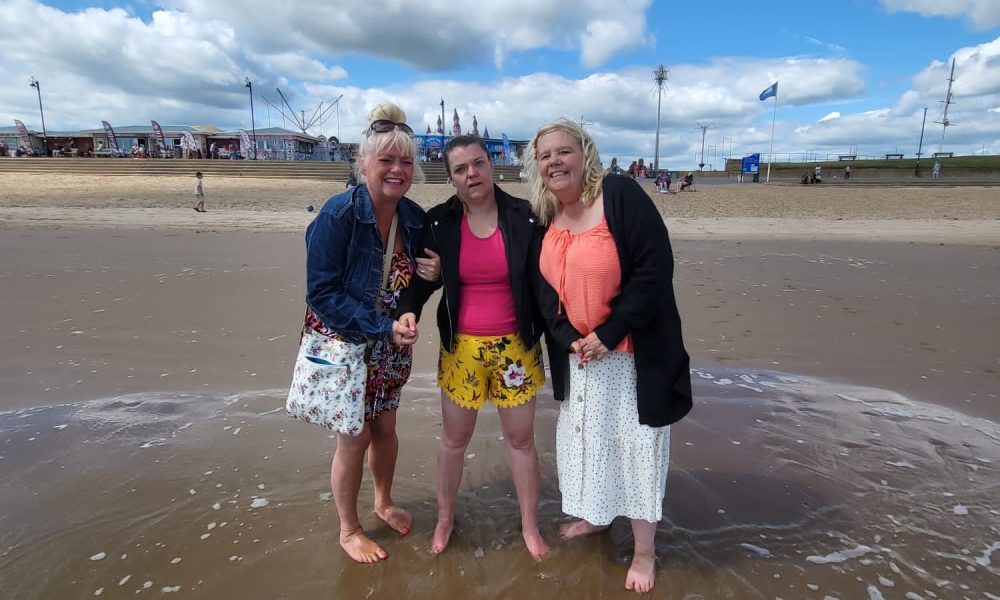
In June 2022, Emma enjoyed a holiday with two other service users. They enjoyed two nights in a lodge in Mablethorpe.
On arrival, Emma shared how ‘posh’ it was and presented as relaxed, chilling on the sofa with her legs crossed.
Whilst away, she went to the pub and enjoyed a meal out and a shandy with her peers.
They visited the shop on site to choose ice cream, went for a walk on the beach and went shopping for a new handbag.
Whilst there, Emma said the only thing that she’d change is that she’d love for her sons to be there. The team supported Emma to write a letter to them to share her experiences, which she was happy with.
At the end of the holiday she said that she had a great time and the only thing she’d change is that she wanted to stay longer!