‘Orphan neuron’ research could help spinal injury patients stand again
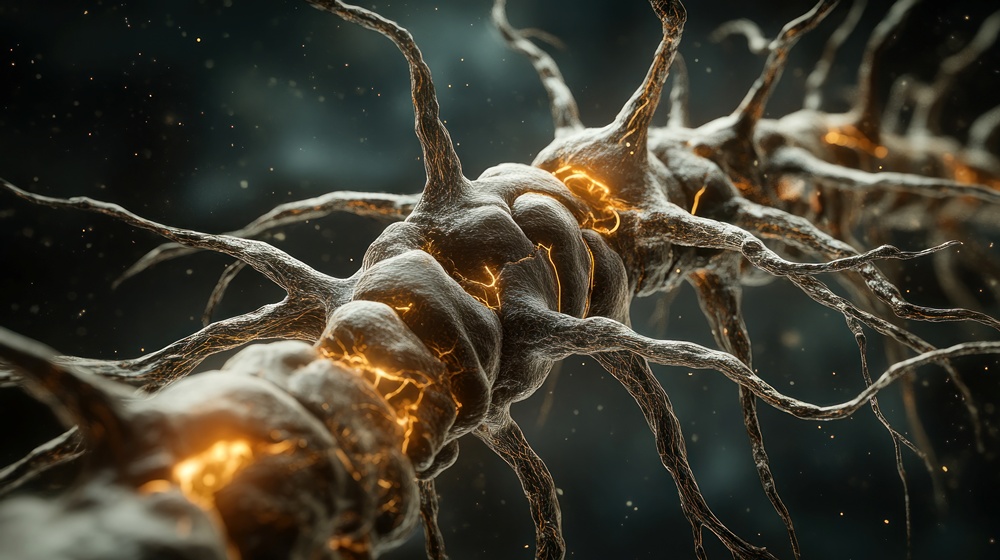
A five-year study will examine V3 neurons, with the aim of one day helping people with spinal cord injury stand again.
The University of Alberta team is led by David Bennett, professor in the faculty of rehabilitation medicine, and has been awarded CA$1.39m by the Canadian Institutes of Health Research.
It is one of 23 University of Alberta research projects to receive more than CA$18m through CIHR’s Fall 2025 Project Grants and Priority Announcements.
The work builds on 10 years of research on V3 neurons, highly connected spinal neurons that receive messages from the brain and send instructions to the motor neurons that control muscles in the legs and arms.
Bennett said: “V3 neurons are what I call ‘orphan neurons’ because we didn’t really know what they did in comparison to many other neurons that we know are involved in rhythmic walking movements.
“They sit quietly most of the time, and we didn’t have the tools before to study them.”
Thanks to new molecular methods for the genetic identification and manipulation of neurons, Bennett’s team discovered that V3 neurons initiate and co-ordinate muscle spasms in mice with spinal cord injuries.
They found that when V3 neurons were silenced, the spasms stopped.
The team then found that V3 neurons were crucial to the mice’s ability to stand. If the neurons were silenced early in life, the mice found other ways to stand but remained awkward and clumsy.
If the neurons were silenced later in life, the mice could not stand up at all. The researchers also found they could make paralysed mice stand up by stimulating V3 neurons.
“Our research indicates the V3 neurons are pretty much essential for basic postural tone for standing, and if we activate them, we can restore standing ability in animals with spinal cord injury and in uninjured animals,” Bennett said.
Bennett cautioned that the role of V3 neurons has not yet been definitively proven in humans, but V3-like neurons are known to work this way in zebrafish, mice, rats and cats, and it is highly likely they work the same way in primates and humans.
“There’s really no doubt these neurons exist in humans. The key question now is how you would activate them after spinal cord injury to restore standing in humans,” he said.
He noted that leg spasms are annoying and even painful for people with spinal cord injuries because the legs suddenly lock into a straightened position.
Bennett suggested this is remnant V3 activity that is mostly turned off after spinal cord injury because messages from the brain can no longer reach the neurons.
He said V3 neurons are usually very quiet, only activating and staying turned on when an animal is standing or walking.
“On a day-to-day basis, when you do motions like stand up from your chair, that’s V3 neurons,” Bennett said.
“They’re so powerful in their action that the nervous system keeps them under wraps most of the time, otherwise we would have uncontrolled spasms.”
Bennett, who is a member of the Neuroscience and Mental Health Institute, cautioned that while the research is promising, it will be many years before it can be confirmed or tested in humans.
It has been known for years that by stimulating nerves in a core circuit called the central pattern generator, people with spinal cord injuries can make walking motions with their legs.
“What was always the missing thing, is that you need to stand before you can walk,” he said, noting that when V3 neurons are stimulated, it drives up heart rate and blood flow.
“We think these neurons are kind of like the centre for saying, ‘OK, let’s get ready. We’re going to stand now. We’ve got to turn on more breathing, more muscle tone.’
“And it’s co-ordinated. It’s not just random,” Bennett said.
Future research could explore how to harness muscle spasms in people with spinal cord injury to help them stand.
The goal could be to develop a collection of nerve stimulation methods that aid standing, rather than generating spasms. Another approach would be to use viruses to infiltrate the neurons and use them to control their action.
The Bennett lab is also just completing another grant that looked at using V3 neurons to improve sensory perception following spinal cord injury.
That work is expected to be published within the year.
“You can imagine that with spinal cord injury, you’re not only losing sensory input to the brain and your sense of limb movement, which you need to make proper movements.
“You’re also losing control over transmission to the brain of those sensory inputs,” he said.
“What we found is that activating V3 neurons and other sensory pathways can improve sensory perception after spinal cord injury.”
For now, he is focused on the new CIHR-funded project.
“My goal over the next five years is to definitively prove that the V3 neuron underlies basic standing behaviour in intact animals, and that this can be harnessed to restore standing in mice after spinal cord injury.”