



Pilot clinical trial to test if early intervention after brain injury enhances cognitive recovery
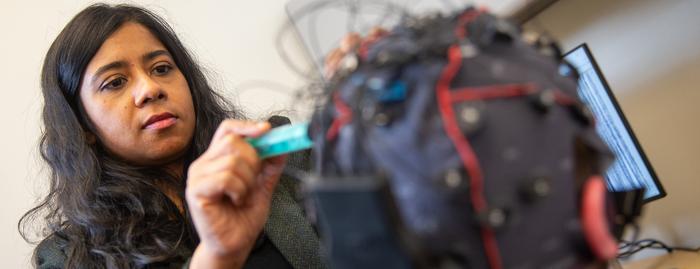
A US researcher has been awarded an $810,000 grant to conduct a pilot clinical trial testing noninvasive electrical brain stimulation as a cognitive rehabilitation method.
Electrical brain stimulation is currently used to treat neurologic disorders such as epilepsy and Parkinson’s disease, but it has generally been applied in the later, or chronic, phases of traubatic brain injury (TBI) recovery.
The study will examine how electrical brain stimulation affects patients when it is administered in the early stages of recovery known as the acute phase.
Ishita Basu, PhD, is assistant professor in the Department of Neurosurgery at the University of Cincinnati College of Medicine.
Basu’s research began focused on cognitive processes that are disrupted by mental health disorders, but she has expanded her scope to include how brain injuries such as stroke and TBI affect similar processes.
Basu said: “I wanted to expand to TBI, as there are a lot of unmet needs in terms of cognitive rehabilitation in this population.
“It is crucial to develop treatments for early phases of TBI to better improve cognitive recovery and prevent long-term cognitive impairments.
“There is limited evidence available for efficacy and safety of brain stimulation in improving cognitive outcomes during acute stages of TBI, and these time-sensitive cognitive therapies have yet to be fully explored.”

The trial will test a brain stimulation technique called anodal transcranial electrical stimulation (A-tES), a noninvasive treatment in which a low-intensity electric current is administered through electrodes placed on the scalp.
Basu said: “We think that treating TBI earlier with A-tES during the acute and early chronic phases of brain injury will better improve cognitive recovery compared to a similar treatment used only in the chronic phase.”
Over three years, the trial plans to enrol 60 patients with moderate to severe TBI being treated at UC Medical Center and follow the patients over six months.
All participants will first complete clinical questionnaires and two cognitive computer tasks while their brain activity is recorded during the acute phase of TBI recovery.
Participants will then be randomised to either receive A-tES for 15 minutes while performing cognitive tasks or to receive a sham stimulation.
At three months, all participants will again complete the questionnaires and receive A-tES while performing cognitive tasks during brain recording.
Six months after their injury, participants will complete the questionnaires and tasks a final time, with no one receiving stimulation treatment.
Basu said the primary goals of the study are to determine how brain activity changes with cognitive recovery between the acute and chronic phases of TBI and to determine how the time of administering A-tES affects cognitive performance and brain activity in patients following a TBI.
Basu said: “We aim to demonstrate that early treatment with targeted brain stimulation can enhance cognitive recovery in moderate to severe TBI and can be integrated with current clinical monitoring and management after TBI.”
Collaborating with a community advisory board (CAB) of TBI survivors, caregivers and medical experts, the researchers will also develop a quality-of-life questionnaire. CAB members will be involved in interpreting the quality-of-life results and how they relate to other outcome measures.
The team hopes data from the pilot study will also help lay the groundwork for a larger clinical trial with more participants and a longer follow-up period.
Basu said: “Our long-term vision is for patients with TBI to go back to regular daily living and cognitive function within months of their injury.
“We hope that this will be a cognitive rehabilitation tool that will accelerate recovery post-injury.”
Image: Photo/Andrew Higley/UC Marketing + Brand


