Scientists develop method to ‘sculpt’ brain activity, paving way for new treatment techniques
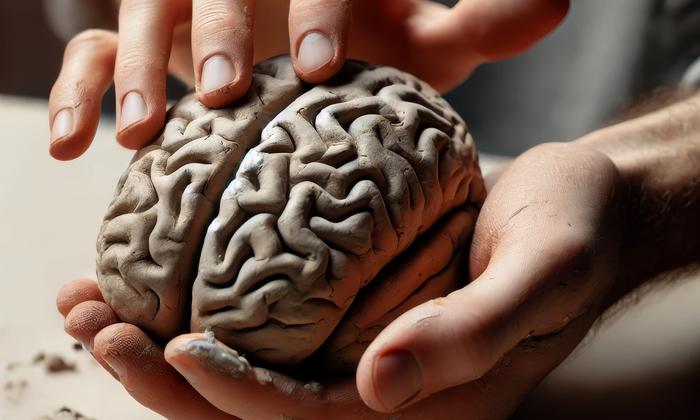
Researchers in the US have developed a new technique that allows scientists to “sculpt” brain activity patterns, enabling people to learn new visual categories without being explicitly taught.
The novel technique could one day lead to better treatment of psychiatric and developmental disorders such as depression or autism.
Coraline Iordan is an assistant professor of brain and cognitive sciences and of neuroscience at the University of Rochester.
The researcher said: ““With our method not only can we nudge complex patterns around in the brain toward known ones, but also—for the first time—write directly a new pattern into the brain and measure what effect that has on a person’s behaviour.”
The scientists used real-time neuroimaging and second-by-second neurofeedback to modify how the brain represents and processes information about visual objects.
Lying inside a functional magnetic resonance imaging (fMRI) machine, study participants viewed objects projected onto a mirror above their heads, which looked like a small screen.
The object—an abstract shape that some participants described as a petal, plant bulb, or butterfly—pulsed gently on the participants’ mirror until they managed to “move it” by their own thought processes to the pattern of activity in their brain (monitored via fMRI in real time) that the scientists had previously chosen.
The researchers instructed the participants to “generate a mental state” that would reduce the shape’s oscillation but had not taught the study participants how to achieve such mental state.
Co-author Jonathan Cohen, a cognitive neuroscientist at Princeton University.
He said: “One of the striking features of the study is that the neural responses and corresponding behaviour to the new categories occurred without explicit awareness of those categories, showing that a long tradition of work in psychology on implicit processing—that is, the ability to respond to information meaningfully outside of awareness—also extends to the learning and formation of new neural representations.”

The immediate feedback given to the study participants here meant that the image stopped wobbling on their mirror once they successfully managed to represent the visual object more similarly to a brain activity pattern that the researchers had previously designated, instead of how the object would have been represented in their brains naturally.
In other words, the scientists had developed a method that caused people to learn new categories of visual objects, not by teaching them what the categories were, but by changing how their brains worked when they looked at the individual objects in those categories.
Iordan said: “Instead of teaching you something and measuring how your brain changes, we wrote a new category into your brain that would have appeared had you learned it yourself.
“Then we tested whether you saw the new category that we had inserted. Turns out you did.”
To ensure study participants were highly motivated to succeed, they were rewarded monetarily if they managed to stop the image wobble, which over six daily sessions could amount to a sizeable bonus.
Future applications
Scientists are working to better understand what exactly happens to brain function in people with a variety of neuropsychiatric, developmental or psychological disorders, such as major depression, visual agnosias (the inability to recognise everyday items), and autism.
According to Iordan, a method like theirs may eventually play a role in clinical treatment by modifying the brain patterns of patients to make theirs look more similar to the brain patterns found in the neurotypical population, which down the road could lead to new approaches for treatment, either by itself or in conjunction with already existing therapies.
Co-author Nicholas Turk-Browne is a psychologist at Yale University.
The researcher said: “This study is one of the most powerful demonstrations yet of brain training with real-time fMRI.
“Dr Iordan used neurofeedback to help humans create a category in their mind that then influenced their behaviour.
“In the future, this discovery could inform the development of brain-computer interfaces and clinical interventions.”
At its core lies the scientists’ ability to access the brain in a way that hasn’t been done before.
Iordan said: “We essentially turned learning on its head and taught your brain something that caused you to vicariously gain information, even though you were never explicitly given that information.
“That tells us we have access to the building blocks of learning in the brain in a way that we haven’t had before—for learning things that are much more complicated, such as entire categories of items, complex visual things, or potentially even beyond that someday.”
Image: University of Rochester illustration / using DALL-E