A chef who continues to rebuild his life after a stroke has helped to guide an Emmerdale actor through one of his toughest acting challenges, when his character is struck by stroke.
Viewers of the ITV soap last night saw much-loved Marlon Dingle collapse after a stroke, in a storyline which will run for months as the chef and his new fiancée Rhona come to terms with his illness and its consequences.
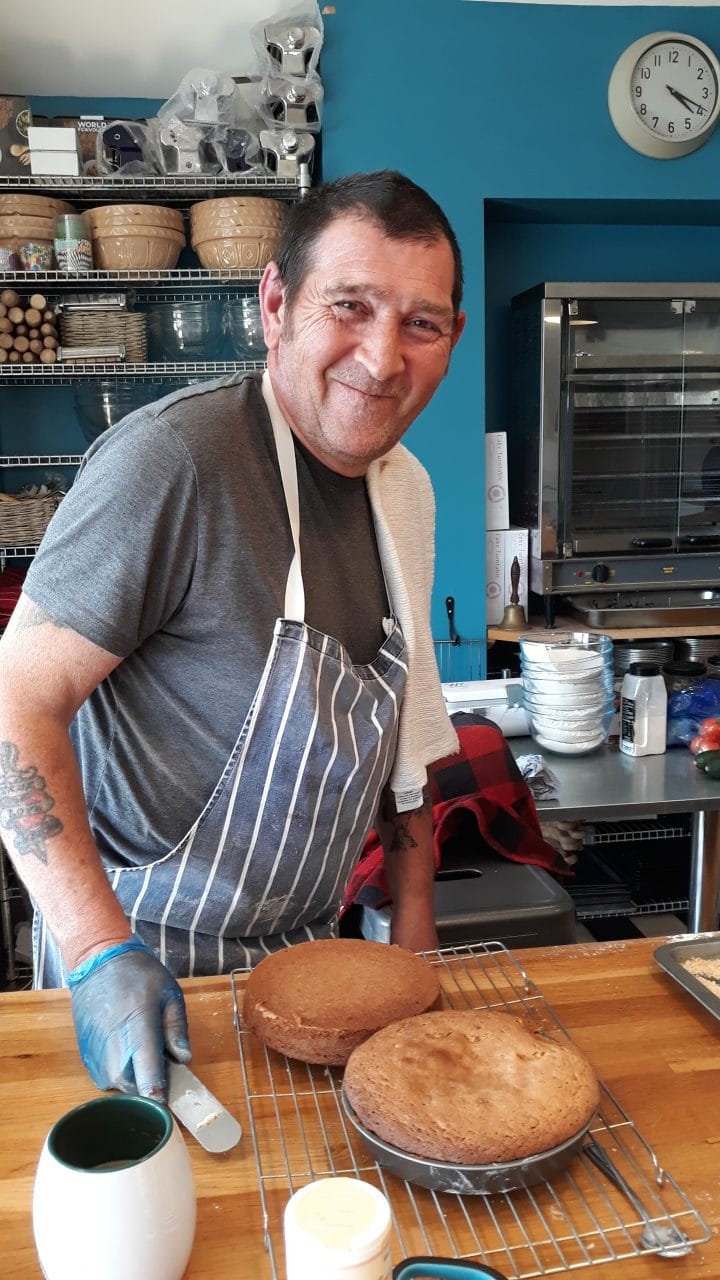 Chris King, a chef from Sandwich in Kent, has helped to advise actor Mark Charnock around the physical and emotional difficulties caused by stroke, to enable him to portray stroke as accurately as possible.
Chris’s stroke in May 2016 left him unable to use his left arm and with only limited use of his left leg. He was also unable to work after his stroke.
He spoke to Mark about his experience and the mental battle to get over his stroke, which he found far tougher than the physical difficulties.
“I told Mark a lot about how it has affected me mentally and how in the blink of an eye, the simplest of things like tying shoelaces, putting on socks and a pair of trousers become real life challenges,” said 55-year-old Chris, who had to sign a confidentiality agreement until news of the storyline broke.
“What I realised quite quickly was I needed to listen and believe in the occupational therapist to re-teach me what I needed to know.
“So the first main challenge became how to get dressed with only the use of one hand. I was lucky my dominant side survived the stroke.
“It was something I just didn’t believe would be a challenge, little did I know. So it was off to buy new socks with elasticated tops so I could stretch them with one hand.
“New T-shirts, elasticated trousers and tracks, velcro trainers, no laces. Then it became about listening and learning and believing I could do this. Things like living on my own again were never a thought as I had too much to relearn.
“However the realisation that my job had gone, and there were slim chances of working ever again, was sinking in fast.
“Something I also had to learn was how to overcome mental fatigue and frustration, which was probably harder than all the rest.”
Chris’s stroke happened when part of a furred-up artery in his neck broke away and the clot blocked the blood supply to his brain.
He believes that the long hours, stress and social pressures of working as a chef were also a factor in his stroke.

“I was a workaholic. Always in the kitchen, always busy,” said Chris
“My average working week was 96 hours. I would be in at 6am and work through until gone midnight by the time we’d clean down and sorted out the kitchen for the next day. I would just have a mini break in the middle of the day.
“You work a long shift. Most sensible people when they finished work would go and get into bed but in the catering industry winding down is an essential part of the job.
“You’d settle down and have a few beers which would turn into the vodka bottle coming out. You probably wouldn’t go to bed until half two, three in the morning, then back up at half past five.
“And I used to smoke between 20 and 30 cigarettes a day. You’re asking your body to do a lot which you shouldn’t ask it to.”
“I would tell other chefs not to work the stupidly long hours I did. No amount of money is worth your health.”
Chris was asked to speak about his experience of stroke after Emmerdale producers approached the Stroke Association. Chris and fellow survivor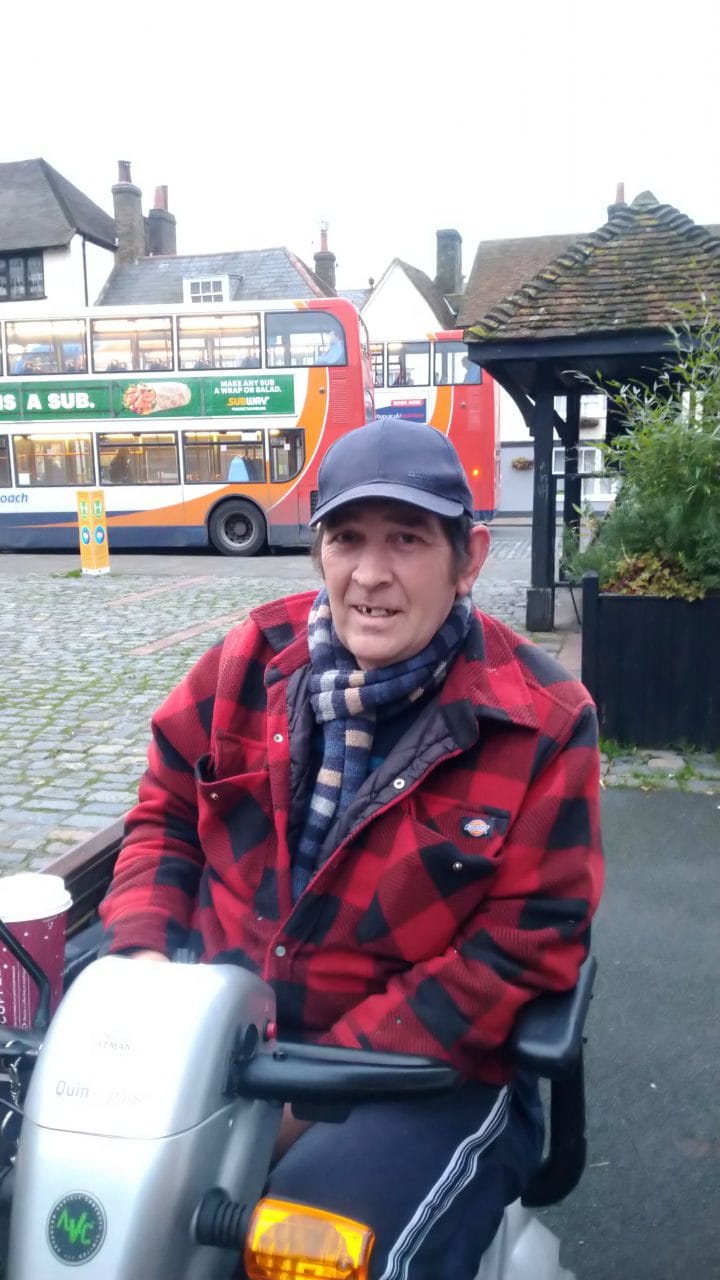 Nick Hounsfield from Bristol spoke with Mark.
“I have learnt so much and am shocked it affects so many,” said actor Mark.
“I found filming this storyline very emotive and the bravery of the survivors in dealing with their strokes is incredible. I hope we can do this story justice.”
Chris said he is delighted stroke and its life-changing impact, on both the survivor and their family and friends, is being portrayed in front of an audience of millions.
“It’s great that Emmerdale is doing this storyline,” he said.
“People see the FAST advert on TV but that’s just recognising signs. People don’t see the full impact of stroke can have and that’s why it’s important to portray it on TV.
“Marlon has a daughter and it’s really important for Emmerdale viewers to understand the impact on those nearest and dearest.”
Happily, Chris is now rebuilding his life through volunteering at the Chequers Kitchen Cookery School, a social enterprise in Deal which supports its social mission by also offering recreational cookery classes, team building and dining events for the general public.
Chris shares his skills with other stroke survivors, showing them how to cook delicious fresh meals.
During the pandemic his classes moved online, initially just for stroke survivors in the south of England, hosted by the Stroke Association.
With funding from the Port of Dover Community Fund via the Kent Community Foundation, the Stroke Association has recently been able to open up ‘Cook with Chris’, so stroke survivors across the country can watch on Zoom.
“Getting back in the kitchen gave me a purpose and a chance to help others,” said Chris.
“It gave me something to look forward to. It is nice to put my experience to good use and help people who are struggling with anxiety or
confidence.
“It’s great when I see people realise: If he can do it, what’s my excuse to say I can’t?
“I thought something you can do with one hand is bread making. I put a class together around that. Then I thought, what goes really well alongside it is making soup.
“We’ve also made mince beef cobbler, home-made pizzas, cakes, curries and other things.
“Many stroke survivors don’t have much money and by cooking at home, you can stretch the pennies. During my classes we use things up, we make sure we never waste anything.
“When people do their own food they become aware of what goes into their food and can control that so you can cut down on the salt and make meals more healthy.
“Now I look at recipes in a completely different way. I know a lot of stroke survivors have only got use of one side of their body. Most vegetables are round and when you’ve only got one arm you can’t hold it and cut it up at the same time.
“So I had to work out how to overcome this. If you’ve only got one hand, nine times out of ten that onion is going to roll around the chopping board. You learn the art of using a really sharp knife to half it.
“I show the guys in my classes how to have a really sharp knife and use it safely. Once I’ve got two halves there’s a flat surface. It’s about show and tell. It’s about building up that confidence. I look at a recipe and I break it down into simple steps.”
- To join Cook with Chris sessions on the third Wednesday of every month at 2.30pm, email Lynn Vincent [email protected] or call on 07507 400284 or Stephanie Hayman [email protected] or call 01304 362 288