


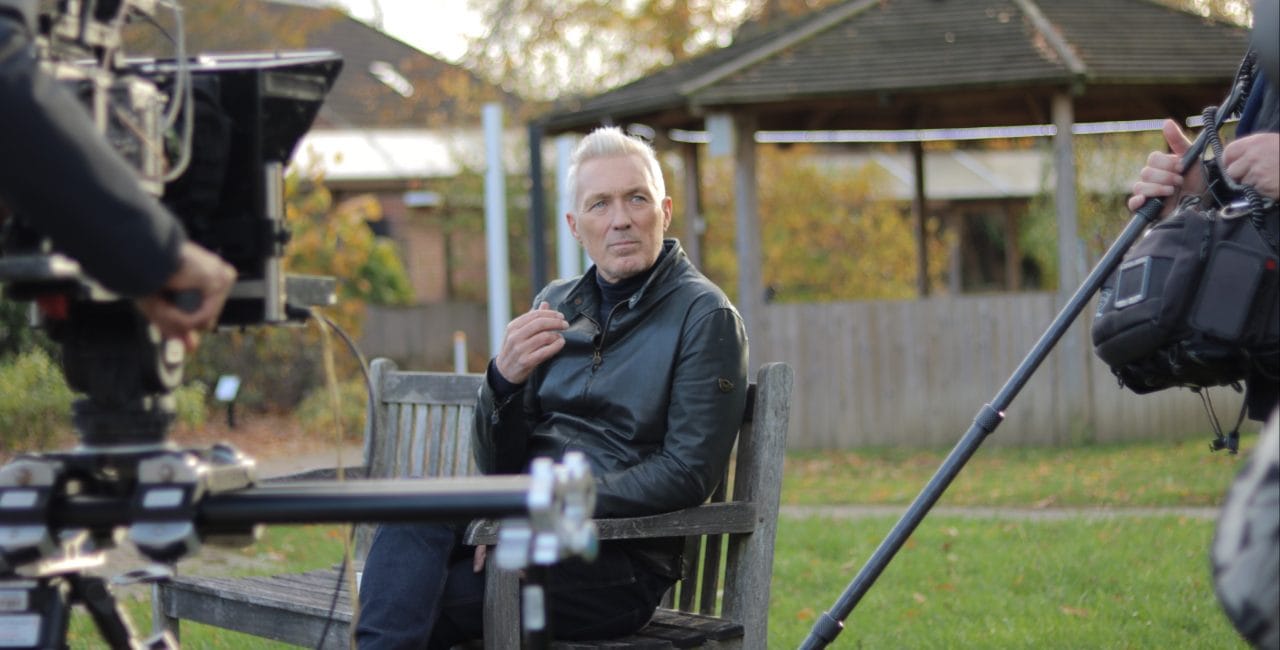
TV star Martin Kemp pledges support for children’s brain injury charity
A charity which provides residential and community care for children with neurological injuries and disabilities has secured the support of a celebrity who himself has overcome brain trauma in appealing for vital funds to sustain its work.
From its base in Tadworth, Surrey, The Children’s Trust has worked with 3,000 children and their families in the past two years, delivering specialist rehabilitation and tailored support as they rebuild their lives following injury or illness.
In support of its fundraising efforts, TV and music star Martin Kemp has committed his support, fronting a BBC Lifeline documentary to highlight the work of the charity.

Experts warn over pension changes
Senior professionals and practice owners must keep abreast of new and impending changes to pension arrangements and assess whether changes are needed to existing future plans, experts have warned.
A new and welcomed pensions annual allowance regime came into force during lockdown. This very broadly permits those with income and pension contributions of up to £240,000 to be entitled to a pension annual allowance of £40,000 during the tax year.
However, the annual allowance, introduced on April 6 to take effect from 2020/21 onwards, will continue to be reduced by £1 for every £2 of income exceeding the threshold, as was the case previously.
The maximum reduction in annual allowance is now £36,000, leaving those with an income and pension contributions of £312,000, with a pension annual allowance of only £4,000. So, while the income threshold has increased, taxpayers do need to be acutely aware of their annual incomes and annual pension contributions to assess whether they may in fact have a lower pension allowance than they anticipated.

Abnormal proteins unleash latent toxicity in neurodegenerative diseases
Most neurological diseases have one thing in common: an accumulation of abnormal proteins around neurons. Researchers agree that these improperly fabricated proteins become progressively more toxic by interacting with healthy proteins, disrupting their functions. This picture, however, may be incomplete, according to a study.
In a recent study published in the Journal of Cell Biology, scientists from Daegu Gyeongbuk Institute of Science and Technology, Korea, have discovered the mechanism of action by which abnormal proteins actually unleash the inherent, but normally latent, toxicity of a natural protein in neurons, causing defects in dendrites (branched parts of a neuron that connect to the next neuron). Therefore, their results provide some clarity as to what actually goes on in diseased neurons. Though the researchers focused on Machado-Joseph disease (MJD), the implications of their results are relevant to other diseases as well.
Individualised brain stimulation therapy improves language performance in stroke survivors
Canadian scientists are pioneering the use of individualised brain stimulation therapy to treat aphasia in recovering stroke patients.
Aphasia is a debilitating language disorder that impacts all forms of verbal communication, including speech, language comprehension, and reading and writing abilities. It affects around one-third of stroke survivors, but can also be present in those with dementia, especially in the form of primary progressive aphasia. "Aphasia can be very isolating," says Dr. Jed Meltzer, Baycrest's Canada Research Chair in Interventional Cognitive Neuroscience and a neurorehabilitation scientist at Baycrest's Rotman Research Institute (RRI). "It can negatively affect people's personal relationships, and it often determines whether or not someone can continue working."
Cannabinoids may help limit secondary damage of TBIs
In the hours and days after a traumatic brain injury, inflammation inside the brain can accelerate to the point that more brain damage occurs, says a scientist working to better understand the acceleration and whether interventions like cannabinoids can improve patient outcomes.
While some TBI patients do well, most would benefit from therapy to create a better balance between the vigorous inflammation needed in the immediate injury aftermath to clean up the site and the deceleration needed to complete healing and avoid more brain damage, says Dr. Kumar Vaibhav, translational neuroscientist in the Department of Neurosurgery at the Medical College of Georgia. "You cannot suppress the entire pro-inflammatory process otherwise it would be difficult to recover from your injury," Vaibhav says. But in this case, there is too much inflammation, a major factor in the reality that one-third of hospitalized patients with a TBI die from damage that continues after their acute injury.
Pain management technology innovator wins prestigious award
A key figure in UK case management has won a prestigious award in recognition of her work in opening up access to chronic pain management support through innovative use of digital technology.
Deborah Edwards has overseen the creation of the RESTORE programme, an eight-week online support and coaching initiative which is helping people across the country to improve how they manage and deal with pain. The “revolutionary” programme, which delivers evidence-based improvements in sleep and movement for chronic pain sufferers, has enabled people to bypass long NHS waiting times to access a tailored programme and bespoke advice from specialists.
‘My brain injury ruined my life – I wanted to end it all’
Having suffered a traumatic brain injury in an assault aged only 24, Martin’s life was changed forever. Here, he tells NR Times how his personality was changed beyond recognition, and why he is now relieved his suicide attempt failed.
It was a Wednesday morning. The sun was shining, children walked past my house on their way to school, it was a day like any other. But for me, today was different. Today was the day I decided I no longer wanted to be in this world.
I took one last look at the sun from my window, closed the blinds, then went to my bedroom with a cocktail of pills to hopefully make it all just end…
Having suffered a brain injury two years previously in a violent assault, which left me with a personality even I didn’t recognise, my life was in ruins.


