The light and shade of brain injury recovery

When comic artist Wallis Eates saw an ad from Headway East London looking for an artist in residence for the charity’s art studio, she knew she had to apply…

Headway’s East London studio provides a place for members, who all have acquired brain injuries, to create artwork. Eates’ own line of work leading up to this included autobiographical comics, and digital storytelling with prisoners. “I’d been looking for ways to help others share their stories or collaborate on story-sharing,” she tells NR Times.
By |2024-07-04T17:59:17+01:008 September 2020|Interviews, Insight, News|

ADHD drug could treat TBI-related depression – study

Ritalin may be the best course of treatment for depression caused by a traumatic brain injury, researchers have found.

Depression is the most common consequence of a TBI, according new research published in the journal Brain Injury. Up to one third of people have been found to have depression in the first year of having their injury, rising to 61 per cent in the subsequent seven years. Depression has been found to impact recovery after a brain injury, and increase the risk of suicide, the paper states. There are three main types of treatment for TBI-related depression: medicine, psychological interventions, and brain stimulation, otherwise known as transcranial magnetic stimulation (TMS).
By |2024-07-04T17:46:56+01:008 September 2020|News|

Virtual rehab “effective” for stroke recovery, research shows

Since the beginning of the pandemic in March, therapists  have adapted face-to-face services to comply with social distancing measures. While many patients and practitioners alike seemed to adapt well, now research has confirmed that it can be a practical way of delivering rehab for stroke patients.

A new paper, co-authored by Brodie Sakakibara, assistant professor at the Centre for Chronic Disease Prevention and Management has found that remote, virtual rehab works for people recovering from a stroke. Six clinical trials were launched across Canada as part of a Heart and Stroke Foundation initiative, where people recovering from a stroke were given interventions including memory, speech and physical exercise training.
By |2024-07-04T17:46:56+01:008 September 2020|Uncategorised, News|

Campaigners call on health secretary to stop closure of Kent stroke units

At a Hilton Hotel in Maidstone on Valentine's Day last year, protestors interrupted a group of GPs as they voted unanimously to stop commissioning acute stroke services in four hospital across Kent and Medway, where there are around 3,000 cases of stroke treated every year.

Under the Joint Committee of Clinical Commissioning Groups for the Review of Urgent Stroke Services in Kent and Medway’s new plans to adopt three hyper-acute stroke services, there will instead be a 34-bed unit at Darent Valley Hospital, a 38-bed unit at Maidstone Hospital and a 52-bed unit at William Harvey Hospital, along with a two-bed outflow at Eastbourne General Hospital. This means acute services at Margate’s Queen Elizabeth the Queen Mother Hospital (QEQM), Medway Hospital, Tunbridge Wells Hospital, and Kent and Canterbury Hospital will stop.
By |2024-07-04T17:46:56+01:003 September 2020|News|

Blood pressure meds more effective at stroke prevention than previously thought

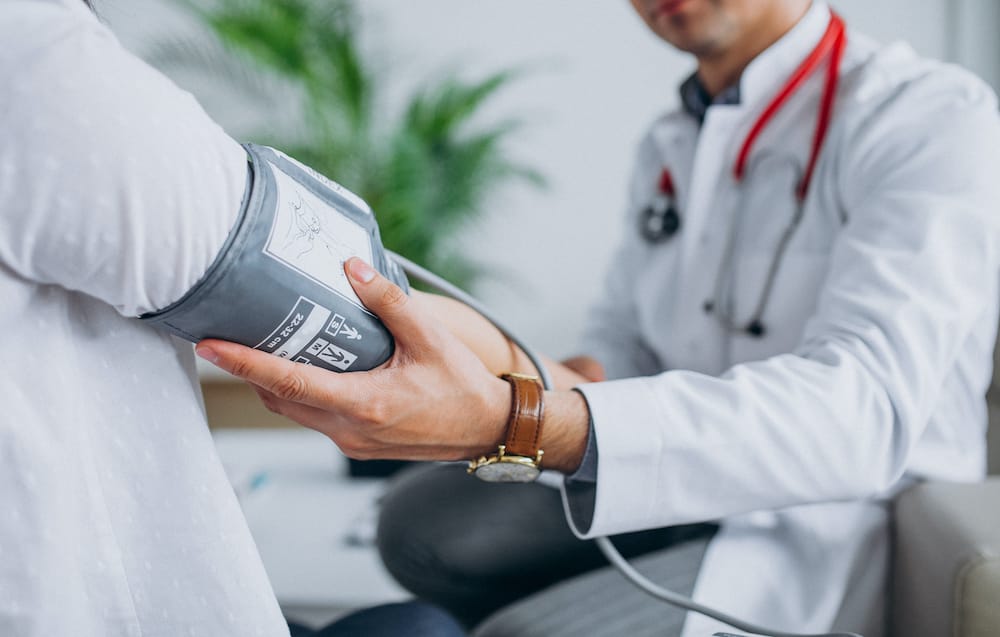
Blood pressure medication can prevent heart attacks and strokes, even in people with normal blood pressure, according to new research.

It has previously been contested whether blood pressure medication is equally beneficial in heart attack and stroke patients compared to those who haven’t had a stroke or heart attack, and when blood pressure is normal. But new research, presented at the European Society of Cardiology Congress 2020, has found that it can. "Greater drops in blood pressure with medication lead to greater reductions in the risk of heart attacks and strokes," said principal investigator Kazem Rahimi of the University of Oxford.
By |2024-07-04T17:46:56+01:003 September 2020|News|

Stroke crisis looming for Scotland – report

Scotland urgently needs a long-term plan for stroke care to avoid a ‘crisis’, a leading charity has warned.

New official figures released by Public Health Scotland show that compliance with the Stroke Care Bundle, support that aims to decrease deaths, was 64 per cent in 2019 across the NHS. This is an increase from 2018, when 59 per cent met Stoke Care Bundle targets. No health board in Scotland met the 80 per cent target.
By |2024-07-04T17:46:56+01:002 September 2020|News|

Leading disability conference postponed until next year

Mobility and disability conference Naidex has postponed this year’s event until spring next year.

The event was originally scheduled for 17 and 18 March this year, and was initially pushed back to 9 and 10 November this year. The event’s organisers, Naidex, have now confirmed the event will take place on 9 and 10 March 2021 at the NEC in Birmingham. The event had confirmed speakers including wheelchair athletes, disability rights champions, inclusion leads, motivation speakers and charity CEOs ROAR B2B, the organisers of Naidex, say the ‘extremely difficult’ decision comes after extensive consultation with its partners, exhibitors and visitors.
By |2024-07-04T17:46:56+01:002 September 2020|News|

How social factors can influence stroke risk

It's well established that social factors, such as income, race and education, are associated with poorer health. Now, researchers have found that some of these social determinants of health are linked to a cumulative increased risk of stroke.

Researchers in the US have found that people under the age of 75 with three or more social determinants of health (SDOH) are almost 2.5 times more likely to have a stroke than those who don't have any. Race, education, income and social isolation were associated with a higher risk of stroke, and the risk increased alongside the number of social determinants of health a person had.
By |2024-07-04T17:46:57+01:001 September 2020|News|

Stimulation therapy helps man walk again in world first

Researchers have, for the first time, shown that synchronising electrical and magnetic stimulation therapy, otherwise known as paired associative stimulation therapy (PAS), can improve a paraplegic patient’s ability to walk.

Researchers at the BioMag Laboratory, operated by the University of Helsinki, Helsinki University Hospital and Aalto University, have previously found that stimulating the motor nerves of the brain and limbs can be useful for motor rehab in patients with spinal cord injuries by strengthening neural connections and, in turn, restoring patients' mobility. In 2016, researchers showed that applying a modified version of the original PAS to two spinal cord injury patients can enhance motor output of paretic muscles and return movement to such paralysed muscles.
By |2024-07-04T17:46:57+01:001 September 2020|News|
Go to Top