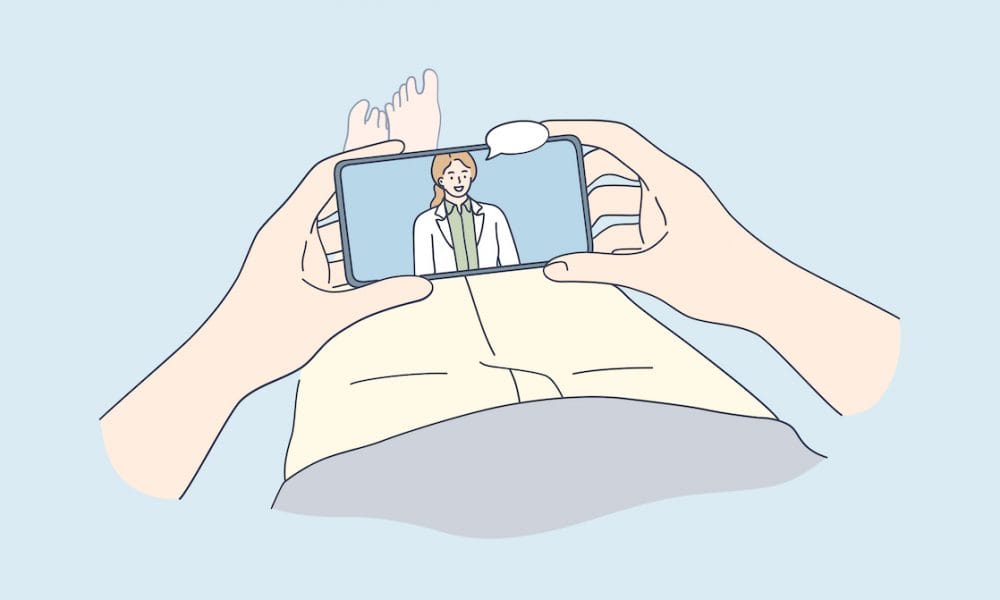
Where mental health help is scarce, telehealth can make a big difference to people’s lives, new research has revealed.
When medical resources cannot be accessed in person, due to matters including COVID restrictions or geography, a virtual connection has shown to help people living with serious mental health conditions access effective care.
The randomised study of just over 1,000 people with post-traumatic stress disorder (PTSD), bipolar disorder or both conditions shows that most patients engaged with either of two types of telehealth. The study also gives insights into which patients might need additional support when getting such care.
Half of the patients connected directly with a far-away psychiatrist and psychologist, while the other half mostly engaged with team members at the local primary care clinic who received guidance from a distant psychiatrist.
In both situations, most patients responded well to medication and/or psychotherapy for their condition.
One major difference emerged: those patients who were assigned to get a form of psychotherapy from a specially-trained nurse or social worker on staff at their local clinic ended up completing 60 per cent more such sessions than those who were assigned to connect with a psychologist via video.
The ongoing in-person contact with their nurses or social workers checking on their other health needs may have been a contributing factor, the report states.

The findings, come from the Study to Promote Innovation in Rural Integrated Telepsychiatry, or SPIRIT trial, which involved patients from 24 safety-net clinics in Michigan, Washington and Arkansas. They support previous research which highlights the positive role remote support can play in mental health.
Dr Jennifer Severe, of the Department of Psychiatry at Michigan Medicine, the University of Michigan’s academic medical centre, led this secondary analysis of the SPIRIT data along with fellow U-M psychiatrist Dr Paul Pfeiffer, and Dr John Fortney of the Department of Psychiatry and Behavioral Sciences at the University of Washington.
“The study (which began pre-pandemic) started at a time where clinicians had reservations about treating psychiatrically complex patients with telehealth or integrated care models. Understandably, engagement in care was one of the many concerns,” said Dr Severe.
“This study showed that patients with multiple psychiatric conditions and who also struggle with several chronic physical health problems can engage well in mental health treatment with their primary care doctors or remote mental health specialists.”
The two approaches used in the study were:
- Telepsychiatry Collaborative Care, in which a psychiatrist makes the initial diagnosis via video and the local clinic team provides brief psychotherapy while the local primary care physician handles medication prescriptions with consultation from the telepsychiatrist
- Telepsychiatry/Telepsychology Enhanced Referral, in which a psychiatrist makes the initial diagnosis and handles medication prescriptions, and a psychologist provides psychotherapy by telehealth
Last summer, another study using data from the SPIRIT trial showed that patients in both groups reported substantially and statistically significant improvements in perceived access to care, decreases in their mental health symptoms and medication side effects, and improvements in their quality of life. There was no difference between the groups, and there were no differences in outcomes regarding age, gender, race or ethnicity.
The new study dives deeper into how patients’ own clinical characteristics affected their experience with telehealth, and how well they stuck with the treatment course.
The analysis shows that patients who have issues with drugs, and those experiencing manic symptoms from their bipolar disorder, may need additional support to get started on psychotherapy or to stay with it.
It also shows that those who have multiple physical health conditions may be most likely to keep pace with their mental health medications and talk therapy programs, likely because they are already coming to the primary care clinic for other types of care.