



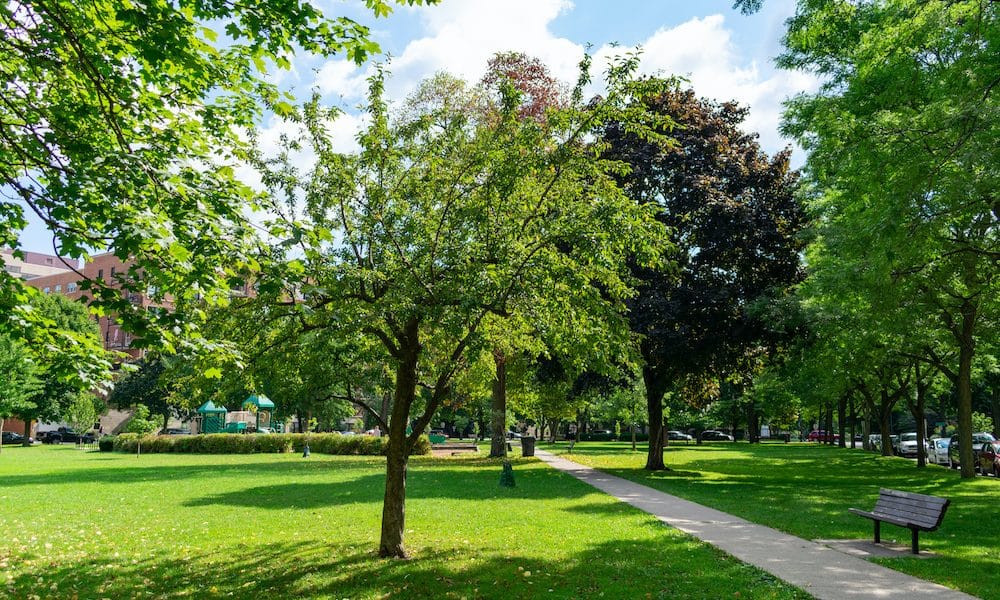
People who were able to access green space and get outdoors during the first year of the COVID-19 pandemic reported significantly less depression and anxiety, a new study has revealed.
The research also found that, at a time when mental health problems soared, people sought solace in the great outdoors, with one-third spending more time there than they did pre-COVID.
“This research shows how critical it is to keep parks and green spaces open in times of crisis,” said senior author Dr Colleen Reid, an assistant professor in the Institute for Behavioral Science at the University of Colorado Boulder.
“It also shows that, as a public health measure, more effort should be made to put in green spaces and make them accessible.”
For the study, the authors presented about 1,200 Denver-area residents with a 30-minute survey gauging their mental health and their perceptions of green space near their home, including how much there was, whether they could see it, whether it was accessible, how much they used it and its quality.
They also collected aerial satellite imagery to objectively quantify greenery in respondents’ neighbourhoods.
Once COVID-19 emerged and lockdowns ensued, Dr Reid added additional questions, providing a rare opportunity to also look at how the pandemic influenced mental health over time and what was most stressful about it.

Surprisingly, the study found no association between being diagnosed with COVID and having poor mental health. But respondents reported that having symptoms, no diagnosis and no way to test was distressing.
Those who lost income or felt they were working in an unsafe environment were also more likely to be stressed or depressed, while the strongest source of mental health problems was a fear of supply shortages.
In contrast, merely having abundant green space nearby, as measured by satellite images, was associated with lower depression scores.
To get the most benefit out of nearby green space, the study found, people had to get out and use it. Those who used green space most had significantly lower anxiety and depression.
“There are many dimensions of green space, and our study looked closely at how these dimensions impact mental health,” said Rieves, noting that policymakers often rely solely on objective measures, like satellite images or proximity to parks when assessing whether to invest in more greenery in a community.
On a satellite image, Rieves points out, a large patch of greenery could actually be a weed-filled lot. A ‘nearby park’ could be on the other side of a busy highway.
“It’s not just about being able to see trees from your home. The amount, quality and accessibility of that green space matters,” said co-author Emma Rieves.
Many public agencies closed public green spaces, including neighbourhood playgrounds and national parks, at the onset of the pandemic for fear that the virus could be easily spread via surfaces.
Once parks reopened, with places like gyms, bars and churches still closed, Coloradans flocked to the outdoors: 33 per cent of respondents reported spending more time in parks or on trails than the year before.
The study adds to a growing body of evidence suggesting that green space can have a measurable impact on health.
“Spend more time outside,” added Rieves. “Pandemic or no pandemic, it’s good for your mental health.”


