Due to the improvement of medicine and the consequent increase in overall life expectancy, the prevalence of neurological disorders and need for neurorehab among the population is becoming higher and higher.
These disorders include Alzheimer’s disease, the presence of brain damage due to stroke, traumatic brain injury or tumour, MS or epilepsy.
In all of them, there is usually long-term cognitive impairment, with the profile and severity of the deficit varying from case to case.
This has an impact on people’s daily functioning, even more than that caused by the physical limitations which are also present in many cases, which makes an appropriate intervention necessary in this field while trying to provide these people with a decent quality of life.
Due to this, in recent years there has been a greater awareness and several advances in the area of cognitive rehabilitation, involving different professionals such as neuropsychologists, occupational therapists or speech therapists.
One of the most relevant advances is related to the revolution in the field of technology and its application to neurorehabilitation, both at the level of intervention with the patient and monitoring of the process.
Numerous applications have emerged within this framework of new technologies, but care must be taken when choosing and knowing how to differentiate between those that really meet the necessary conditions for the professional to carry out an adequate intervention.
It is essential that it is based on a robust theoretical model of brain functioning and allows the professional to design an intervention that meets the following points:
– Be an adequately planned process in which the specific objectives to be achieved with each patient in the short, medium and long term will be established (the subject must also participate in some decisions in the planning of the intervention).
– Be an active and dynamic process, which will be adjusted to the patient’s needs as he or she evolves in the different areas (cognitive, emotional, functional and social).
Be individual and personalised, adjusting to the needs, interests and situation of each person
– Develop tasks with ecological validity and generalisable value, so that the learning achieved is transferred to the patient’s personal context. To this end, real situations must be worked on and, specifically, of the type that the person must face in their day-to-day life, so that the acquisition of skills will be useful in real life.
– Propose a hierarchical organization, since all the affected areas should be addressed, starting with the non-specific aspects until reaching the specific ones.
– Adapt the level of difficulty progressively, starting with tasks that require minimal demands and gradually progressing to higher levels of difficulty (always as far as the patient can tolerate).
– Be motivating and present appropriate reinforcement throughout the process. It is essential that the patient is aware of how he or she is doing during the process and understanding why each task is being done. It may be convenient to give examples from his or her real life.
– Make systematic records that allow us to assess how the patient evolves in the development of the rehabilitation process, which will allow us to know if the methods we are using lead to the expected result or if they need to be changed.
– Carry out a final evaluation of the effectiveness of the rehabilitation, which, compared with the previous evaluation, will tell us if we have really achieved our objectives.
On this occasion we are going to focus on the importance of personalisation, which will allow the intervention to be adjusted to the needs, interests and situation of each individual.
This is essential to motivate the patient and to achieve useful objectives in each situation (ecological value), which can vary immensely from one patient to another.
Let’s think for example of two patients with Alzheimer’s disease.
It might seem that both would have a similar profile and need the same intervention, but while one is in a nursing home, grew up in the countryside and cannot read or write, the other lives at home with his son and daughter-in-law, with two school-age grandchildren who spend a lot of time interacting with him, and during his working life he was a banker in the city.
Both their cultural background and experience, as well as their interests and daily circumstances, are totally different, so it is convenient to analyse what kind of content would be more practical and necessary to work with each of them.
With this premise in mind, the NeuronUP platform stands out, allowing numerous aspects to be customised and adapted, enabling the professional to quickly and easily design the most appropriate intervention in each case.
On the one hand, the general characteristics of the activity can be customised (maximum time, instructions, inactivity warnings in case the patient has attentional problems, errors allowed, etc).
On the other hand, the professional can choose the specific parameters of the activity, which allows the level to be adapted in a precise way (for example, in a task of memorising objects, the number of items that will appear and the time to memorise them could be chosen).
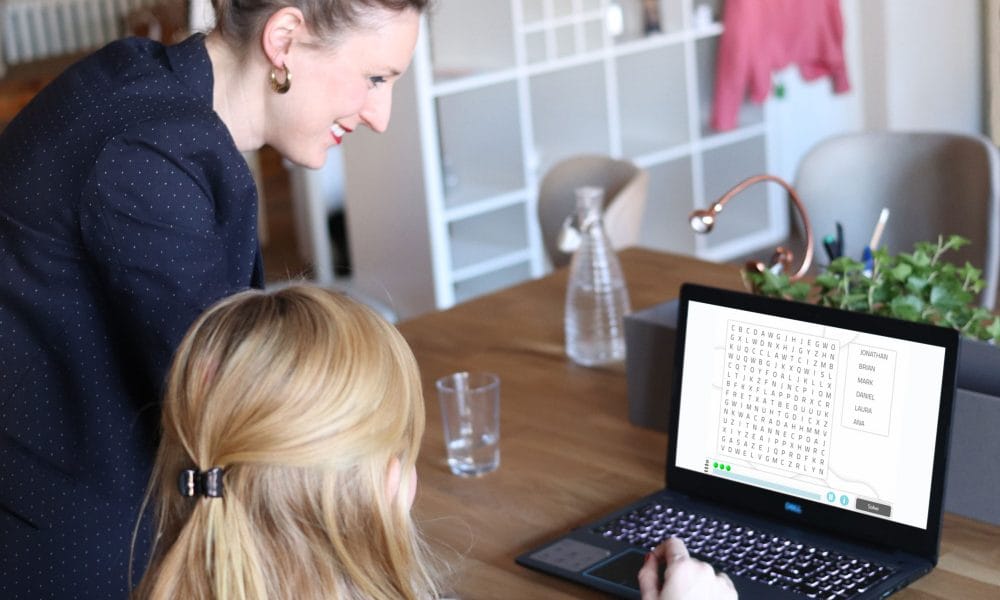
Materials can also be customised to make the activity more motivating and meaningful for the patient (in word search, one could choose the words to look for or in a social cognition activity include relevant situations of his daily life).
Finally, in appropriate cases, the adaptability when interacting with the game can be customised (if the patient has a touch screen, probably the most intuitive way is to drag the elements, but in case of mobility or mouse use problems, the professional can choose that the movement of elements is done by simple clicks).
The appropriate choice of all these possibilities has demonstrated better patient outcomes and greater adherence to the intervention.