A serious assault has left John with severe brain damage. NR Times discovers how attending SweetTree’s therapeutic care farm has benefited him on his recovery journey.
John is one of SweetTree Home Care Service’s clients. As a result of his brain injury following an assault, he experiences challenges with communication, socialisation and his planning and executive functions, but is supported by brain injury specialists who are helping him to enhance his overall level of independence.
As a former gardener and lover of animals, John has always enjoyed working outdoors. His SweetTree Care manager felt his wellbeing, independence and personal development would benefit from having a personalised care programme which would allow him to enjoy the company’s 15-acre therapeutic care farm based in Mill Hill.
Clients like John can access the farm as part of their therapeutic journey under either a group-based support package or with one-two-one support provided by a specialist support worker.
The facilities include a varied programme of activities ranging from animal husbandry to horticulture, cooking to crafts, and can make a real difference to individuals in helping them achieve their goals.
“The farm has really changed John’s life for the better,” says John’s brother, Graham. “Following the assault, he lost his job and his independence and had nothing to look forward to, but his visits to the SweetTree Fields Farm have changed all of that.
“John was welcomed to the farm on his first visit by lots of friendly and happy faces. The farm manager was fantastic and immediately made him feel at ease. On his first day he was sowing broccoli seeds which he loved, it really triggered his interest in gardening and the outdoors again which is fantastic as before he had nothing to look forward to.”
At the beginning of the programme, the team at SweetTree has assessed John’s needs, abilities, risks and likes and dislikes to draw up a personalised care plan. His care manager has then identified a range of goals which govern the activities he undertakes with his support workers during his visits to the farm.
Each day John attends the farm where a programme of engagement is created for him that supports the achievement of his developmental goals. To improve his level of socialisation, many of the activities are specifically configured to involve working in a group setting which helps enhance his ability to communicate with others – something that has been a challenge since his brain injury.
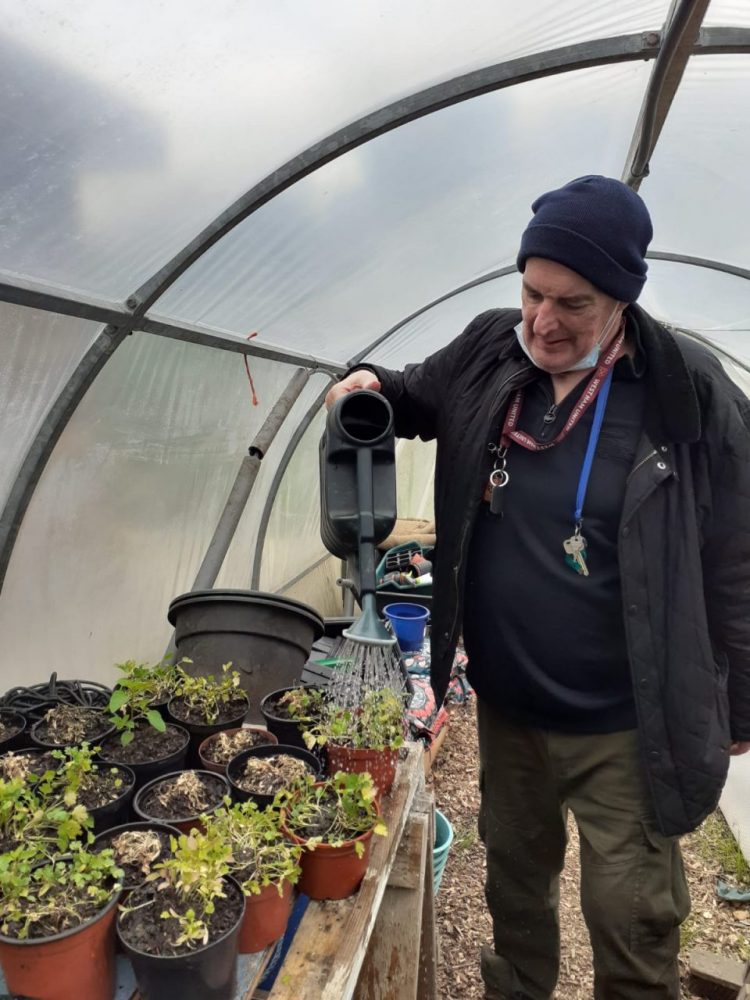
John visits the farm every week
John’s love of animals is used to help develop his planning and executive function skills by ensuring that he spends time with his support worker planning any animal husbandry tasks he will do on that day.
Where possible, the support worker will work with him the day before a visit to the farm to think through what is going to happen the next day so he has the opportunity to repeat the planning process numerous times before carrying out an activity.
Gemma Johnson, SweetTree Fields Farm Service Manager, says: “All of the projects and activities we do on the farm are created as a vehicle to deliver therapeutic health and social care outcomes. The farm service offers an incredible environment to place these outcomes in a meaningful, engaging and fun context.
“I do not know of any other care provider with its own farm that is specifically and solely designed to enhance the lives of those that we support. We are blessed to share these opportunities and successes with our clients on our beautiful farm.”
John is reaping the benefits of working at the farm for four hours every Thursday and it is something he looks forward to every week.
“It is really nice to see him happy again and that is all down to his visits to the SweetTree Fields Farm,” his brother adds. “It has given him a new lease of life and a new sense of purpose.
“As well as the gardening activities, he enjoys seeing the animals on the farm and meeting other clients. Whilst the injuries have left him almost non-verbal, you can tell by the few words he utters and his facial expressions the impact that attending the farm has had on his life and how happy it makes him. We couldn’t ask for anything more.”
For more information, visit sweettree.co.uk.