Researchers awarded grants to tackle Parkinson’s and osteoarthritis
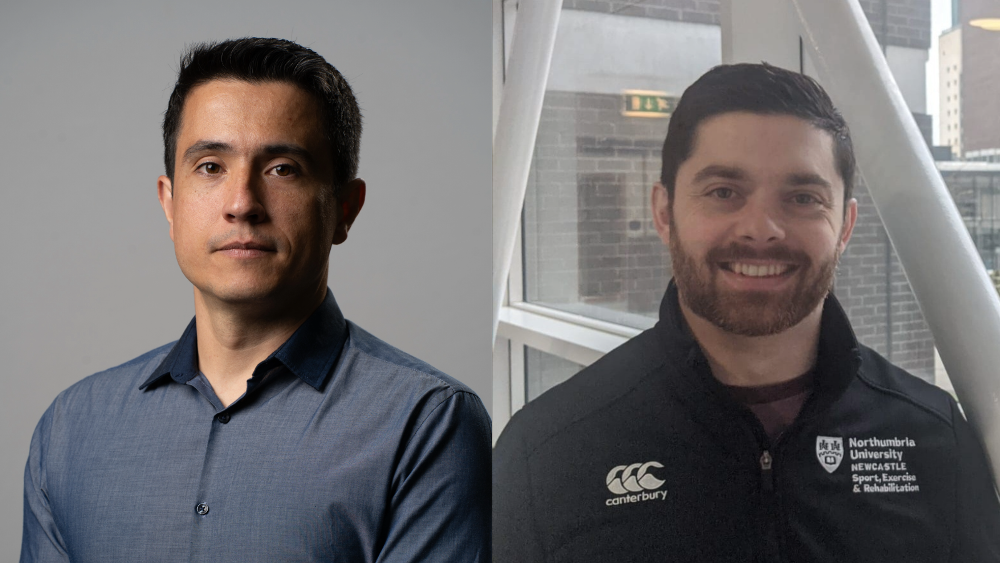
Two Northumbria University researchers have won grants for Parkinson’s disease and knee osteoarthritis projects in a £6.7m health research scheme.
Dr Rodrigo Vitorio and Dr Justin Andrushko, both from Northumbria’s School of Sport, Exercise and Rehabilitation, are among 55 early career scientists across the UK to receive funding from the Academy of Medical Sciences’ Springboard programme.
The scheme supports researchers at a key stage in their careers, helping them build independent research groups and pursue ideas that could improve patient care.
Dr Vitorio is investigating whether a safe, low-cost form of non-invasive brain stimulation could help people with Parkinson’s disease overcome persistent problems with walking and balance.

Many people living with Parkinson’s find these symptoms respond only partly to medication, increasing their risk of falls and reducing their independence.
His project will test how transcranial direct current stimulation, or tDCS, which uses a mild electrical current delivered through a head-worn device, can be optimised and personalised for individual patients.
The research will also assess whether people can use the technology in their own homes, focusing on the practical difference it could make to everyday life.
Dr Vitorio said: “I am delighted to receive the Academy’s Springboard support, which will enable me to take a crucial next step in understanding how tDCS can be optimised and personalised for people with Parkinson’s.”
“The project will identify a precise tDCS dose for each individual, potentially leading to enhanced benefits in walking and balance that truly translate to better quality of life for people with Parkinson’s.”
“By testing whether people can use this safe, low-cost technology in their own homes, I hope to show that tDCS can be not just effective, but genuinely accessible to those who need it most.”
Dr Justin Andrushko is leading a pilot clinical trial exploring a new approach to treating knee osteoarthritis, a condition that disproportionately affects women and affects the lives of millions of people across the UK.
His research focuses on cross-education, a technique in which training one leg can produce strength and functional gains in the other, offering a way to improve mobility without placing demands on a painful joint.
Working in partnership with Healthworks in Newcastle, the trial will test whether this approach can be delivered effectively within a community exercise programme and make a meaningful difference to patients’ quality of life.
Dr Andrushko said: “I am thrilled to receive the Academy of Medical Sciences Springboard Award. Knee osteoarthritis disproportionately affects women, and pain can limit how effectively they respond to standard exercise treatments.”
“By focusing on the unaffected leg, this approach sidesteps that barrier entirely. We hope to demonstrate that this strategy is both feasible and effective in real-world community settings, and that it can make a meaningful difference to people’s quality of life.”
UK science minister Lord Vallance said: “To tackle cruel diseases like Alzheimer’s, Parkinson’s and chronic pain, and ultimately save lives, we must help researchers to take their ambitious discovery-stage work to the next level.
“This support is backing researchers at a stage where attracting commercial investment can be a challenge and builds on the Government’s record investment in research, unlocking more discoveries that benefit people across the UK and beyond.”