About Andrew Mernin

This author has not yet filled in any details.
So far Andrew Mernin has created 640 blog entries.

Youth justice measures must go further – report

The UN Convention on the Rights of the Child (UNCRC), an international human rights treaty, released General Comment 24, in which it recommends that more effort should be made to divert children with developmental difficulties away from criminal proceedings. The guidance asserts that these children “should not be in the child justice system at all”, but when they are, “should be individually assessed” to enable appropriate safeguards to ensure the protection of their rights without discrimination.

By |2024-07-04T17:47:55+01:0031 January 2020|News|

Out of the shadows

“I was hearing the same story over and over again,” says neuropsychologist Dr Sherrie Baehr. “It was one of isolation, sadness and loss of direction.” These accounts came from brain injury survivors who, with depressing regularity, told Sherrie how society was rejecting them post-injury. After one such tale too many, she decided to take affirmative action by launching a charity that enables people with brain injuries to help themselves by helping others.

On the road to reinvention

Byron Konizi wants to do away with the word ‘rehabilitation’. He believes he has a better term for brain injury recovery. But this is no lexical whimsy. His conclusion comes after a decades-long journey into the world of neurological treatment, to the brink of death and back again. It started with a bike ride at age six that sent him freewheeling onto another life trajectory. He fell off, sustaining a head injury - the first in a series of traumatic brain experiences in his life. These dark chapters have shaped a new organisation that wants to bring about a post-brain injury revolution in the UK.

By |2024-07-04T17:59:18+01:0016 January 2020|News, Interviews, Insight|

“She started playing, and then spoke for the first time”

When a music therapist first came to Karima Collins’ stroke ward, her NHS- issue sceptic alert fired up. “We’re trained to be quite critical and to focus on the evidence,” she says. “When someone makes grand claims about what the therapy can do, like improving attention, communication and reducing neglect, I was sceptical. How on earth could it do all these things?” Then she saw the video evidence – and heard more about how neurologic music therapy (NMT) can transform outcomes in stroke patients.

By |2024-07-04T17:47:55+01:0016 January 2020|Therapy, News|

Home run for stroke innovation

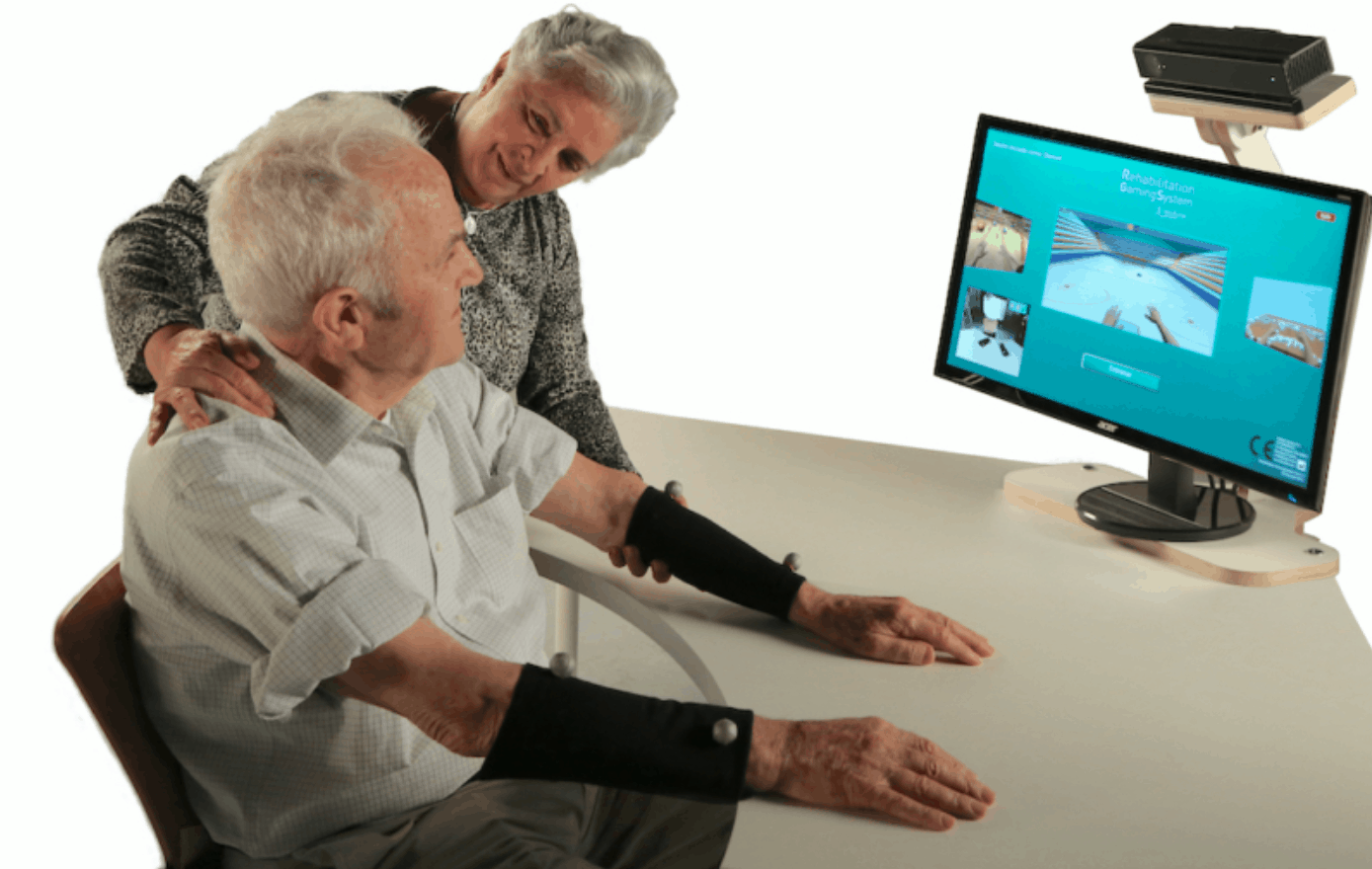
When “combined with conventional rehabilitation” it has the potential to improve motor and cognitive performance in neurologic patients alongside “additional benefits” (Maier M et al, 2019). New tests of its efficacy continue to emerge, while technological advancement is blurring the lines between the real and virtually real. Few VR rehabilitation systems can boast as much clinical evidence as that developed by Barcelona tech firm Eodyne in partnership with SPECS-lab, part of the Institute for Bioengineering of Catalonia (IBEC).

By |2024-07-04T17:47:55+01:0016 January 2020|Tech & industry, News|

The manual therapist’s new best friend?

  New York-based Spine Care Technologies, launched in March 2018, believes it has the answer in the Extentrac Elite; which enables non-surgical, drug free, disc and spine care treatment. The device is a multidirectional decompression device used to aid the treatment of spinal injuries, mostly from the thoracic (mid) to the lumbar (lower) spine. It is used in in the treatment of minor degenerative disc disease, through to drop-foot and serious neurological impingement.

By |2024-07-04T17:47:55+01:0016 January 2020|Tech & industry, Therapy, News|

Dysphagia device that continues to deliver

>​It will affect around one in two stroke survivors, according to the Stroke Association, and roughly at least a third of people with MS. Meanwhile, over 80 per cent of people with Parkinson’s may be affected (Suttrup et al, 2016). Speech and language therapists and other rehab professionals may employ a range of techniques aimed at triggering swallowing reflex and strengthening muscles needed for chewing and swallowing.

By |2024-07-04T17:47:55+01:0016 January 2020|Tech & industry, News|

Meet David, a global innovator in rehab

“Exercise helps maintain brain connections and counters brain shrinkage from Parkinson's disease as well as from brain aging,” wrote Eric Ahlskog, a neurologist and author of The New Parkinson's Disease Treatment Book. More exercise is also being increasingly linked by researchers to faster stroke recoveries – and lower stroke risk. A systematic review of evidence published in November in the Journal of the American Heart Association (JAHA) examined 19 studies of aerobic training programmes for stroke survivors.

By |2024-07-04T17:47:55+01:0016 January 2020|Tech & industry, News|

The twin forces creating a rehab superpower

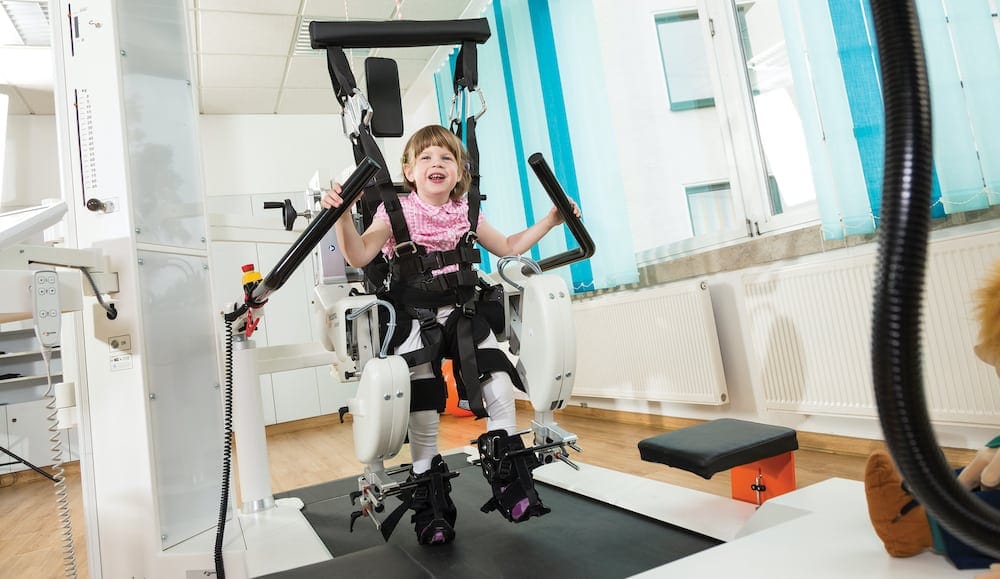
While Lokomat’s evolution has continued to be driven in that time, other devices have thrived too; including ArmeoPower, the world’s first exoskeleton for integrated arm and hand rehabilitation. At Medica 2019, however, digital health is among the latest focus areas. HocoNet is a single software platform which connects to all devices in the Hocoma stable, as well as the existing hospital information system. It enables rehab professionals to manage and keep track of patient, treatment and device data in a secure manner. Patient information need only be inputted once, on one device at the outset and is then synced across all equipment that the patient may require.

By |2024-07-04T17:47:56+01:0016 January 2020|Uncategorised|

Emerging Parkinson’s treatment “safe and effective”

Tremors are characteristic of movement disorders like ET and PD, two progressive conditions that affect millions of people worldwide. Previous treatment options for reducing them in patients who have not responded to medical therapy include deep brain stimulation, a surgical procedure that involves implanting a small electrode in the brain connected to a pulse generator that is implanted in the chest like a pacemaker. A more recently-available option is magnetic resonance-guided focused ultrasound (MRgFUS) thalamotomy, an incisionless interventional radiology procedure.

By |2024-07-04T17:47:56+01:0016 January 2020|Research, News|
Go to Top