Achievement in rehabilitation should be shared and celebrated with supporters to help sustain and encourage progress, says Lisa Beaumont, whose own ten-year recovery from stroke continues with the support of family, friends and therapists
Rehabilitation works best when it is not undertaken in isolation.
Over the past month, Ihave been thrilled bythe progress that I have made towards my goal to walk without a stick, my posture has improved significantly during lockdown and I have enjoyed walking in the garden in June’s sunshine. My progress has reminded me of the saying, “it takes a village to raise a child". I would like to adapt that expression to become: "it takes a village to deliver successful rehabilitation, many people have important roles to play".
The official opening of the Chinese Medicine Rehabilitation Centre marks a historic moment in the integration of traditional and modern concepts and methods of rehabilitation therapy.
The Centre features a wide clinical application base of intelligent rehabilitation robots in collaboration with Fourier Intelligence.
Traditional Chinese Medicine (TCM) rehabilitation therapy has been in practice for thousands of years and has endured the test of time. This discipline enters a new paradigm in the digital age combining advanced robotics through modern rehabilitation equipment. Established in 1988, the Second Affiliated Hospital of Nanjing University of Chinese Medicine (Jiangsu Province Second Hospital of Traditional Chinese Medicine) is a public provincial-level hospital providing medical treatment, medical education, scientific research, preventative health care, and rehabilitation.
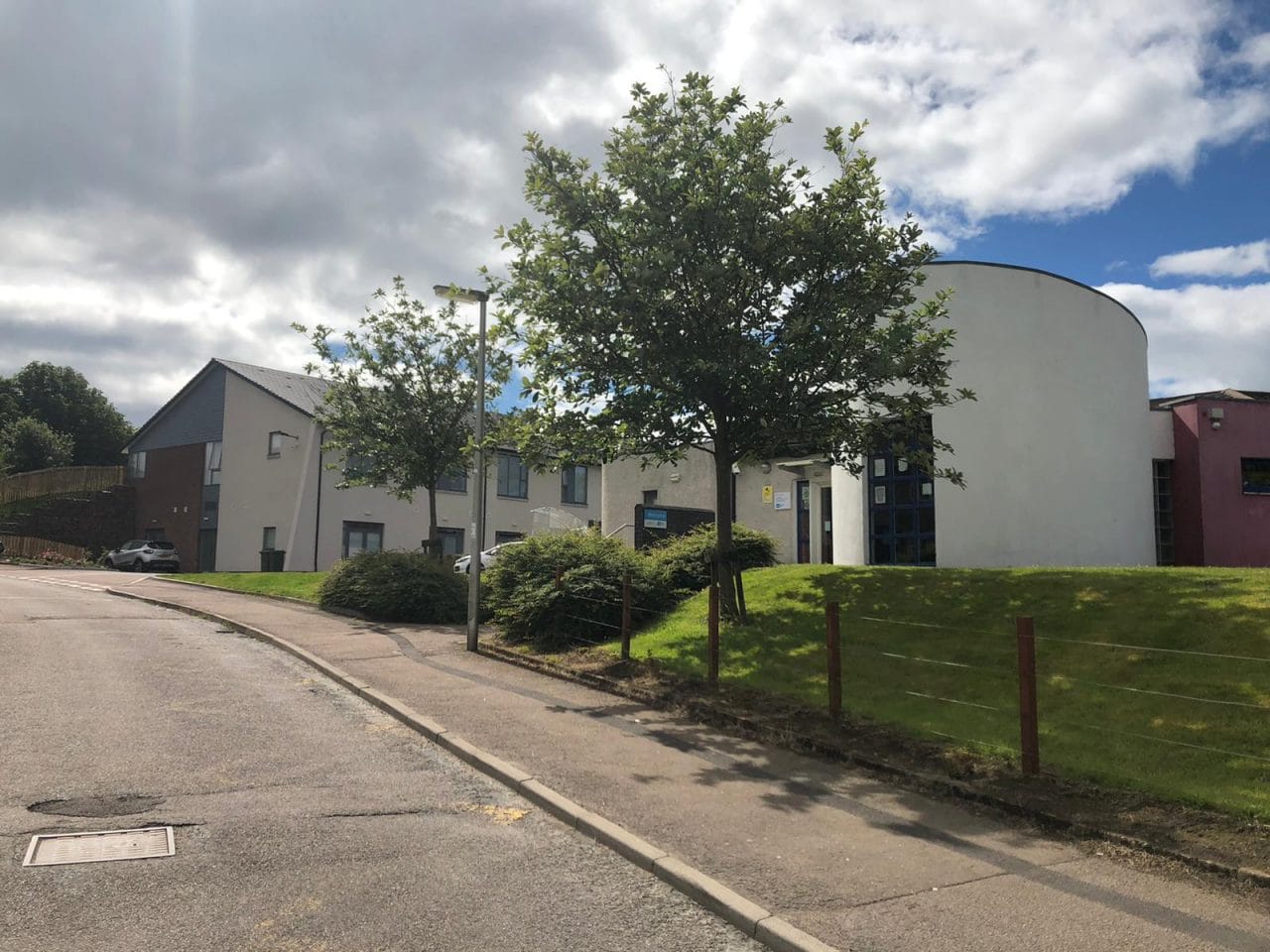
A specialist care centre has doubled its capacity to 44 beds after raising over £3.9million through its capital appeal.
Sue Ryder Neurological Care Centre Dee View Court is Scotland’s only purpose-build neurological care centre and its expansion brings more badly-needed provision in specialist care to the country. The centre, in Aberdeen, has increased its capacity from its initial 22 beds through converting unused areas of the existing building into new bedrooms and creating a four-bedroom garden annexe and new double storey annexe. In total, 14 new en-suite bedrooms and six apartments have been developed.
The Dee View Capital Appeal was launched in June 2017 to fund the expansion of the centre, to deliver on Sue Ryder’s ambition to deliver more care to more people in Scotland and the UK living with neurological conditions and acquired brain injury.
Speaking at Calvert Reconnections’ recent Zoominar for case managers and solicitors, activity lead Rob White made a compelling case for rehabilitation in the great outdoors
“The use of outdoor activities makes our rehabilitation service unique,” said Rob.
“Working with leading clinicians and academics, our service combines traditional multi-disciplinary clinical therapies with physical activity in the outdoors to support individuals in their recovery from brain injury.”
Rob brings over 20 years’ worth of outdoor coaching experience to the Calvert Reconnections team. He has always been a strong advocate for using outdoor activities to facilitate personal development and this underpins his practice. In 2018, he qualified with an MSc in Psychology.
He researched the influence of rock climbing on people’s mental wellbeing and this highlighted the transformative potential of the outdoors. Rob uses his knowledge when designing and delivering programmes, focusing on maximising wellbeing by using adventurous activities and the outdoor environment.
A newly-developed device which can be implanted into the spinal column to treat severe pain could also be a potential treatment for paralysis.
The ultra-thin inflatable invention, which is about the width of a human hair, can be rolled up into a tiny cylinder, inserted into a needle, and implanted into the epidural space of the spinal column - the same area where injections are administered to control pain during childbirth.
Once correctly positioned, the device - developed by engineers and clinicians at the University of Cambridge - is inflated with water or air so it unrolls like a tiny air mattress, covering a large section of the spinal cord. When connected to a pulse generator, the ultra-thin electrodes start sending small electrical currents to the spinal cord, which disrupt pain signals.
A state-of-the-art neurorehabilitation centre has been officially opened by HRH The Countess of Wessex.
The Care and Rehabilitation Centre (CRC), operated by disability charity Queen Elizabeth’s Foundation for Disabled People (QEF), offers specialist expertise to support people to rebuild their lives after an acquired brain injury, stroke, incomplete spinal injury or other neurological condition. The service opened during the pandemic in July 2020 and Her Royal Highness was keen to speak to staff about their experiences of the last year and the challenges of providing person-centred therapy and care to people straight from hospital and sometimes straight from Intensive Care.
The team at the CRC have worked tirelessly during the pandemic, expanding the number of NHS Trusts and Clinical Commissioning Groups the service supports, so they were able to accept patients directly from hospitals across the South of England.
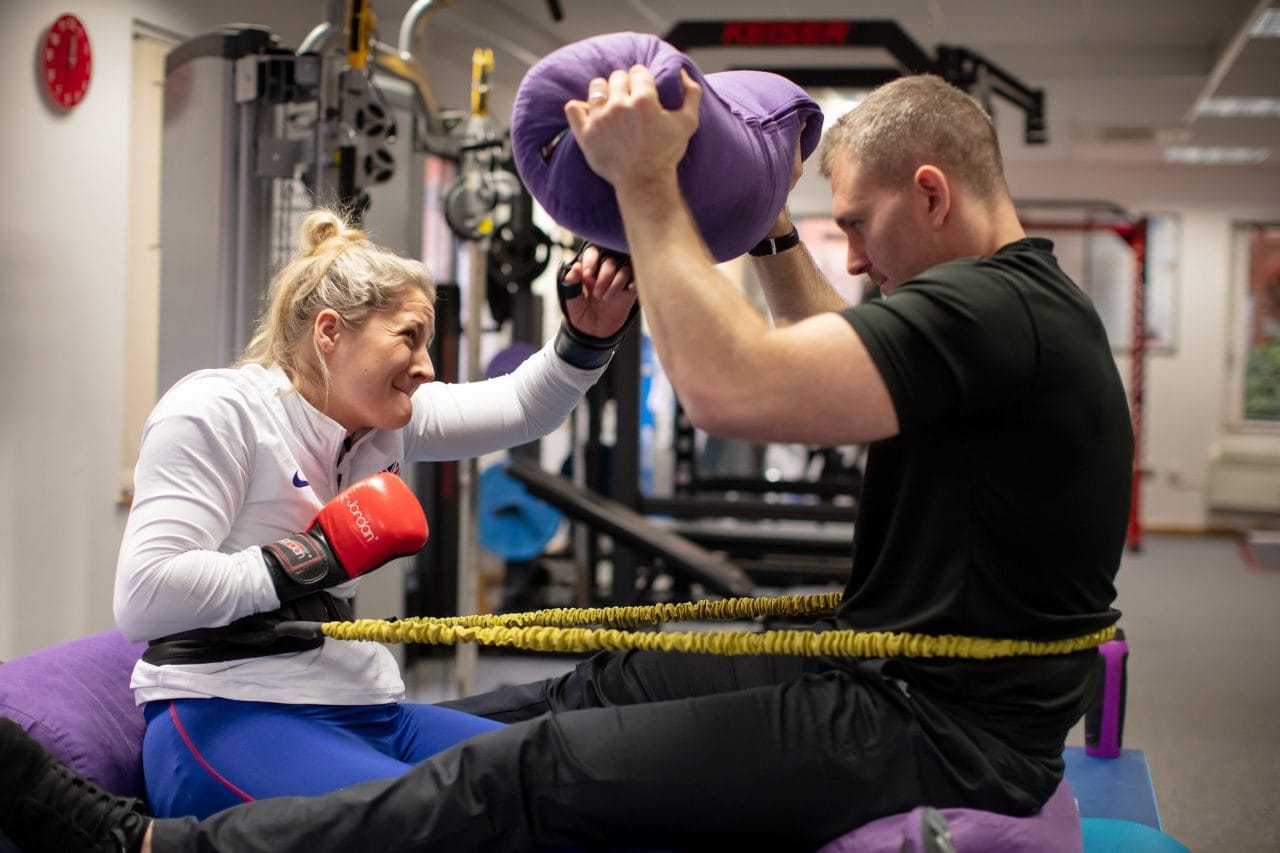
Strength and conditioning is a field of exercise science specialising in the optimisation of human performance.
Along with other closely related disciplines - such as physiotherapy, biomechanics and physiology - strength and conditioning is an established support service in sport but rarely applied within neurorehabilitation, despite holding evident value.
Within sports, a strength and conditioning specialist works collaboratively with a multidisciplinary team that has been collectively tasked with optimising the physical resilience, development and performance of athletes. An integral part of their specific role within such a team is to maximise the technical training opportunities of athletes by ensuring they can withstand the unique physical demands placed upon them by their respective sport, training environment and competition format.
This role is fulfilled by methodically appraising and addressing the physical abilities and limitations of athletes in alignment with specific outcomes associated with sporting success. In doing so, distinct movement patterns (eg running), physiological systems (eg cardiovascular) and architectural properties of muscles (eg cross sectional area), can be effectively and repeatedly targeted for adaptation and maintenance as required.
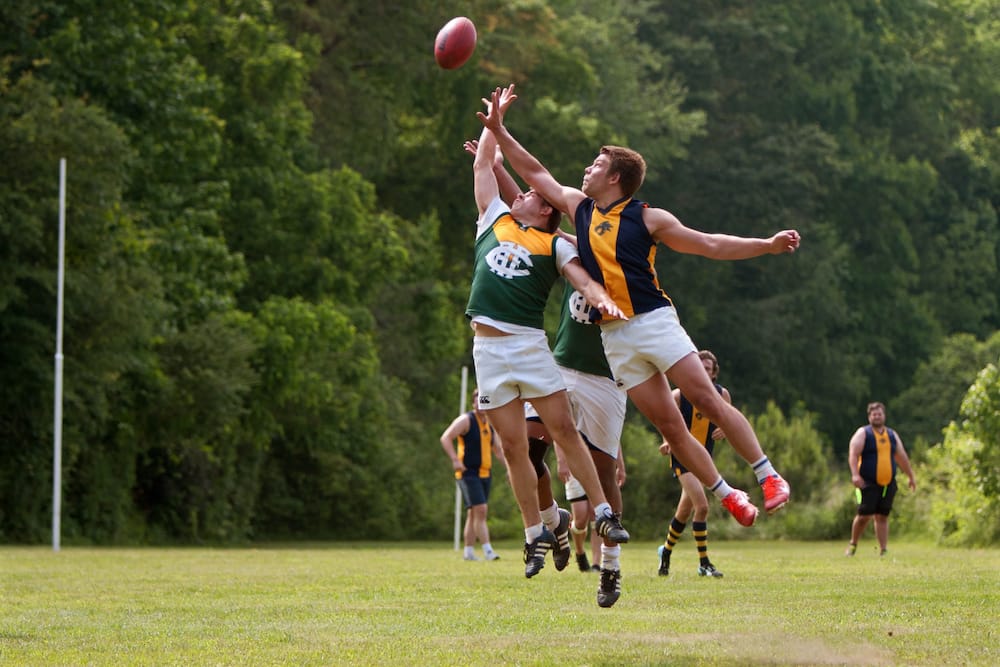
Further evidence of the long-term impact of concussion in sport has emerged through the findings of a new study into young Australian Rules football players.
The new research has discovered that physical damage is still evident in the brains of players months after sustaining a concussion, adding further to concerns around the long-term neurological health of sports players after a head injury. The study, from Monash University, found damage to the white matter and cortex in players even six months after their concussion, raising concerns that Australian Rules players who experience concussion result in persistent brain injury.
Twenty-six young male Australian footballers with sports-related concussions - as well as 27 non-collision sport athletes as controls - were recruited to the study, which investigated the presence of brain abnormalities in Australian rules footballers with a history of sports-related concussion as determined by MRI scans.
None of the footballers had sustained a concussion in the preceding six months, and all players were asymptomatic.
With the creation of LusioMATE, rehabilitation is being revolutionised through the use of gaming. NR Times meets Justin Keenan, CEO of Lusio Rehab, to learn more about the world-first device
From a series of chance encounters came the creation of a business which is helping to revolutionise therapy and rehabilitation on a global scale through the use of gaming. With the creation of LusioMATE, the world’s first wearable therapy controller and game ecosystem, Lusio Rehab is helping to redraw the boundaries and rehab potential for people living with neurological conditions and other disabilities around the world. Since its launch in 2019, the device has expanded far beyond its origins in Australia to be in use in the UK, across Europe, the United States and South America.
An online calculator has been created which empowers older people to better understand their brain health and how they can reduce their risk of being diagnosed with dementia in the next five years.
The calculator, built and validated by Canadian researchers, enables individuals aged 55 and over to assess themselves using the online tool at projectbiglife.ca.
Dementia is the biggest cause of death in the UK and there are currently around 850,000 people living with the disease. This figure is projected to rise to 1.6million by 2040. While there is no cure for dementia, around a third of dementia cases may be preventable through lifestyle factors like physical activity, healthy eating, reducing alcohol and tobacco use, and managing conditions like diabetes and high blood pressure.