About Deborah Johnson

This author has not yet filled in any details.
So far Deborah Johnson has created 1517 blog entries.

Father-and-son bond supports RAF veteran’s recovery

A Royal Air Force veteran who sustained a significant brain injury and overcame “testing hurdles” on the road to recovery is now making strong progress with the unwavering support of his son. Herbert Martin, an 85-year-old from Littleport, near Ely, sustained a brain injury following a fall in October 2020 and went on to make a remarkable recovery – highlighting the rapid progression specialist rehab therapy can offer. A former RAF serviceman of 12 years, which included deployments to Cyprus, Australia, Pakistan and Singapore, Herbert was admitted to Askham Rehab on New Year’s Eve 2020 after suffering a subarachnoid haemorrhage that caused a bleed between his brain and skull. The severity of the injury left Herbert extremely fatigued and resulted in muscle weakness that restricted his mobility. His condition upon arrival at Askham was so critical it was initially feared he wouldn’t recover enough to return home and live independently.

By |2026-02-11T11:41:51+00:0018 June 2021|Inpatient neuro rehab, Care & services|

Revolutionary spinal cord therapy moves closer to reality

Health tech business ONWARD has secured its third Breakthrough Device Designation status as it continues towards its goal of commercialising its technology which could allow paralysed patients to walk again. 

The venture secured Breakthrough Device Designation for its ARC-IM platform for blood pressure and trunk control in people with spinal cord injury. It is the third such status awarded to ONWARD from the US Food and Drug Administration (FDA), following previous awards for ARC-EX for upper extremity function and ARC-IM for mobility. ARC-IM consists of an implantable pulse generator and lead that is placed near the spinal cord. The system is operated via a tablet programmer and smartwatch. 
By |2024-07-04T17:43:08+01:0018 June 2021|Spinal injury|

Using technology to help preserve independence

With the creation of the Luscii remote monitoring platform, people with ongoing care needs can avoid the necessity for regular medical appointments, while clinicians can ensure they're being looked after from afar. NR Times speaks to its founder Professor Daan Dohmen about Luscii's role in the future of healthcare

  From his early experience of working part-time in a nursing home came a realisation that patients could and should play a more active role in their care and health.  “For me, that was a really important step in my vision to use technology to help regain people’s independence,” says Professor Dr Daan Dohmen.  “The nursing home had all good intentions but took away the independence of people living there - they put them in the shower, they did everything. 
By |2024-07-04T17:43:08+01:0017 June 2021|Tech & industry|

Wiltshire Farm Foods Turns 30 with Softer Foods Offer

It’s been 30 years since the company created its first ready meal and, all these years later, it’s celebrating with a Softer Foods offer for those living in the UK with swallowing difficulties.  

It’s been 30 years since the company created its first ready meal and, all these years later, it’s still delivering Softer Foods ranges to thousands across the UK who are living with swallowing difficulties.  Also known as dysphagia, swallowing difficulties are brought about by a variety of medical issues and commonly experienced by patients with neurological conditions. 
By |2024-07-04T17:43:08+01:0017 June 2021|News|

Day One Trauma Support rolling out nationally

A charity which supports seriously injured people from the earliest stages of their recovery is rolling out its services in new regions following its national launch last month. 

Day One Trauma Support offers financial, emotional and legal support to patients and their families, and was originally based at Leeds Teaching Hospitals NHS Trust. Its support will now also be offered in the Major Trauma Centre at Aintree University Hospital, with rollout into more of the country’s 27 Major Trauma Centres also planned.  The charity is launching a fundraising drive during July to help raise vital funds for the expansion of its services, with over 100 people committing to each cover 75 miles to raise money - the distance marking the journey between Leeds and Aintree. 
By |2026-02-11T11:41:51+00:0017 June 2021|News, Inpatient neuro rehab, Care & services|

First-of-its-kind project supports brain injury survivors in return home

A first-of-its-kind house has been created for people with brain injuries, using the latest in technology innovation to support them in their return to living independently. 

The Link is a pioneering project designed to bridge the gap between acute medical settings and return home, or to allow for a period of independent living, which uses assistive, smart and strategy technology to enable residents to live autonomously thanks to the ‘hidden’ support within the building.  The purpose-built house, in Snodland, Kent, is a unique innovation from BIS Services, which has been meticulously planned for over three years. It offers a solution to people who are set to move back into the community but want to live in somewhere that feels like home during their transition, rather than a multi-occupancy unit, while not compromising on levels of support.   But while they are able to live independently, they have the benefit of round-the-clock subtle monitoring, with observations of skill, patterns of behaviour, independent motivation and initiation, all of which can be graded and reduced where appropriate, allowing for maximum safety whilst increasing positive outcomes. 
By |2024-07-04T17:43:09+01:0016 June 2021|News, Community neuro rehab, Brain injury|

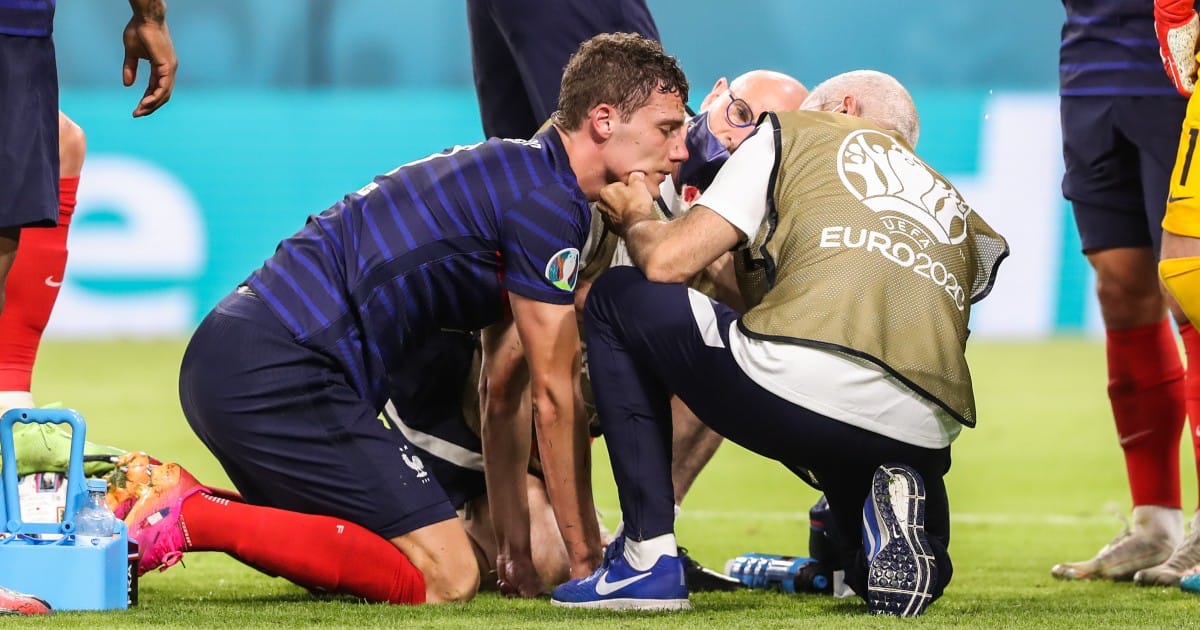
Pavard head injury ‘sickening to watch’

The injury sustained last night by France defender Benjamin Pavard and the way it was dealt with was "sickening to watch", with calls for urgent action to be taken to protect players from such a situation repeating.

Pavard was injured in the Euro 2021 match with Germany, when he collided with Germany’s Robin Gosens. Pavard hit the ground without his arms protecting him from the fall and later admitted he was ‘a little knocked out for ten, 15 seconds’. Despite this, the player was allowed to continue after receiving on-pitch medical attention for less than three minutes – a decision labelled by brain injury charity Headway as "disturbing". While the Premiership last season became the first football competition in the world to trial the use of concussion substitutes - although its premise of permanent rather than temporary replacements has prompted widespread calls for it to go further - no such measures are in place during the Euros. In the wake of Pavard's injury last night, with football fans around the world fearing for the player's welfare during the incident, Headway has called for urgent action to be taken to ensure such a situation does not occur again.
By |2024-07-04T17:43:09+01:0016 June 2021|Brain injury|

TBI leads to neurodegenerative diseases through protein build-up – research

Scientists have revealed a potential mechanism for how traumatic brain injury leads to neurodegenerative diseases.

The results could aid the development of treatments that halt the progression of cell damage after brain injury, which can otherwise lead to neurological diseases such as amyotrophic lateral sclerosis (ALS), and Alzheimer's and Parkinson's disease. Repeated head trauma is linked to a progressive neurodegenerative syndrome, chronic traumatic encephalopathy (CTE).  Postmortem tissues from patients with CTE show dysfunctional levels of a molecule called TDP-43, which is also found in ALS, Alzheimer's disease and frontotemporal dementia.
By |2024-07-04T17:43:09+01:0016 June 2021|Research, Brain injury|

Risk calculator ‘will save many lives from stroke or heart attack’

A new risk calculator will better predict people at high risk of stroke or heart attack years before they strike and is ready for use across the UK and Europe, it has been announced. 

The risk calculator, SCORE2, will be adopted by the upcoming European Guidelines on Cardiovascular Disease Prevention in Clinical Practice, and enables doctors across Europe in the next ten years with greater accuracy than ever before. The research team behind the breakthrough say this new prediction tool will help save many more people across Europe from having a potentially deadly heart attack or stroke, ultimately saving lives.  People who are flagged as having an increased risk can be put on personalised preventative treatment, such a statins, or will receive lifestyle advice to lower their risk.
By |2024-07-04T17:43:09+01:0015 June 2021|Research, News, Stroke|

COVID affecting mental health ‘the norm, rather than the exception’

Neurological and psychiatric symptoms including fatigue and depression are common among people with COVID-19 and may be just as likely in people with mild cases, according to a new study.

By reviewing evidence from 215 studies of COVID-19, the extent of the virus affecting mental health and the brain has been discovered.  “We had expected that neurological and psychiatric symptoms would be more common in severe COVID-19 cases, but instead we found that some symptoms appeared to be more common in mild cases,” says lead author Dr Jonathan Rogers, UCL Psychiatry and South London and Maudsley NHS Foundation Trust.  “It appears that COVID-19 affecting mental health and the brain is the norm, rather than the exception.”
By |2024-07-04T17:43:09+01:0014 June 2021|Neuropsychology|
Go to Top