A specialist children’s care provider is rebranding and expanding its service offering.
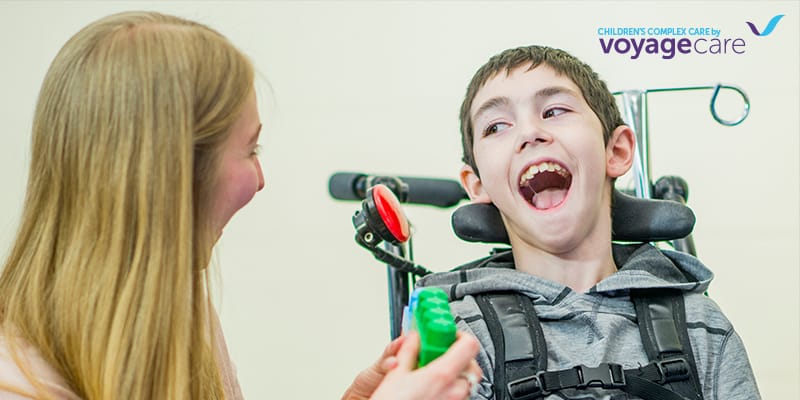
Focused Healthcare has become Children’s Complex Care Limited, which will build further on its work in supporting children and young people aged up to 25 with complex care needs in Greater London and the surrounding counties. Its nurse-led, personalised care at home service enables young people to live with their families in their own communities, and supports them in doing so. The rebrand also creates the opportunity to expand service offering, with the business speaking of its aspirations to create a specialist children’s autism offering and the development of a unique child to adult services transition pathway in the future.
The COVID-19 pandemic has had a "significant, detrimental" impact on adolescent mental health, especially in girls, a new study has found.
In research involving over 59,000 Icelandic teenagers, negative mental health outcomes were disproportionately reported by girls and older adolescents (13 to 18-year-olds), compared to same-age peers prior to the pandemic. At the same time, it revealed a decline in cigarette smoking, e-cigarette usage and alcohol intoxication among 15 to 18-year-old adolescents during the pandemic.
The study is the first to investigate and document age and gender-specific changes in adolescent mental health problems and substance use during the COVID-19 pandemic, while accounting for upward trends that were appearing before the pandemic.
Thorhildur Halldorsdottir, a clinical psychologist and assistant professor of psychology at Reykjavik University who is the study co-principal investigator, says the study represents a "landmark contribution to what we now know about just how psychologically devastating being socially isolated from peers and friends during the ongoing pandemic has been for young people."
The UK's only medical expert witness chambers run by neurological rehabilitation professionals has appointed a new chair.
Established in 2015 by neurological rehabilitation experts Dr Edmund Bonikowski and Professor Mike Barnes, NRC Medical Experts specialises in serious neurological injuries such as traumatic brain and spinal cord injury. The organisation’s expert witnesses provide the courts with testimony and reports for claimant and defendant solicitors in very serious injury cases.
Heather Lawrence OBE has now joined the medico-legal group’s board of directors to help its ongoing progress. She brings over 40 years of experience in healthcare to the organisation, including 12 years as CEO of Chelsea & Westminster Hospital, Non-Executive Director at Monitor (now NHS Improvement) and more recently as Non-Executive Chairman of the London Ambulance Service.
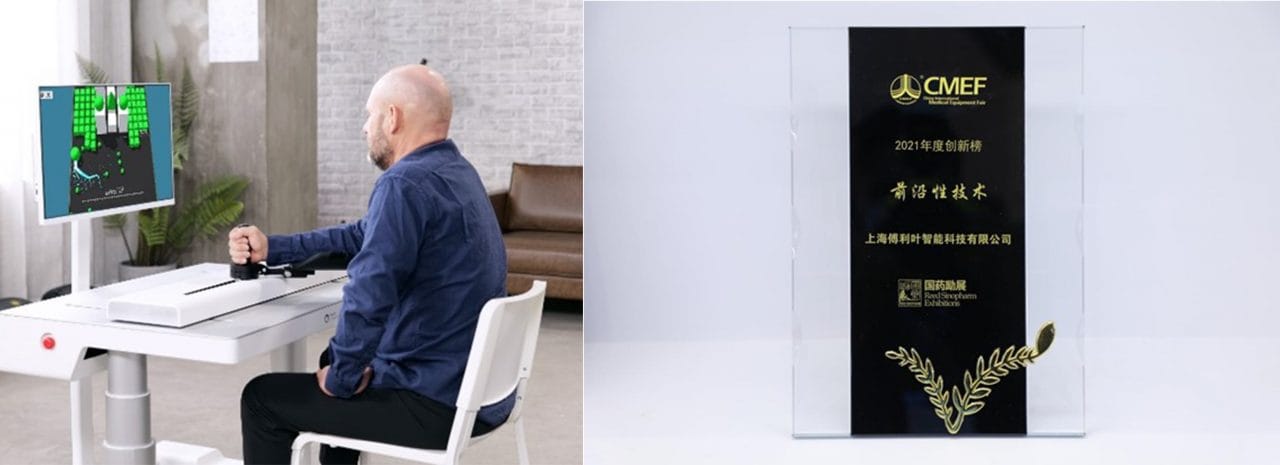
Global rehab tech business Fourier Intelligence has won a number of prestigious awards for its work in redefining rehabilitation possibilities across the world.
Fourier Intelligence has won the Top Leading Rehabilitation Technology Enterprise Award at the 84th China International Medical Equipment (CMEF) Spring Expo.
Its newly-revamped ArmMotusTM M2 Pro device also received two coveted awards - Most Innovative Rehabilitation Robotic Award and the Outstanding Industrial Design Award at the annual medical equipment event.
A new means of determining concussion in young children has been developed, in an innovation which could help change the way they are treated and accurately diagnosed at the earliest stages.
Through the work of scientists at Université de Montréal, children up to five years of age can be assessed more accurately, with difficulties often arising in toddlers and pre-school children being able to describe their symptoms. To address the lack of assessment tools for this age group, UdeM neuropsychology professor Miriam Beauchamp, who conducts research at the UdeM-affiliated CHU Sainte-Justine children's hospital, designed a new observational tool that allows parents and clinicians to assess the child's health status.
It is also designed to document the progression of symptoms and their severity over time, and also emphasises the importance of parents tracking changes in their child after a head injury.
People with COVID-19 have more severe strokes, with the potential to strike at a younger age, new research has found.
The COVID-19 Stroke Study Group's latest report shows that nearly 45 per cent of strokes among people with the virus are large vessel occlusion (LVO) - in the general population, this is between 24 to 28 per cent. It also found that more than a third of people in the group were younger than 55, and nearly half were younger than 65. Pre-pandemic general population data showed 13 per cent of strokes occurred in people under 55, and 21 per cent in people younger than 65.
The report focused on a group of 432 patients from 17 countries diagnosed with COVID-19 and stroke.
Having the right mindset can be central to rehabilitation, says stroke survivor Lisa Beaumont, and can equip an individual with the determination to overcome setbacks, find new means of expression, and crucially, to never give up
Last month, I highlighted the importance of goal-setting. This month my focus is on the mindset that I believe is fundamental for a successful rehabilitation.
Even though goals and plans to reach them are important, it is crucial to have the right mental attitude to make a successful recovery throughout neurological rehabilitation.
A specialist rehabilitation centre is extending its reach to accommodate Long COVID patients, as cases continue to rise and brain injury-like symptoms become more closely associated with the condition.
Uplands Rehabilitation Centre is supporting growing numbers of people with Long COVID, using its ten years of neurological rehabilitation experience to devise bespoke plans for people battling its effects. Recent statistics from the Office for National Statistics (ONS) suggested that 1.1 million people in the UK were affected by the condition in the four weeks from February 6, with about one in five people showing symptoms of Long COVID five weeks after an initial infection, and one in seven after 12 weeks.
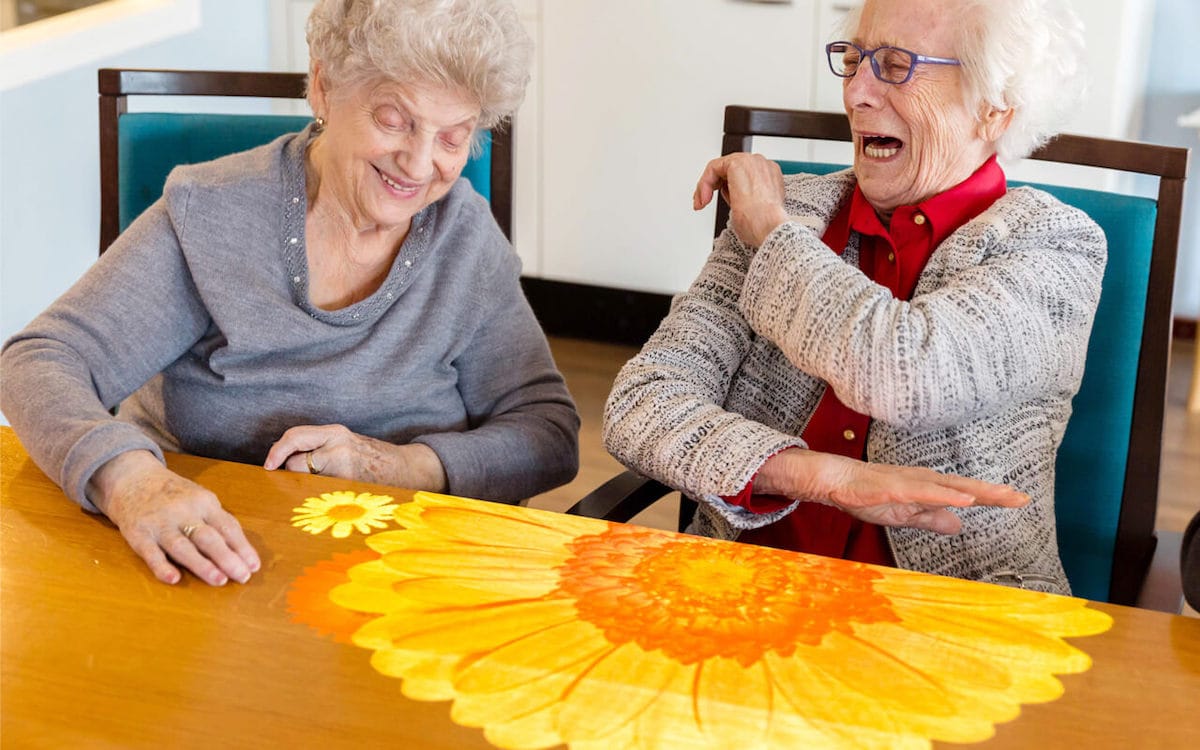
An innovative serious play technology system is supporting people living with dementia with their mental wellbeing and self-confidence.
The Tovertafel is a first-of-its-kind interactive light game system, which enables people with cognitive challenges to play and socialise. It has proved hugely valuable in care home surroundings, encouraging socialisation and enabling those living with dementia to interact through play. With the Tovertafel - which means ‘Magic Table’ in Dutch - people living with dementia can enjoy the myriad of fun and easy-to-play games the system offers, centred around universally-accessible themes like music, art, sport, animals and nature.
Exoskeletons could help people with spinal cord injury improve their bowel function, new research has revealed.
Physical intervention plans which included exoskeleton-assisted walking were shown to help people with SCI evacuate more efficiently and improved the consistency of their stool.
Rehabilitation professionals have traditionally managed bowel dysfunction using approaches that target the gastrointestinal system or require manual intervention, but some newer research suggests that physical activity and upright posture may enhance bowel motility. However, few studies have explored the possibility that exoskeletal-assisted walking - in which a person with spinal cord injury wears a robotic suit, enabling them to stand and walk - may be an effective addition to existing intervention plans.