
About Deborah Johnson

This author has not yet filled in any details.
So far Deborah Johnson has created 1517 blog entries.

Pioneering MS research supported with £1.2m in grants

Pioneering new multiple sclerosis (MS) research projects - including three in the UK - have been awarded £1.2million as part of a renewed global effort to stop the condition.

The International Progressive MS Alliance will share the funds - up to £65,000 each - between researchers around the world through 19 Research Challenge Awards. Each winning project shares a united goal of discovering what causes MS to progress.  By developing a clear understanding of what leads to MS progression, it is hoped this funding will speed up the development of much-needed new treatments for the condition. Professor David Baker, from Queen Mary University of London, is one of three UK researchers who has been awarded funding. 
By |2024-07-04T17:43:13+01:001 June 2021|Multiple sclerosis|

Gender-targeted TBI drug delivery to be investigated

New research has determined that the window of opportunity to provide possible treatments for patients suffering from traumatic brain injuries (TBIs) differs depending on whether the patient is male or female. 

And from these findings, scientists from The University of Texas Health Science Center at Houston (UTHealth) and Arizona State University have teamed up on the first study looking at sex-targeted drug delivery for TBI in a five-year, $2.5 million project funded by the National Institutes of Health (NIH). The study will be used to help design nanoparticle delivery systems targeting both sexes for treatment of TBI.  One of the many factors that could be causing this difference between female and male patients is varying levels and cycles of sex hormones such as oestrogen, progesterone, and testosterone. While these levels already differ in healthy people, brain injuries can also cause additional hormone disruption for both sexes.
By |2024-07-04T17:43:13+01:0028 May 2021|Brain injury|

Revolutionary tech secures world-first hospital adoption

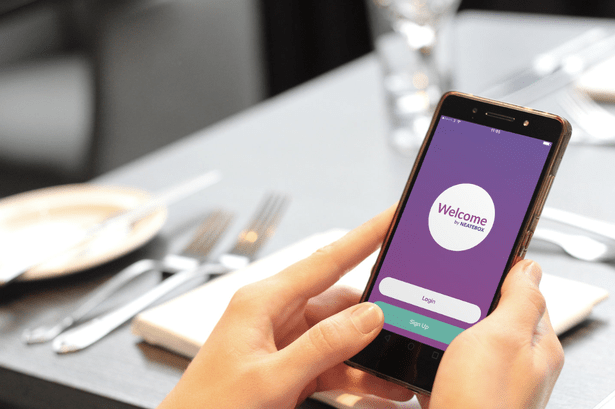
Technology developed to revolutionise the customer service experience for disabled people has secured a world-first through being introduced into a hospital environment. 

The WelcoMe app has been adopted by NHS Golden Jubilee, a flagship hospital in Clydebank, Scotland, to support it in delivering more person-centred care for people with disabilities.  Use of WelcoMe - devised by entrepreneur Gavin Neate to help businesses to give the best possible customer service to people with a range of disabilities and additional needs - will be rolled out to all outpatients of Scotland’s flagship hospital, as part of a six-month pilot programme, the first of its kind in the world in a hospital. Ahead of their visit, outpatients will be sent information on how to download and set up the app.

By |2024-07-04T17:43:13+01:0027 May 2021|Tech & industry|

‘Submit to Love. Everyone can do that’

By engaging brain injury survivors in art, Submit to Love is supporting them to rebuild their lives, whilst also uncovering hidden or forgotten talents. NR Times learns more about he East London project which is enabling people to submit to the love of art

  “In a strange way, disability has freed me up to express myself in my art, and no longer care what others think. I have been forced by disability to come to terms with living in a less than perfect body in a less than perfect world.” For Chris, a 68-year-old retired science teacher and youth and community worker, art has enabled him to accept his new self. 
By |2024-07-04T17:43:14+01:0027 May 2021|Community neuro rehab|

Concussion ‘could lead to later-life disability’

People who have had a concussion where they lost consciousness may be more likely to have some disability or limitations later in life, new research has revealed. 

A new study from the US has discovered that issues including difficulty walking or limitations in the amount or type of work they can do are key concerns among survivors of mild TBI.  "About 16 per cent of all adults have experienced a concussion with loss of consciousness - and our study found that nearly half of those people are living with disability," says study author Andrea L.C. Schneider, of the University of Pennsylvania Perelman School of Medicine in Philadelphia. "This substantial burden of disability suggests that research into how to better care for and improve the functioning of people with concussions over the long term should be a priority for both public health and for planning for individuals.”
By |2024-07-04T17:43:14+01:0027 May 2021|Brain injury|

Case managers praised for vital work during pandemic

Case managers have won praise for the “vital role” they have played in their response to the COVID-19 pandemic.

New research has found that 81 per cent of claimant personal injury solicitors believe case managers have risen to the challenges presented by the pandemic. Solicitors credited case managers for “adapting to an unprecedented situation”, “transitioning to remote working”, “developing bespoke solutions”, “ensuring rehabilitation continued seamlessly” and “facilitating remote rehabilitation”. The research, by barristers Exchange Chambers and neurorehabilitation centre Calvert Reconnections - a first-of-its-kind brain injury rehabilitation centre in the UK, which opens next month - reflects on a period during which case management had to find alternative ways to provide its services to clients to ensure support continued. 
By |2024-07-04T17:43:14+01:0026 May 2021|Case management|

Reeve Foundation and SII collaborate to increase spinal cord injury support

A new Transatlantic alliance has been formed to expand support further for the spinal cord injury community. 

The Christopher & Dana Reeve Foundation has collaborated with Spinal Injuries Ireland (SII) to foster sharing of best practices, expand services and educational content, and enable joint fundraising opportunities in the US and Ireland. This Reeve-SII collaboration follows an alliance with the International Spinal Research Trust (ISRT), announced earlier this year, as a joint strategic approach to research with a focus on accelerating the progress of therapies and their delivery to the millions of people around the world living with the life-altering effects of paralysis. As the only support and service agency for those who sustain a spinal cord injury in Ireland, SII provides support for injured people and their families and friends at every stage, with counselling, community outreach, peer mentoring and activity programs. 
By |2024-07-04T17:43:14+01:0026 May 2021|Spinal injury|

Redefining dementia detection

In the ongoing battle against dementia, pre-dementia symptoms can now be detected more quickly and cost-efficiently than ever before through the development of AI-led technology. NR Times speaks to Dr Sina Habibi, CEO of Cognetivity, about their groundbreaking work and how the pandemic has helped in the acceptance of remote-use technology

  Through the development of pioneering AI-led technology has come the power to reinvent dementia detection.  Following years of R&D, successful clinical trials and medical approval, Cognetivity Neurosciences is now being used in both primary and secondary care to find pre-dementia symptoms through a simple test in a quicker time and at a lower cost than ever before. 
By |2024-07-04T17:43:14+01:0025 May 2021|Dementia, Tech & industry|

‘Decision acuity’ underpins decision making in young people

Young people have a decision making ability distinct from IQ, which is associated with good social function but may be linked to poor mental health, a new study has revealed. 

The decision-making ability, called ‘decision acuity’, is a novel construct and may be underpinned by how strongly certain brain networks are connected, researchers from UCL and Karolinska Institutet found.  “We worked to improve understanding of the brain underpinnings of decision-making ability in adolescence and early adulthood – a critical period of development and a common time for the emergence of psychiatric disorders,” says Dr Michael Moutoussis, of Max Planck UCL Centre for Computational Psychiatry & Ageing Research and Wellcome Centre for Human Neuroimaging, UCL Queen Square Institute of Neurology.
By |2024-07-04T17:43:14+01:0025 May 2021|Research, News, Neuropsychology|

‘Effective MS treatments should be available for everyone with MS, wherever they live in the UK’

A medication for people with relapsing MS has been denied recommendation for NHS use England and Wales, despite it gaining approval from Scottish regulators earlier this year. 

Ozanimod, or Zeposia, is a disease modifying therapy which is taken as a tablet and traps immune T-cells in the body’s lymph nodes. In a two-year clinical trial, it was shown to reduce relapses in those with active relapsing remitting MS by around 38 per cent, compared to beta interferon, an existing MS treatment. However, the National Institute for Health and Care Excellence (NICE) has decided not to recommend it for people with relapsing MS on the NHS in England and Wales, confirming its provisional decision from January - despite the fact it was given approval by the Scottish Medicines Consortium (SMC).
By |2024-07-04T17:43:15+01:0024 May 2021|Multiple sclerosis|
Go to Top