




New UCL Neuroscience centre to unite research and treatment
Work has begun to bring a landmark neurological research and treatment centre to reality.
The UCL Neuroscience centre of excellence will be home to three bodies: the world-leading UCL Queen Square Institute of Neurology; the headquarters of the UK Dementia Research Institute, the single biggest investment the UK has ever made in dementia; and the UCLH National Hospital for Neurology and Neurosurgery (NHNN), which is the UK's largest dedicated neurological and neurosurgical hospital. Clinical work and research will take place together within the new facility, at 256 Grays Inn Road in London, enabling an active dialogue between people with neurological disorders, their doctors, and researchers.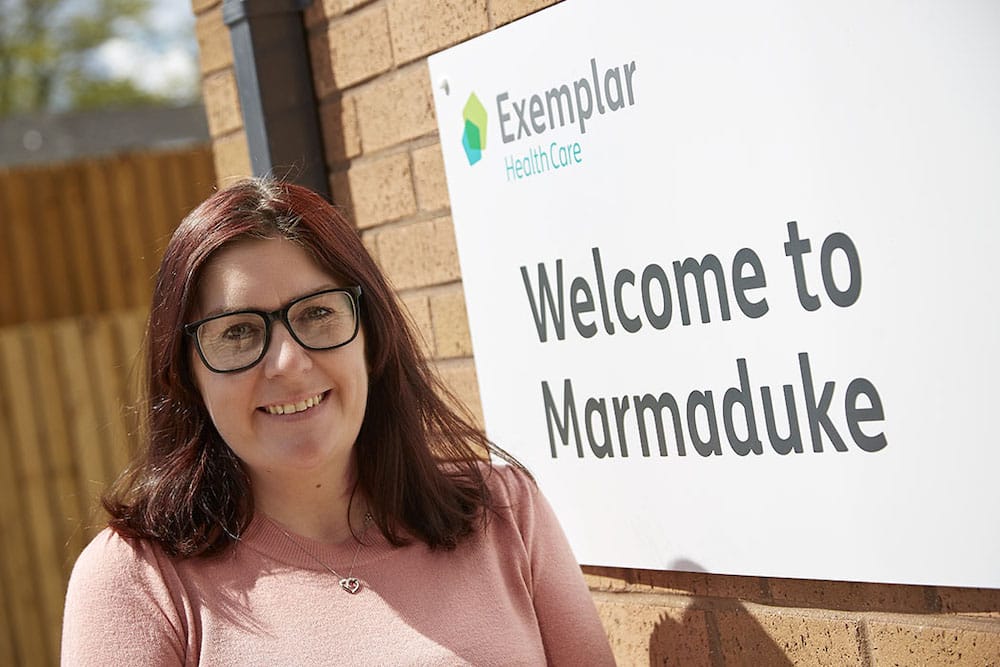
Exemplar opens new complex needs care home
Exemplar Health Care, a specialist nursing care provider for adults living with complex needs, has officially opened its £2.9 million state-of-the-art complex needs care home in Hull.
Marmaduke is Exemplar Health Care’s second home in East Yorkshire. The home will provide person-centred care and rehabilitation for younger adults who have a neuro-disability, acquired brain injury or complex mental health needs, including those who display behaviours of concern. A place to call home Marmaduke has the facilities to provide specialist nursing care for people living with a neuro-disability or neurodegenerative disorder.
Defying the odds
When Rolf Zartner experienced three strokes in March last year, followed by a devastating fourth after life-saving surgery, he was given - at best - a five per cent chance of survival. But Rolf, a managing director at Deutsche Bank in London and lover of extreme fitness challenges, would not be written off so easily.  From the point of him waking from more than three weeks in a coma, he resolved this would not be the reality for him, and began to plan for a future as full as his life was until March 21, 2020. And on March 21 this year - a year to the day that stroke struck - he ran a half-marathon, having pursued a punishing neurorehabilitation and training regime which begun even while he was still in hospital.
New understanding of brain protein could help tackle Parkinson’s
New understanding of how the production of a protein in the brain is controlled could pave the way for new treatments for a wide range of neurological conditions.
In a newly-released study, researchers investigated a section of genetic material known as antisense long non-coding RNA (lncRNA), which helps fine-tune the production of the protein tau inside brain cells. This precision in tau regulation is crucial for smooth functioning of the nerve cells. Understanding the mechanism which helps regulate tau production could be the key to developing better treatments for conditions including Parkinson’s, Alzheimer’s, corticobasal degeneration and progressive supranuclear palsy.
Decrease in SLT ‘led to decline in mental health’
Over half of those living with neurological conditions who could [...]

An insight into loneliness – findings so far
“Our lives have mainly been the same - the difference is to other people’s lives.”
As pioneering research continues into experiences of loneliness during the pandemic for brain injury survivors, some of the preliminary findings are stark. The resilience of survivors - many of whom face loneliness every day even outside of the pandemic - in dealing with the isolation many others were experiencing for the first time, is one of the themes to already come to the fore. Dr Stephen Dunne, from the University of Sunderland, who is leading the research project - which is being carried out in conjunction with Headway - says a more ‘level playing field’ appears to have been created in the understanding and experience of loneliness.
Artwork inspired by sounds supports stroke survivors’ recovery
Stroke survivors have improved their ability to communicate and use their non-dominant hands through a new initiative in which artwork was inspired through sound.
The Seeing Sound project brought together people with aphasia, a language impairment caused by damage to the left side of the brain, usually as a result of a stroke. Over five sessions between November 2020 and February 2021, the 17 participants - service users of London charity the Free Space Project and Liverpool-based The Brain Charity - created dozens of artworks in response to sounds. The clips, released as part of the British Library’s Unlocking Our Sound Heritage project, included the songs of chaffinches and tawny owls, streams running through woodland, the babble of seaside piers and even the mating call of a male haddock.
Parkinson’s symptoms ‘exacerbated by anxiety’
Anxiety amplifies the physical signs of Parkinson's disease, a new study has revealed.
The study - believed to be the first to explore the lived experience of anxiety for people with Parkinson’s - also revealed that participants did not see talking therapy as a useful solution, and more support was needed for people living with both conditions, along with their carers and health professionals. Led by the University of Plymouth and Glasgow Caledonian University, the research involved in-depth interviews with six people living with Parkinson’s and anxiety. The study covered three male and three female participants, each at varying stages of Parkinson’s, and uncovered primary themes that: • Anxiety amplifies their physical Parkinson’s symptoms • Anxiety affects their cognition and freezes the thought process • Anxiety was ‘always there’ and they were constantly trying to find ways to cope
The Emotional Effects of Living with MS
By recognising the signs of PTSD with an MS diagnosis and delivering the appropriate support, patients are empowered to focus on improving their quality of life, says Dr Roy Aloni, head of Psychological Unit, Multiple Sclerosis Center, Sheba Medical Center, and BelongMs expert
Multiple sclerosis (MS) is an autoimmune disease of the central nervous system that affects both the brain and the spinal cord. With MS, the immune system attacks myelin—a protective layer that covers the nerve fibres— allowing the degeneration of groups of neurons, which affects a variety of functions. Multiple sclerosis (MS) is an autoimmune disease of the central nervous system that affects both the brain and the spinal cord. With MS, the immune system attacks myelin—a protective layer that covers the nerve fibres— allowing the degeneration of groups of neurons, which affects a variety of functions. MS-Related Stress In most cases, MS is diagnosed at a young age, which can be a significant emotional burden with extensive psycho-social consequences that affect the patient’s quality of life.

